
Environment
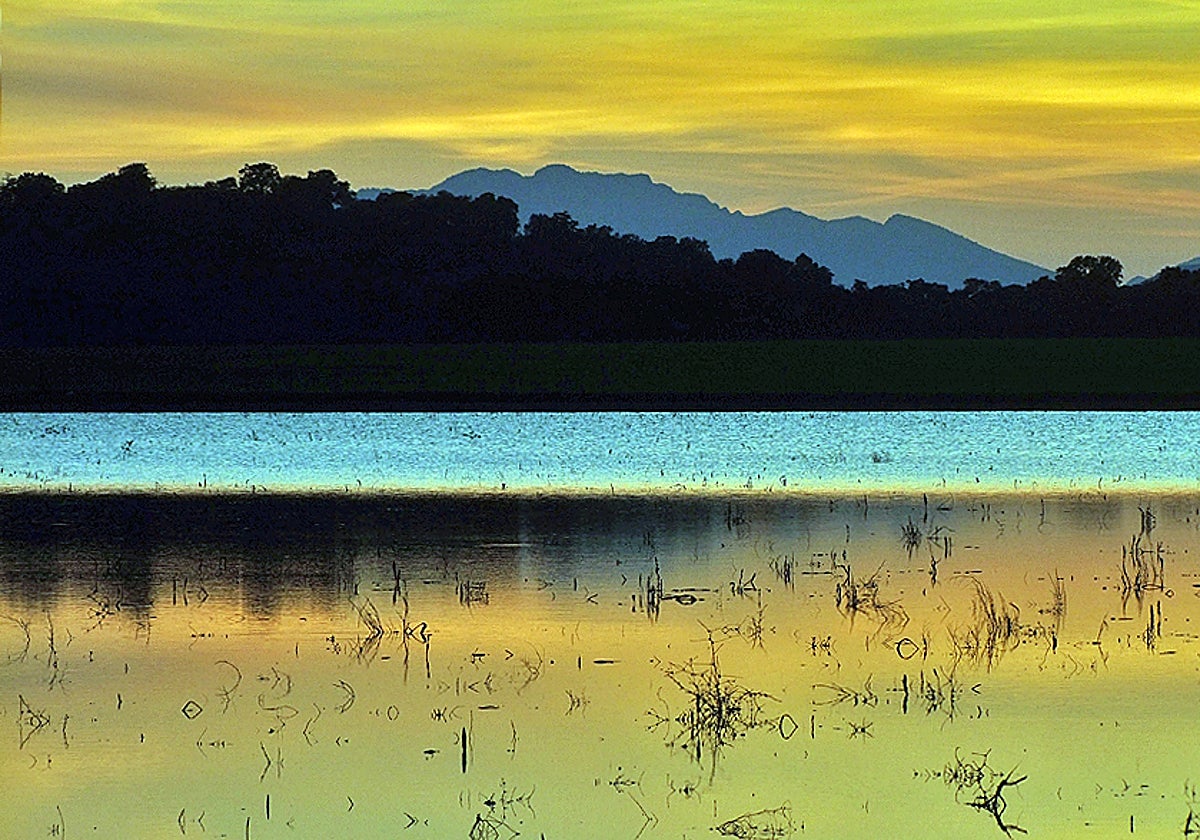
La Laguna de la Alberca, in Ronda, recognised as one of Spain's new protected wetlands
The Malaga enclave, with an area of more than 52 hectares and located almost 800 metres above sea level, has been included in the Spanish Wetlands Inventory, along with four others in Cadiz

Ronda
The Junta de Andalucía has announced that five new wetlands in the region have been included in the Spanish Wetlands Inventory. This was confirmed after it was included in the resolution published in the Official State Gazette (BOE) number 248, on 15 October 2025, including one located in the province of Malaga, specifically in Ronda: the Laguna de la Alberca.
This spot, located within the municipal district of Ronda, covers an area of more than 52 hectares and is marked by its geological and geomorphological characteristics. It is situated almost 800 metres above sea level, and is located on a poljé (a karstic valley of relict origin, surrounded by limestone mountain ranges). It is now considered one of the largest wetlands, located at the highest altitude in the region.
52
hectares
It should be noted that the Spanish Wetlands Inventory was established in compliance with Law 4/1989 and modified by Law 42/2007, which requires the creation of a national inventory in order to track how wetlands evolve and to establish protections. Royal Decree 435/2004, approved on 12 March 2004, regulates this inventory and gives the Ministry for Ecological Transition the responsibility for its elaboration and maintenance.
In addition to this area located in the province of Malaga, four other sites in Cadiz have been added. The Lagunas de Bonanza (Sanlúcar de Barrameda), Huerta de las Pilas (Algeciras), Haza de la Torre (Jerez de la Frontera) and the Wetlands of Cetina (Puerto Real), bring the total number of officially recognised wetlands in Andalucía to 229.
"The technical and scientific work being carried out by the regional ministry has made it possible to identify, characterise and manage Andalusian wetlands based on a criteria of sustainability and rigour," says Borrallo
The Junta has stressed that all this work is the result of the collaboration between the Andalusian authority itself and the national Ministry for Ecological Transition and the Demographic Challenge (MITECO). "The technical and scientific work being carried out by the regional ministry has made it possible to identify, characterise and manage Andalusian wetlands based on a criteria of sustainability and rigour, ensuring their preservation in the face of climate change threats and human pressure," explained the general director of Protected Natural Spaces, José Enrique Borrallo.
Waterfowl
In each and every one of these wetlands, the Andalusian government has confirmed that they are home to diverse communities of waterbirds "of great interest". Several of these species are listed as threatened or endangered. Among them are the marbled teal (Marmaronetta angustirostris), the white-headed duck (Oxyura leucocephala), the whit-eyed pochard (Aythya nyroca), the squacco heron (Ardeola ralloides) and the osprey (Pandion haliaetus).
The Regional government of Andalucía reiterates that the conservation and the careful use of its wetlands, including the restoration and rehabilitation of those that have been degraded, is a strategy of its environmental policy. These ecosystems don't only act as biodiverse sanctuaries, but also play essential roles in water regulation, aquifer recharge, climate change mitigation and flood prevention.
Likewise, detailed knowledge of where they are located, their characteristics and general state, through regional and national inventories, is essential to put the correct protection, management and restoration policies in place. The regional administration considers that having accurate and up-to-date information is the basis for detecting possible changes or threats, and for guaranteeing the long-term preservation of these unique natural environments.
![[]](http://static.vocstatic.com/voc26/latest/assets/images/favicon/surinenglish/apple-touch-icon-57x57.png)