
Water welfare
Malaga has more water reserves underground than in reservoirs: the map of groundwater in the province
Despite containing 639 million cubic metres per year, this resource, which returned to the agenda during the last drought, is still largely under-explored
-U65461857626Ers-1200x840@Diario%20Sur.jpg)

Groundwater remains largely undermined outside expert fields despite its strategic importance. There is no accessible and up-to-date information available to the general public on the state of underground water bodies in Malaga, although the province has some 639 million cubic metres per year. To put the figure in context: this is more than the storage capacity of the seven large reservoirs in Malaga (603.14).
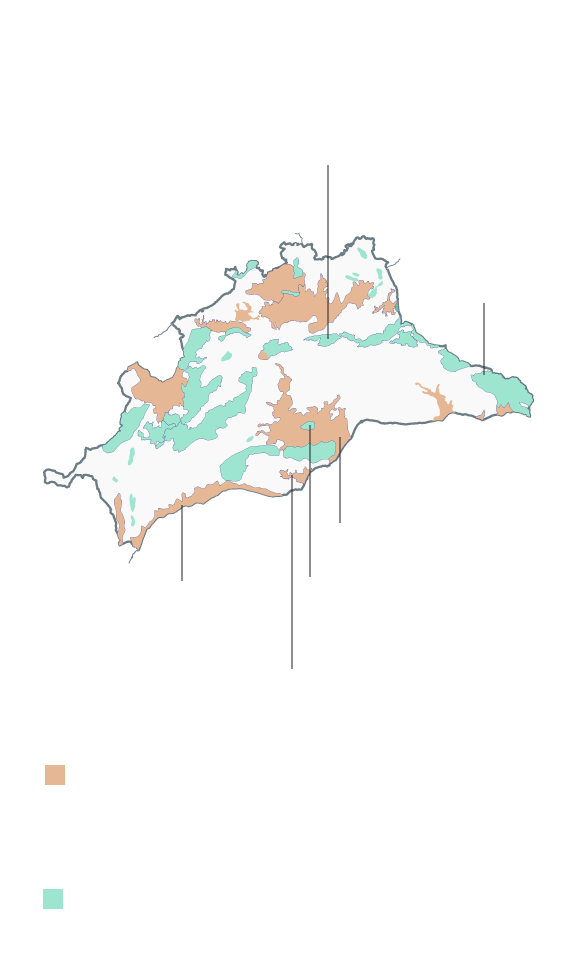
Aquifers in the province of Malaga
El Torcal de Antequera
Sierra Almijara-Alberquillas (Chíllar)
Bajo Guadalhorce
Aljaima-Fahala (Cártama)
Guadalmansa (Estepona)
Río Fuengirola
Detrital aquifers. Gravel, conglomerate rock, sand, calcarenite and silt. Variable to average permeability.
Carbonated aquifers. Limestone, dolomite and marble. High permeability.
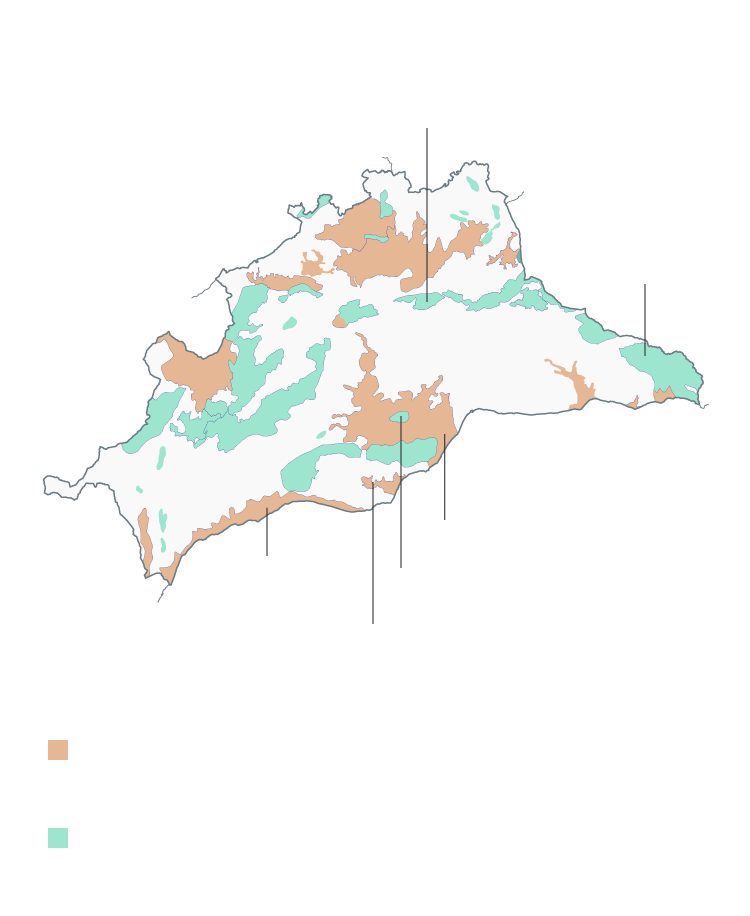
Aquifers in the province of Malaga
El Torcal de Antequera
Sierra Almijara-Alberquillas (Chíllar)
Bajo Guadalhorce
Guadalmansa (Estepona)
Aljaima-Fahala (Cártama)
Río Fuengirola
Detrital aquifers. Gravel, conglomerate rock, sand, calcarenite and silt. Variable to average permeability.
Carbonated aquifers. Limestone, dolomite and marble. High permeability.
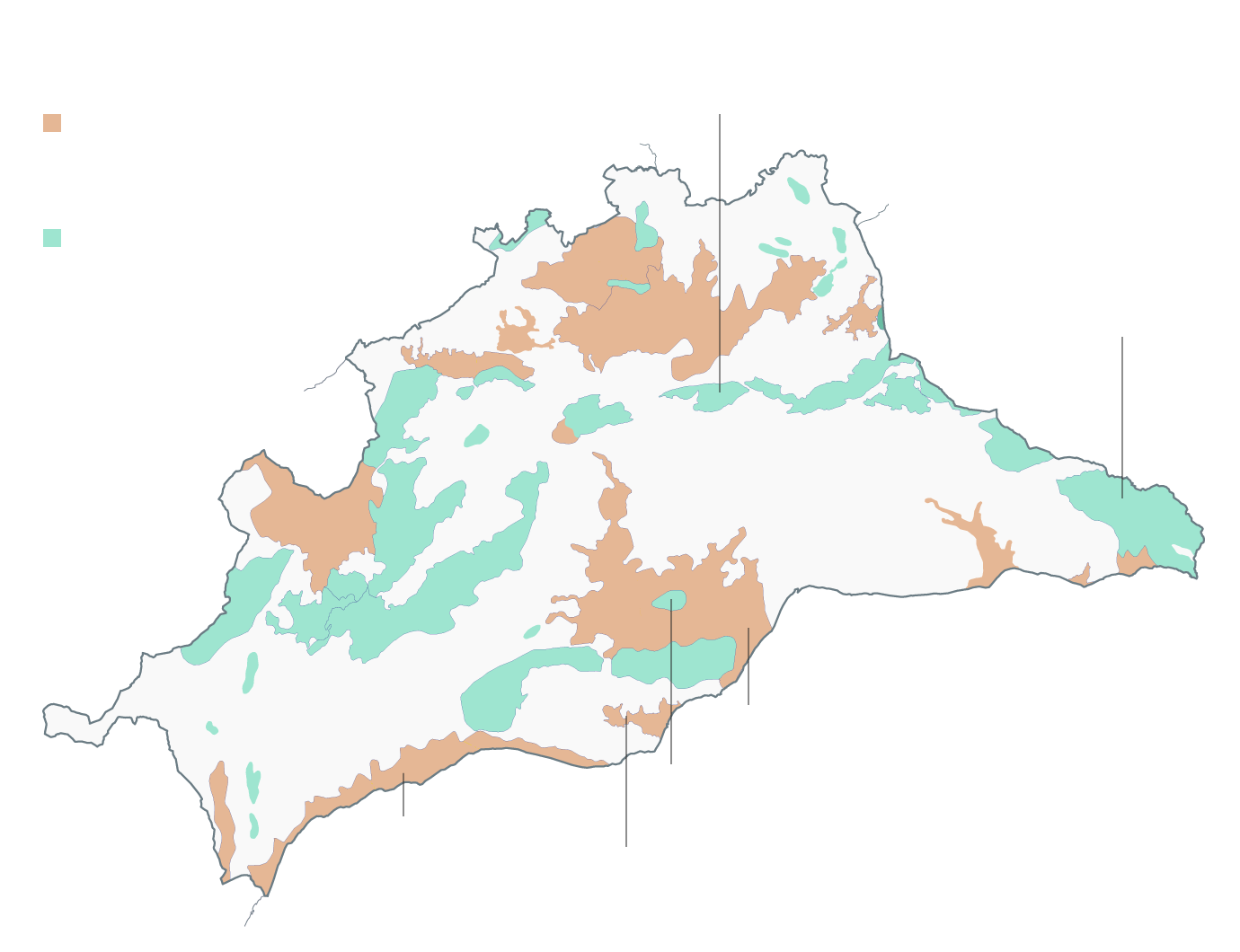
Aquifers in the province of Malaga
El Torcal de Antequera
Detrital aquifers. Gravel, conglomerate rock, sand, calcarenite and silt. Variable to average permeability.
Carbonated aquifers. Limestone, dolomite and marble. High permeability.
Sierra Almijara-Alberquillas (Chíllar)
Bajo Guadalhorce
Aljaima-Fahala (Cártama)
Guadalmansa (Estepona)
Río Fuengirola
Groundwater is a sensitive resource. Aquifers can be overexploited and can be easily contaminated by fertilisers, biocides, chemicals, etc. Their quality is highly variable and this determines whether their main use is urban supply or agricultural irrigation.
Increasing use
During the last drought, which hit the province for six years, groundwater was a decisive resource. In fact, on the western Costa del Sol, the Guadalmansa and Fuengirola river wells were very important, providing up to 11% of necessary supply. In this geographical area, the aquifer of Sierra de Mijas is of great importance.
It is also a growing resource in Malaga city. For years, municipal water company Emasa has been immersed, in conjunction with the regional government, in the recovery and recharging of the Aljaima and Fahala aquifers (in Cártama). Maintenance work is ongoing to ensure that pumping machinery, casing, electrical systems are always ready. To these crucial reserves have just been added those of the Bajo Guadalhorce - a large underground reservoir capable of supplying up to 800 million cubic metres per year, more than half of what the city needs. This facility is already producing in a test phase.
Hydrogeology
Within this strategy of guaranteeing almost two thirds of consumption in difficult times, it is very important to have good knowledge of the characteristics of the reserves, their capacity, what level of pumping and use is sustainable? The key team for this task works at the hydrogeology centre of the University of Malaga, led by Professor Bartolomé Andreo. He has played a key role in the recovery of the old wells of Puente del Rey and Perales, but also in the monitoring of their use.
It is true that the quality of groundwater is highly variable. For this reason, the treatment and purification capacity of each municipality is very important. For example, the desalination plant at El Atabal is crucial for obtaining high-quality water even if supply is of lower quality at source due to hardness (lime), conductivity (salt) or any other factor.
On the other coast, in the Axarquía district, the wells of the Chíllar have also been providing more than 10% of the urban consumption of the region.
Wells and groundwater are essential in many areas of the province where reservoir water is not potable. We are talking mainly about the Guadalhorce, Ronda and Antequera.
Detrital aquifers are geological formations where water is stored and flows through the pores (spaces) between sediment grains, such as sands and gravels. Their permeability depends on factors such as the size, shape and cohesion of the grains and the presence of cementation or fractures.
-U15060424304TEY-650x455@Diario%20Sur.jpg)
Carbonate aquifers are geological formations that store water in rocks such as limestone and dolomite, mainly through fractures and cavities (karstification).
Atlas Hidrogeológico de Málaga
The last major global study carried out in the province is Atlas Hidrogeológico de Málaga, carried out by Cehiuma, in collaboration with the provincial authority.
According to the document, the province has (renewable) resources of 639 million cubic metres per year (435 in carbonate and 205 in detrital). Of these, some 188 million cubic metres per year are pumped (84 in carbonate and 104 in detrital). About half of the resources of the detrital aquifers are used. Of the carbonate aquifers, only 20% are used near the aquifers and a large part of their discharge goes directly to feed the reservoirs.
By volume, the most important groundwater body in the province of Malaga is in Sierra de Líbar, with an estimated 100 million cubic metres per year, followed by Sierra de las Nieves, with 75, Bajo Guadalhorce, with 55, and Sierra Almijara-Alberquilla, with 50, followed by the Llanos de Antequera-Archidona, with 45, and Sierra Hidalga-Merinos-Blanquilla, with 30.
One of the environmental approaches on the rise is the artificial recharge of aquifers. In Malaga, the city counil is studying the modification of the discharge point of the Guadalhorce wastewater treatment plant's outfall for this purpose. This would be water which, despite its origin and thanks to technological advances, would come out complying with very high-quality standards. On the western Costa del Sol, water company Acosol is also testing a project at the La Víbora wastewater treatment plant in Marbella with Cetaqua (Life Matrix initiative). Hidralia has also been recharging aquifers in Marbella for years.
The importance of underground resources for the province was the main focus of Andreo's speech at his induction at the Malaga academy of sciences. In his address, he reflected on the need for intelligent management of underground reserves, which must maintain a balance between the water they receive and the water they release. He also warned that overexploitation not only depletes the water stores but also affects all the natural systems that depend on them, such as riverbeds. "This resource continues being used for drought mitigation without adequate knowledge and management," he said.
Andreo stressed that, historically, most of the municipalities of Malaga were located where there was groundwater - springs that guaranteed supply. "However, there has never been political, social or economic recognition of the importance of groundwater. Dissemination is fundamental. We have the obligation to transmit the value of groundwater and hydrogeology as a science," he said.
Andreo pointed out that karst, carbonate aquifers can be defined as water towers. They feed the rivers at their headwaters and must be maintained as such.
Andreo referred to the EU's legal obligations, but warned that resources and time are lacking. "We have a challenge especially in issues such as those related to contamination," he said and gave as an example the creation of a protection perimeter around a karst spring that supplies Villaluenga del Rosario.
"In Malaga, groundwater is of strategic importance. It is in all areas. There is more groundwater than in reservoirs. What happens is that a large part of it drains and flows downstream and ends up in the reservoirs themselves," he said.
Management proposals
The professor proposed the creation of a network of activated wells in perfect condition for the recurrent droughts suffered by the region. "It is not a question of creating more wells to generate more consumption. It is a question of having them maintained and operational, so that they can be used at critical moments. We need to keep the control network up to date, accessible and public," he said.
He also advocated the increased presence of experts in politics and the creation of an Andalusian evaluation plan similar to the one set up by the Ministry of Ecological Transition.
Credits
-
Map and infographics Alba Martín Campos
![[]](http://static.vocstatic.com/voc26/latest/assets/images/favicon/surinenglish/apple-touch-icon-57x57.png)