
History
This is the spring that has provided water to Marbella for centuries
The first Marbella Activa historical guided walk took place on Sunday 11 February and focused on the Puerto Rico fountain
María Albarral
Marbella
Being able to turn on a tap and see water coming out is a luxury, and not only because of the drought affecting the Costa del Sol and much of Spain, but also because of the infrastructure that brings it to our homes.
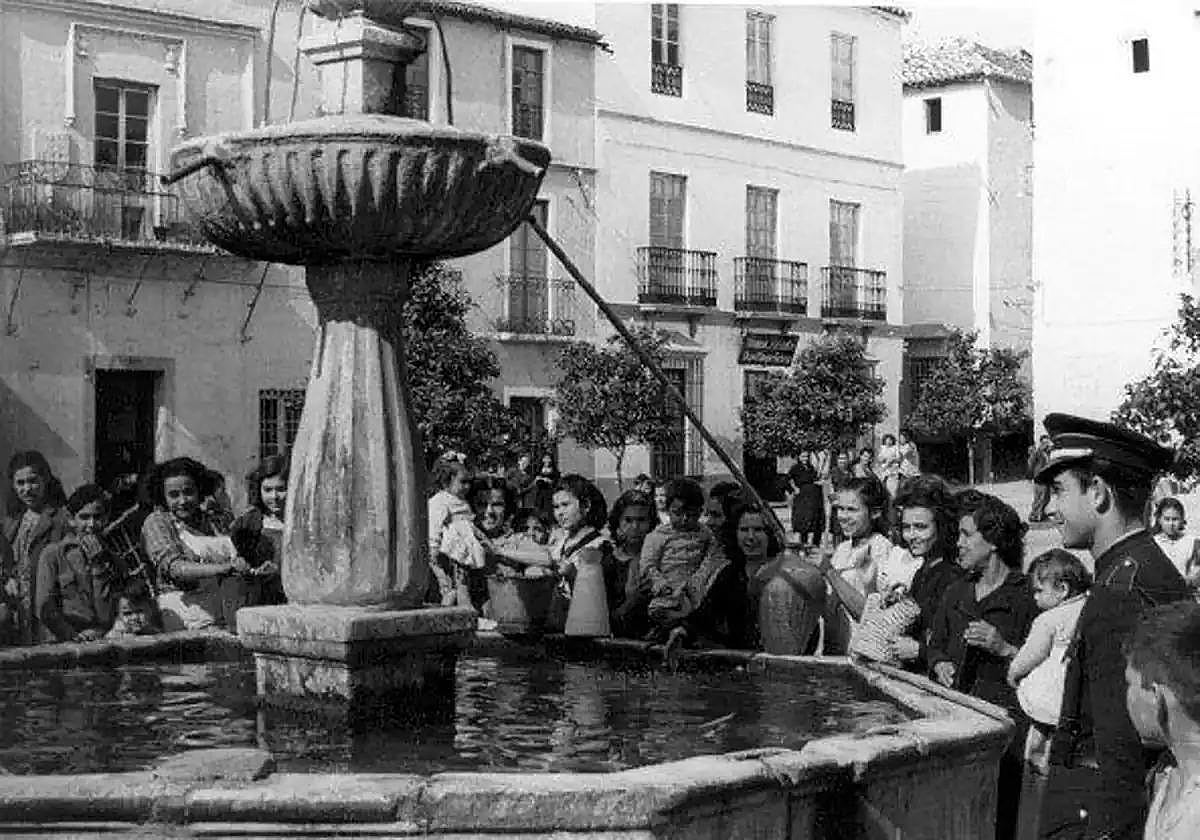
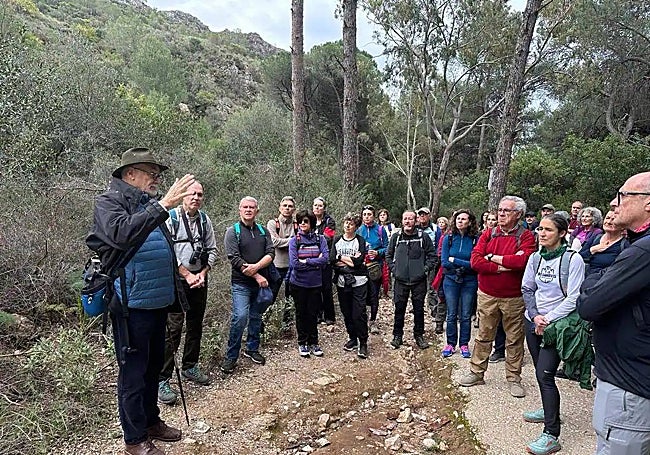
On Sunday 11 February around 50 people participated in the first of four Marbella Activa guided walks that are taking place throughout February and March. This first one focused on the history of water in the town and the importance of the Puerto Rico fountain, which until the 20th century served as an important meeting place where residents would go to fill up jugs and buckets to take home, before the days of running water and taps in houses.
What was everyday life like in Marbella when there were no pipes? History is cyclical and so are the periods of drought. How were these problems solved? Historian Francisco Moreno and specialists in the environment, botany and ornithology were on hand to answer these and other questions as well as to teach more about the history of water in the town.
“The day has served to learn more about the Puerto Rico area, which is perhaps the environmental jewel of Marbella that has supplied water throughout history," said Moreno, who added, “It is the key to the whole existence of the town. Without this spring Marbella would not exist, as the first settlements were built around this natural resource".
The area has been important since prehistoric times and was later used by the Romans in installations that supplied the town’s 'Castellum Aquae'; a water deposit located in the upper part of the town that received water via an aqueduct. Later, during Spain’s Islamic period irrigation channels were created.
"From Islamic villages we have what is known as the 'acequia vieja' (old irrigation channel) which ran along Calle Portada to the roundabout near the national police station. It supplied the town for centuries and in the 19th century, another channel was created along Camino del Trapiche, which carried the water to Marbella’s public and private fountains,” the historian explained during the walk.
From the 20th century onwards, pipes began to be installed to supply the houses but, due to the Civil War, it was not until after the 50s and 60s that, slowly and gradually, water began to reach the homes of Marbella. Before then the people of Marbella had to go to the public fountains to fetch water, with the exception of a few residents who had their own.
Among the most popular fountains that served as a meeting point for the locals were Santo Cristo, El Chorrón, Plaza de Los Naranjos and Plaza de África. "I remember fondly when my mother used to send me to the fountain to fetch water. There were always people and they would chat for a while. If we wanted water, there was no other way", recalled Francisco Cerván.
No alternative
It was an opportunity for children to play together while adults chatted and caught up with news and gossip. There were often problems with the water as the animals also drank from it and the water itself was not treated, as it came directly from the spring, making it a source of infections and epidemics.
Droughts were not experienced in the same way either. There were constant conflicts, which are documented. "There were fights because people took water from each other. The water would flow down by gravity and those at the top would get it first and many of them abused it by diverting it and using it for irrigation leaving those at the bottom with nothing," Moreno commented.
"In those days there was no alternative and if there was no water you couldn't water the gardens or drink, so it was a real problem which generated constant conflict," he pointed out.
The historian also mentioned that "in times of drought the people of Marbella prayed to their patron saints, for example, in Santo Cristo church, and they were also taken out in processions". Moreno explains that "in April 1897, the drought was so severe that one night all the saints came out".
![[]](http://static.vocstatic.com/voc26/latest/assets/images/favicon/surinenglish/apple-touch-icon-57x57.png)