
Rail infrastructure
Malaga firm NGRT invents system to ‘listen’ to train tracks and detect incidents
Railways in India, Lagos, Canada and South Africa are already using the innovation of the small company, which has origins in Malaga TechPark

Málaga
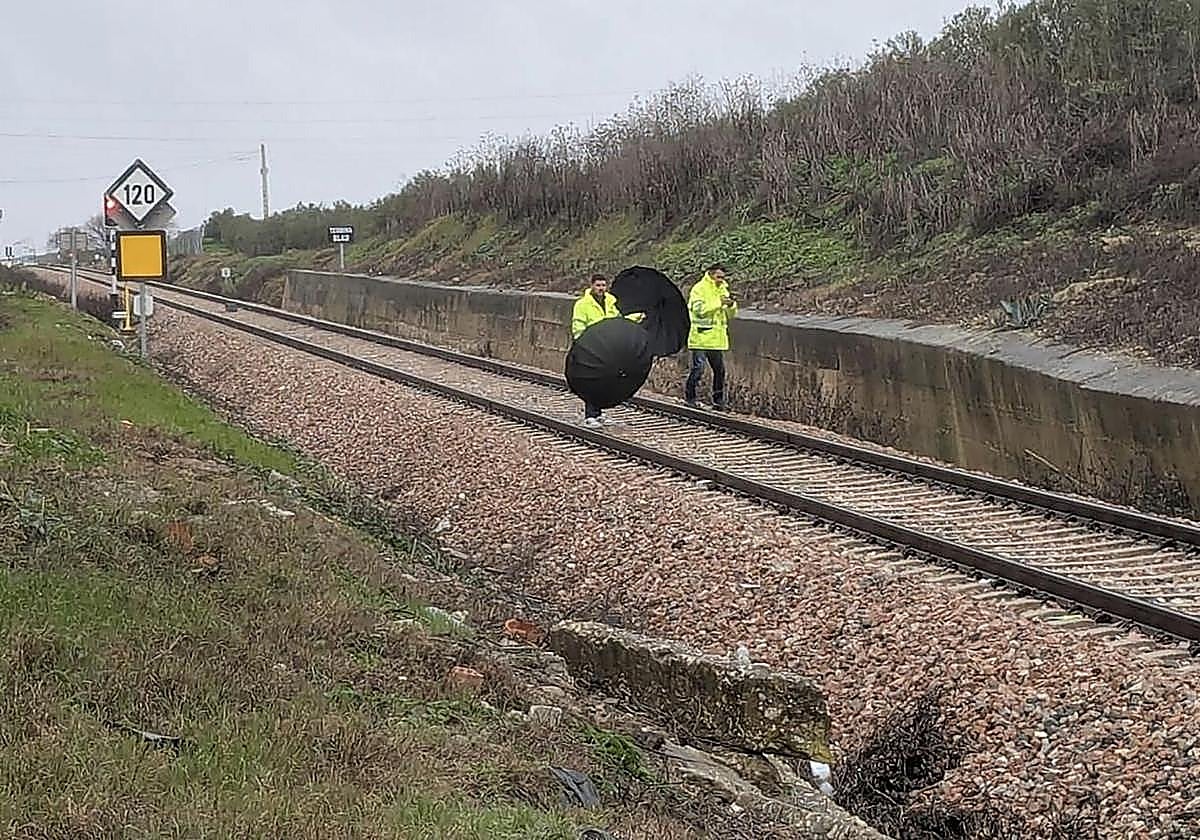
A company based in Malaga's TechPark might have the solution to preventing serious train accidents like the one near Adamuz. NGRT (New Generation Rail Technologies) uses a system that 'listens' to the tracks with highly sophisticated microphones capable of detecting any anomalies, from broken rails to falling objects.
The best solution is often the simplest: this is the credo of NGRT, a company with only 14 employees but a sturdy following. The company is already applying its technology in the world's largest railway network, in India. Its microphones also serve the metro in Lagos (Nigeria), Metrolinx in Toronto (Canada) and Transnet in South Africa.
"Soon our technology will also be deployed in the United Arab Emirates, Saudi Arabia, Turkey, Australia, Egypt and Brazil," founder and CEO Richard Aroe says. He says that NGRT's objective is to constantly monitor railway tracks to detect any incidents in real time with a system that is easy to install and not costly for the industry.
What makes the system cheap? According to Aroe, it is its "passive nature and small size", although each sensor is "capable of covering 10 kilometres of track".
A Norwegian entrepreneur
Richard Aroe is a Norwegian entrepreneur, who founded the company in 2015. "I created NGRT after gaining a deep understanding of the railway industry by spending five years travelling the world," he says after years of studying the railway infrastructure of various countries.
"I realised that all railways face the same daily challenge: simple things like rocks and landslides, falling objects on the track, broken or cracked rails and deformations, human or animal intrusion and floods," Aroe says.
This inspired him to design a "novel and technologically advanced solution that all railways could afford". According to him, the system is "extremely easy to build, install and operate". Despite this apparent simplicity, the highly sensitive microphones are able to send reliable information "in a matter of seconds". They can also quickly detect the exact type of the incident on the tracks.
According to NGRT, this technology lacks the limitations of other track monitoring solutions currently in use, such as ultrasonic inspection trains, geophysical detection or visual detection with cameras and infrared sensors. "All of these systems require external analysis after obtaining information before conclusions can be drawn, whereas ours immediately process all the data and reports the anomaly within five to ten seconds. In addition, we do not encroach on or alter the infrastructure," the company says.
The obvious question that arises is: would such a system have detected a broken track such as the one that is thought to have been at the origin of the Adamuz accident? "Yes. Our technology is able to detect broken tracks and cracks in the rail immediately when they occur," Aroe says.
Low cost: advantage or disadvantage?
The main advantage of their technology, Aroe holds, is the "disruptively low" cost. "You've been hearing about ultrasonic inspection trains in the news lately. Buying the inspection trains, operating them and having a team or department to analyse all the findings and maintain the trains is extremely expensive. We are talking about millions of euros per train per year. Our technology has a 25-year lifespan and the total cost for a customer to get a full real-time monitoring and alarm alert is about 150 euros per kilometre per month," the CEO states
This low cost was, curiously enough, the reason why NGRT was discarded in a 2022 Adif tender. Spain's rail infrastructure company doubted the efficacy of a system that needs such a low budget. According to the documentation, NGRT's bid was considered "reckless" as it was 30% below the tendered budget and did not adequately justify the price.
Despite this rejection, Adif has been in conversation with NGRT since 2017, having shown interest in the system. The Norwegian business owner's company has previously installed two of its systems in Malaga at its own expense: one at the Campanillas local train station, from where it also detects the high-speed line to Madrid, and another at a mid-point on the track to Cártama. The pilot project lasted more than a year and a half before being discarded.
NGRT has 14 employees: software engineers, sound engineers, hardware engineers and firmware and embedded system specialists. "We plan to increase this number to 30-35 employees by the end of 2026," Aroe says.
Aroe has picked Malaga to develop the system for "several reasons": living comfort faciliated by good air transport; the "cost of maintaining a business", which is "half that of Madrid and Barcelona"; and the city's ability to "attract talent form all over the world", in addition to local specialists coming from the university.
![[]](http://static.vocstatic.com/voc26/latest/assets/images/favicon/surinenglish/apple-touch-icon-57x57.png)