
Technology
Malaga hosts first European research lab to provide satellite broadband from space to anywhere on planet
Vodafone, Malaga University and satellite manufacturer AST are behind this pioneering technology centre in the city

Malaga
"The aim is to offer broadband coverage anywhere on the planet: in the desert, in the middle of the ocean and, why not, even in the middle of empty Spain... or during a blackout like the one we had a few months ago," were the words of Jesús Amores, director of the Vodafone innovation centre in Malaga, which has consolidated its position as one of the major driving forces behind the city's technological ecosystem.
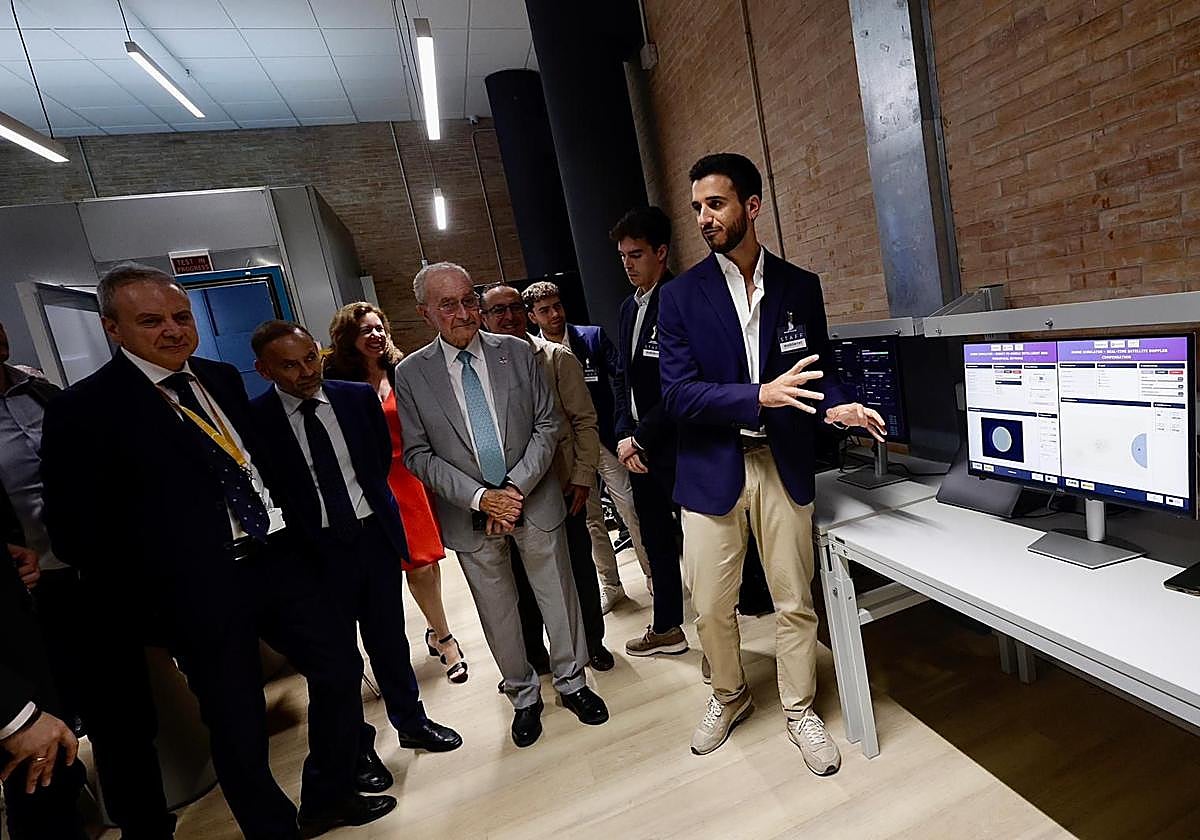
Malaga's satellite centre was officially born on Thursday, 2 October, with the first tech lab in Europe to integrate terrestrial and low orbit satellite-based mobile broadband services and enable customers to seamlessly switch between satellite and 4G/5G networks. This pioneering research centre is part of the Vodafone hub, but it is physically located at the UMA School of Technical Telecommunications Engineering.
One of the main objectives of the lab is to facilitate the validation of software versions, integrating innovative functionalities that incorporate new 3GPP global standards, as well as optimising coverage, mitigating interference and developing robust network management tools.
The project is co-financed by the Spanish space agency (4 million euros) and Vodafone (another 4 million euros) to cover the first two years of operation. Amores explained that AST and Vodafone will collaborate with the UMA, but the university "will also have its space to develop its own research projects". Initially, around 20 people will be working in the laboratory between the three organisations. The staff will increase as the project evolves.
Malaga's satellite lab will evolve in several phases, starting with the research and development of new functionalities, followed by validation tests for the commercial launch of these and culminating with the creation of tools that streamline the network's operation and automation.
Meta project
The lab's first project involves collaboration with Meta, with the aim of optimising and guaranteeing high-quality WhatsApp audio and video calls and ensuring excellent communication over hybrid space and terrestrial networks.
Vodafone wants to lead the introduction of direct satellite connectivity to smartphones in Europe from the end of 2025 and the start of 2026. For this, it is essential to validate the technology that will support it. Once its efficiency and robustness have been demonstrated, the Malaga satellite centre aspires to become one of the space-to-earth gateways to facilitate connection with the 106 satellites that will be deployed by 2027. There will be five such centres in Europe and ten to 15 worldwide. As the technology evolves, the laboratory will become an operations and service management centre for the whole of Europe.
AST SpaceMobile (which is building the first global cellular broadband network in space) and the UMA are Vodafone's partners in this venture, along with other technology companies and external researchers invited to participate. Together, they foster a new European ecosystem of combined connectivity between satellites and terrestrial networks.
Vodafone is not the only company pursuing the goal of universal satellite coverage. Elon Musk's Starlink project is another example. Vodafone and AST's approach to the problem has one advantage: it does not require any additional device to the one users already have.
Amores celebrated Malaga's potential to offer the tech knowledge of both the UMA and Vodafone and attract leading international companies such as AST.
Collaboration
"Malaga satellite centre is an example of collaboration between the UMA, the Telma institute, the MobileNet group and two companies like AST and Vodafone," said deputy rector for Transfer, Entrepreneurship and Business Juan Carlos Rubio.
Malaga city mayor Francisco de la Torre reminded the launch attendees that Malaga was chosen to host the Vodafone hub after a "tough competition" between European cities. Director of network strategy and engineering architecture of Vodafone, Nadia Benabdallah stated that the lab's strategy "will boost both national and European digital sovereignty and ensure universal broadband coverage for consumers, businesses and governments". AST's Chris Ivory added that the collaboration "is a perfect example of how to leverage space technology in a practical and transformative way".
![[]](http://static.vocstatic.com/voc26/latest/assets/images/favicon/surinenglish/apple-touch-icon-57x57.png)