
Culture
Malaga artist completes huge mural at city cinema, a journey through the history of Spanish film in 35 movies
It took Idígoras, helped by some of his family members, three months to complete the commision, just taking a short break every day to do his daily newspaper cartoon for SUR
-U25044254743wBp-1200x840@Diario%20Sur.jpg)

Málaga
Cartoonist Ángel Idígoras will remember 22 October 2025 as the first day in three months when he woke up without catching the number 3 bus and walking along Calle Alcazabilla to get to the legendary Albéniz cinema in the centre of Malaga, where he has created a large mural as a tribute to Spanish cinema.
Idígoras worked tirelessly, with a break for lunch and drawing the daily SUR cartoon, until finishing the day at 9pm or until his back would start to hurt. Three months of his life were just paint brushes and cinema. Occasionally, he would take a break, during which he wouldn't even leave the building, as he would spend a couple of hours watching a film that was being screened there. Albéniz manager Juan Antonio Vigar even jokes that they should have put a bed for him there.
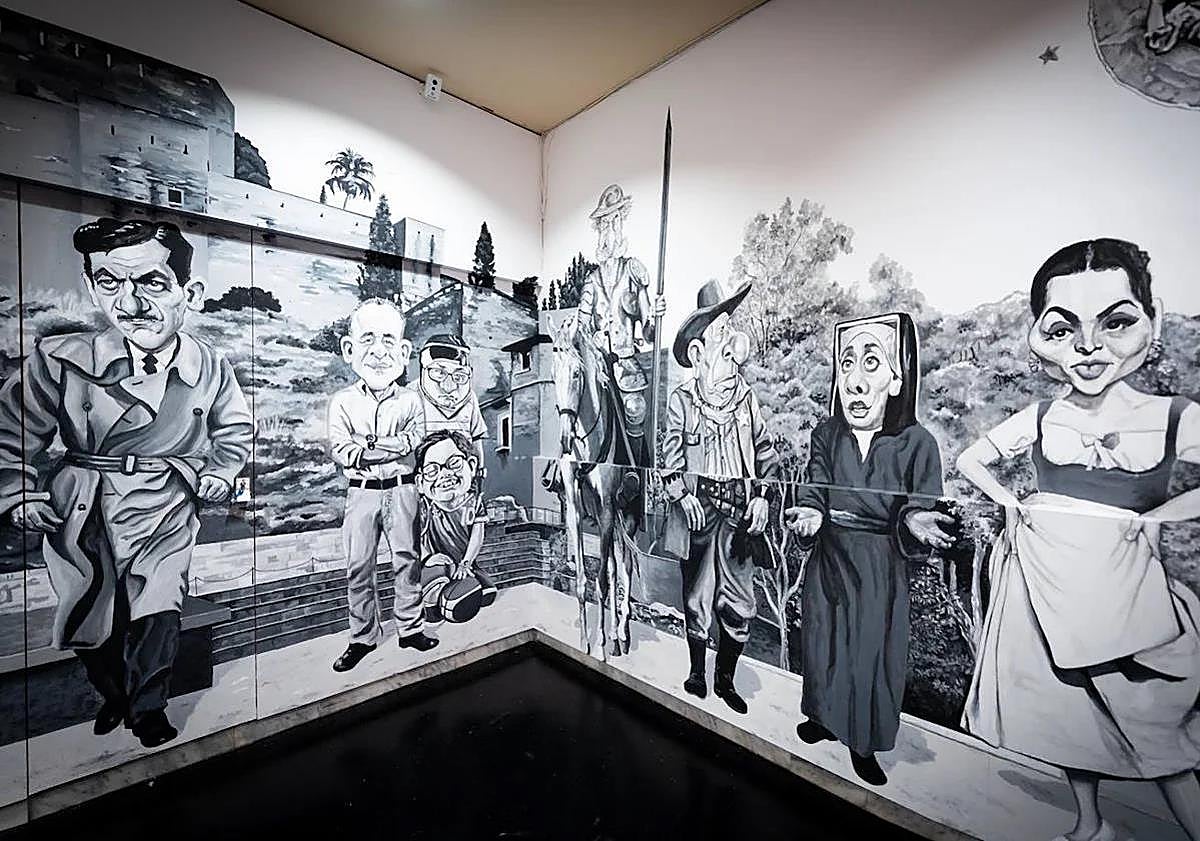
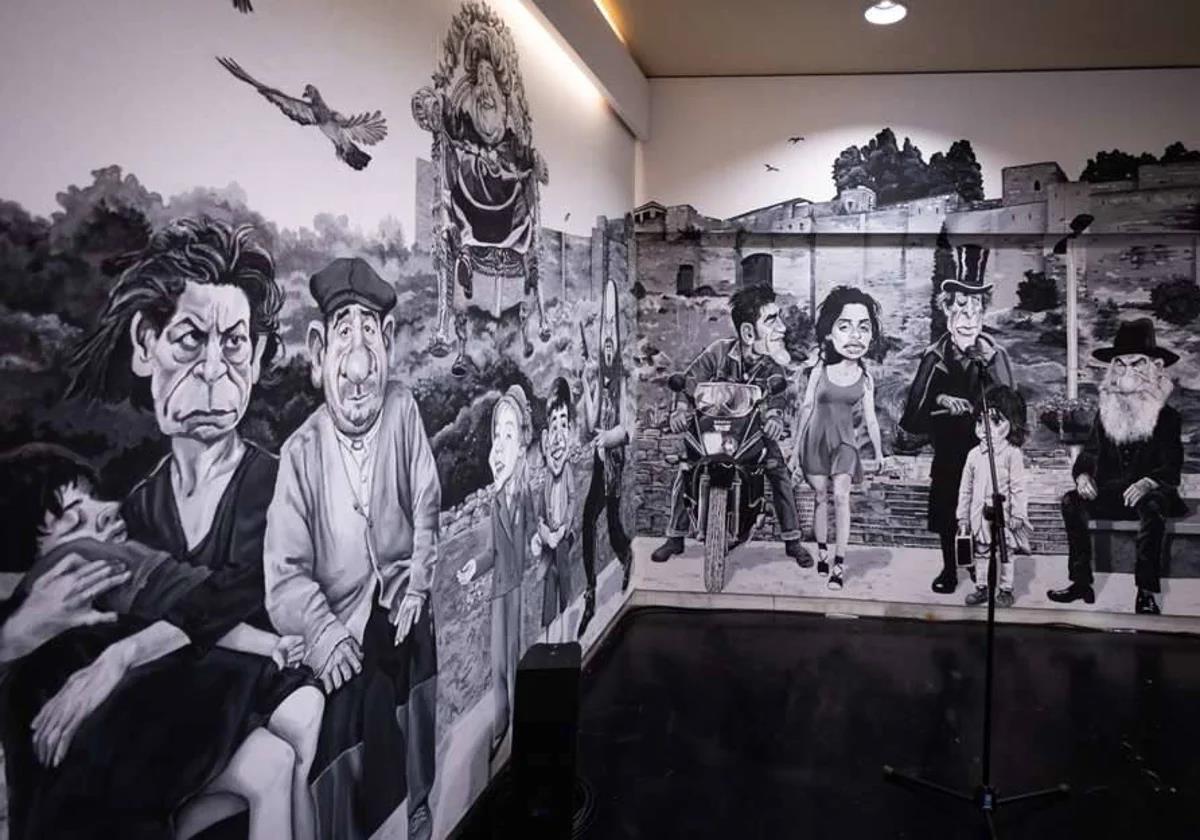
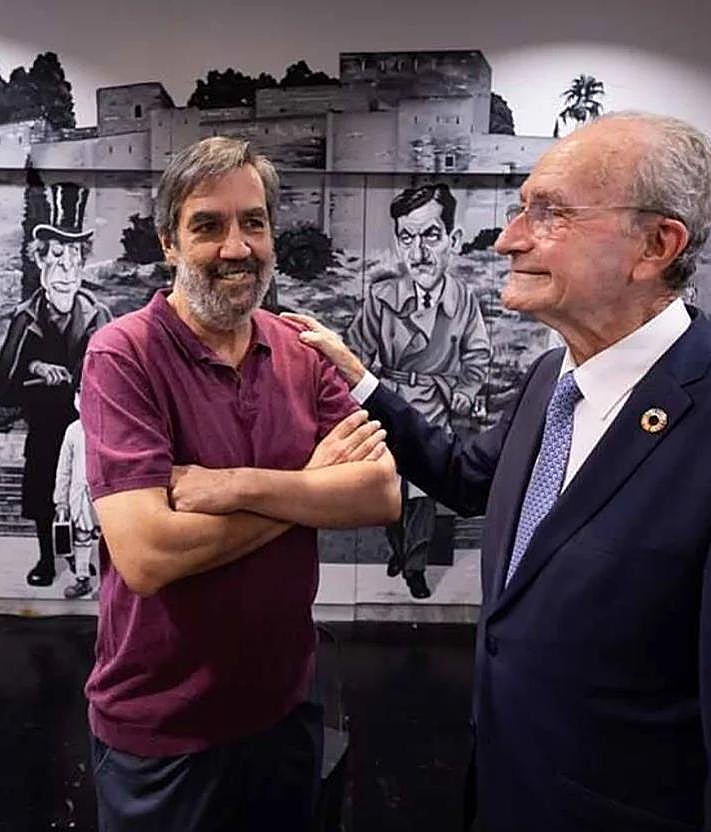
On Tuesday, Idígoras put the finishing touch to the mural in homage to Spanish cinema. As the artist himself said, this project is very different from the small tablet-size cartoons he makes every day and, moreover, "painting a wall is every child's dream". This is not his first mural - Idígoras has other similar projects in Malaga, dedicated to economics and the city's history.
When the artist offered to create a mural for Albéniz, Vigar immediately accepted it. The result of this agreement can be seen in the corner of the ground floor, at the entrance to hall 4, where the buffet used to be. Characters from 35 essential Spanish films welcome visitors.
65
characters star in this tribute to Spanish cinema, from silent films, with Viaje a Júpiter (1909) by Segundo de Chomón, to The 47 (2024) by Marcel Barrena.
The mural is a sentimental, fun and "magical" journey, as Malaga mayor Paco de la Torre said at the inauguration. Antonio Resines and Luis Ciges, in the iconic sidecar from Dawn Breaks, Which Is No Small Thing (José Luis Cuerda, 1989), welcome the visitor. They are followed by a formidable cast including the prisoner with the broken voice played by Luis Tosar in Cell 211 (2009), Paco Rabal in The Holy Innocents (1984), Javier Bardem and Penélope Cruz in Jamón, jamón (1992), coach Javier Gutiérrez and his Champions (2018), the inimitable 'sheriff' Pepe Isbert from the classic Welcome Mr Marshall (1953) and the terrified José Luis López Vázquez from The Telephone Box (1972), responsible for making many Spaniards stop phoning from the street.
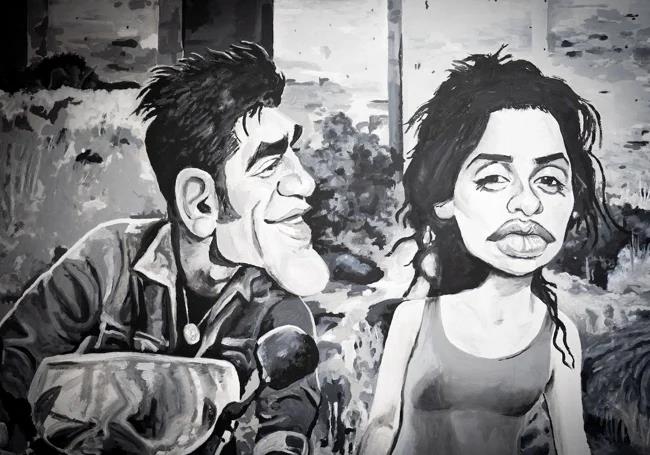
The imprint of Malaga actors can also be traced with the presence of Marisol and her Tómbola (1962), Rafaela Aparicio and her Mama Turns 100 (1979) and Manuel Bandera and Ángela Molina with their The Things of Love (1989), Pablito Calvo in Uncle Hyacynth (1956), as well as a series of small posters in which Idígoras has caught the tandem Antonio Banderas and Almodóvar, Adelfa Calvo and the latest Goya award winner, Salva Reina.
'Artists or troublemakers'
To celebrate this visual tribute to Spanish films, the Albéniz has also organised a special series that, in the coming November and December, will screen some of the classics portrayed by Idígoras. The programme includes Voyage to Nowhere (1986) by Fernando Fernán Gómez; Death of a Cyclist (1955) by Juan Antonio Bardem; The Tower of the Seven Hunchbacks (1944) by Edgar Neville; the once-banned The Crime of Cuenca (1980) by Pilar Miró; the essential comedy Robbery at Three O'Clock (1962) by José María Forqué; and the surreal Dawn Breaks, Which Is No Small Thing.
Idígoras' large family accompanied and helped him during the process
Idígoras shared the process with his children, Marta, Daniel and Pablo, and his wife, Sonia Codes, who have also actively collaborated in this great mural. Idígoras recalled that someone had once told him: "The Idígoras are either artists or troublemakers." They all turned out to be artists. As the cartoonist explained, his daughter Marta took over the characters' clothes, as she has mastered the shadows; Daniel drew the Alcazaba in the background and the dog that looks like it's coming out of the wall; Pablo drew the challenging hands; and Sonia handled "the most tiring task" - the large brushwork and the lettering on the posters.
At the inauguration, Idígoras said that the process had been a lot of fun for the whole family. Sometimes, people would see them through the window and send them air kisses and one passerby even went inside and applauded them. Another person brought them croissants.
With his usual spontaneity, he asked his children if there was anything else he needed to say and Daniel reminded him that they have another new mural project, this time in the El Palo district, where a residential association has commissioned them to draw the 12 most prominent locals. Idígoras mentioned that they do need funding, however, and that he will first need a little break before he jumps on another project.
![[]](http://static.vocstatic.com/voc26/latest/assets/images/favicon/surinenglish/apple-touch-icon-57x57.png)