
1 December, World Aids Day
'I have HIV patients who are 84 years old and have been infected for 35 years'
1 December is World Aids Day, raising awareness to a chronic disease that has benefited from many medical advances in both treatment and prevention
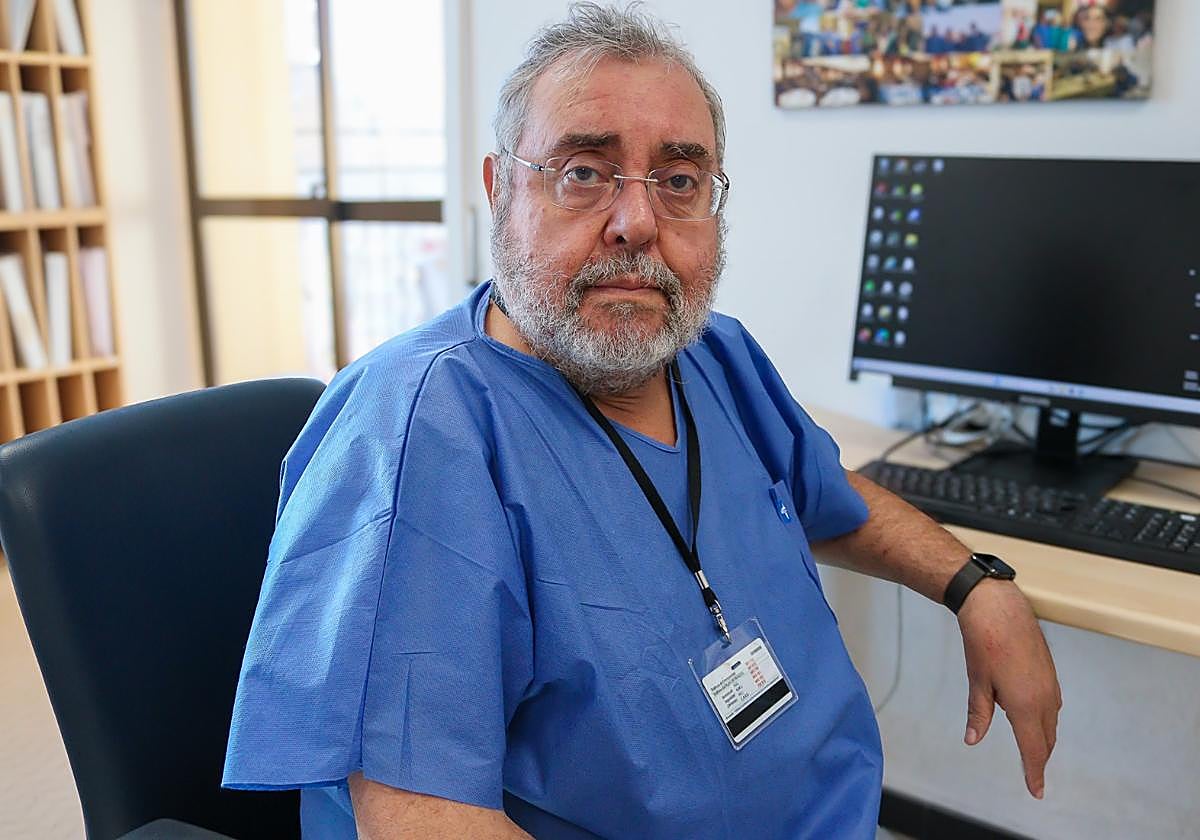

Manuel Castaño is a researcher, specialist in internal and family medicine, as well as in infectious diseases at Hospital Regional Universitario in Malaga. He has been working as an HIV and Aids consultant since 1988. On the occasion of World Aids Day, SUR spoke to Dr Castaño and got answers to some of the most common questions related to the disease in today's world.
-What is the current picture of HIV in Malaga?
-What we have is an infection that can be fairly well-controlled with medication and close monitoring of the patient. In addition, we are implementing a strategy of pre-exposure treatment for people at risk in order to reduce the transmission of the virus in our environment.
'The fear of Aids has completely gone. Nobody uses condoms'
-What trends can we trace nowadays?
-We have quite a few patients coming from other countries, from Latin America and Eastern Europe, mainly Ukraine. They are not newly diagnosed patients - they are simply new in our system due to migration, but they have an impact on the number of patients needing consultations in Spain. From the point of view of transmission, it's not that there are high peaks right now. The last incidence cut-off I think was below 6.5 per 100,000, which is quite good and we are neither better nor worse. The infection is quite well-controlled thanks to medication.
Older people and HIV
-Patients get older...
-Our patients are getting older and they, in fact, reach old age. I have 83- or 84-year-old patients in follow-up who have been infected for 30, 35 years. HIV poses no problem for them, none at all. What they do have are the usual comorbidities of other illnesses affecting older patients, which is another challenge that is emerging for this group.
-Does late diagnosis remain very high?
-Late diagnosis has been a problem for more than 15 years. Late diagnosis is effectively defined as a diagnosis that is made when the patient's immunity is already low. This poses problems from a personal, care, social and disease transmission point of view, because in a person who is diagnosed, treated and controlled, the viral load becomes undetectable and stops transmitting the virus.
- Why is late diagnosis still occurring?
-Well, because people don't really think about it. In the Carlos Haya and Clínico hospitals and in many other hospitals in Andalucía, a diagnostic protocol is implemented in the emergency department, which basically consists of the following: when someone arrives with a series of illnesses or processes that could lead to suspicion of HIV, a serology is requested, for which the patient's permission is sought beforehand. That's how they "hunt" for diagnoses. Efforts are being made to train primary care doctors and residents to keep this diagnosis in mind.
'If people go to their doctor to have their cholesterol checked, they should also have an HIV test'
-How many people with HIV are currently undiagnosed?
-Of those infected, 90-92% are diagnosed, and 8-10% are not. I take this opportunity to tell the general public that if you go to your GP for a cholesterol check, which is great for reducing your cardiovascular risk, you should also get an HIV test.
A person treated for HIV today has the same life expectancy as someone not infected, provided they are diagnosed and treated. If it is neither diagnosed nor treated, HIV is indeed a 100% fatal infection.
Future challenges in treatment
-How has treatment changed in recent years?
- It has changed a lot. The treatment we use today has nothing to do with the treatment that was used seven or eight years ago. Treatments today are very convenient and not toxic at all. Today, basically 80% of diagnosed cases can be controlled with just one pill a day. People take less medication than a person with hypertension, it's unbelievable. In addition, there is another medication that can be injected every two months to keep the infection under control.
Currently, our hospital is participating in a clinical trial with two combined drugs that are taken as one pill once a week. The tests have been running smoothly so far. In the future, we might be able to use other methods such as subcutaneous drug delivery, in some cases intravenous, which could be used every six months. These are all exciting advances.
The problem is that many of these treatments are very expensive, which is something health authorities will have to address and tackle. The same applies to pre-exposure prophylaxis, or PrEP, which is widely used and recommended for people engaging in high-risk sexual activity, as it is truly cost-effective and prevents HIV infection. More and more people at risk are taking PrEP under medical supervision without any problems. Nowadays, it is taken as a single daily pill of tenofovir and emtricitabine.
-Are people, especially the younger population, more relaxed and less prone to use protection?
-Yes, the fear of Aids has been completely lost. Nobody uses condoms. PrEP is used as if it were a chemical condom, so to speak, so other sexually transmitted infections are widely emerging. The habits of the young and the not so young have been relaxed for a long time. My older patients who are 65 or 60 years old, who got infected in the 80s or 90s and have seen their partners die one after the other, are shocked that people don't use condoms and that there is no fear of HIV transmission.
![[]](http://static.vocstatic.com/voc26/latest/assets/images/favicon/surinenglish/apple-touch-icon-57x57.png)