
Environment
A new initiative at Ardales: sowing the seeds - and more - to raise climate change awareness
Málaga Viva Lab: a provincial authority project to refurbish a former nursery in Ardales that aims to become the largest research centre in this field with training facilities, an experimental research area, an eco-innovation zone and a biodiversity garden with insect hotels
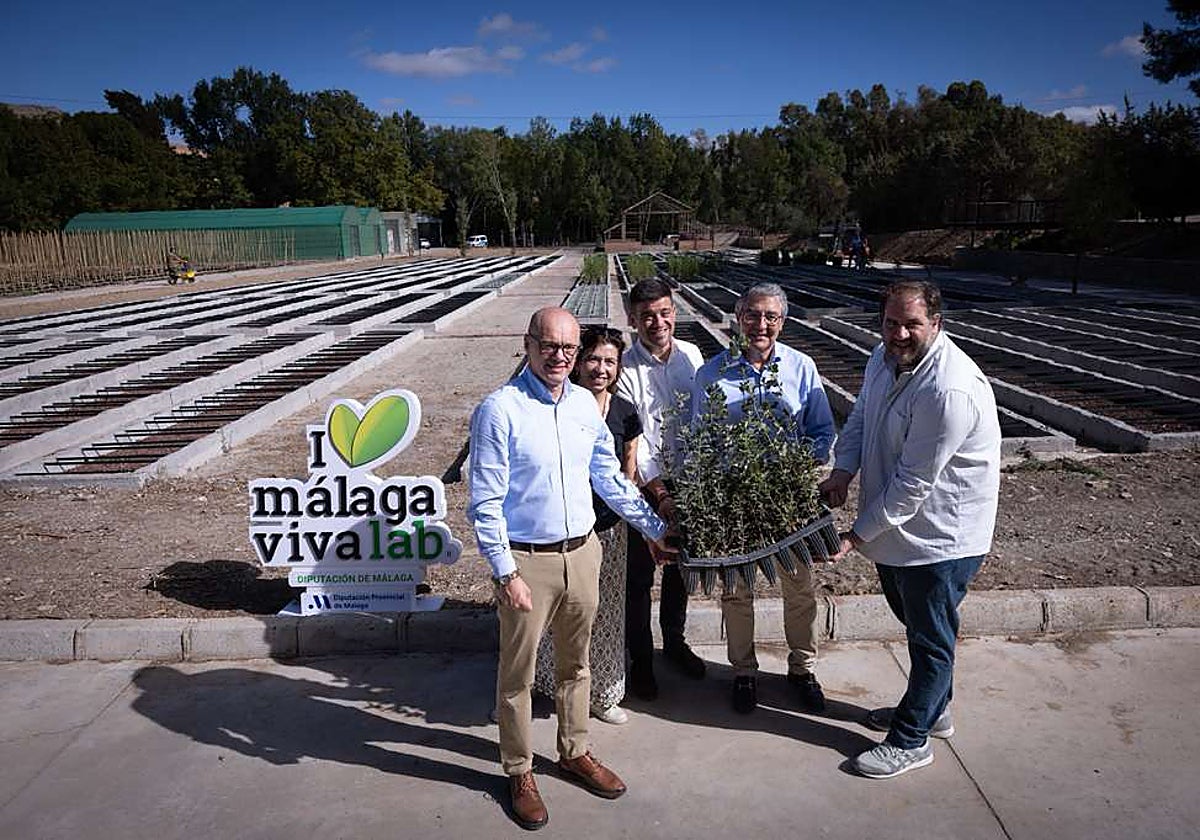

Ardales
For years, the former nursery at Ardales run by Icona (a national institute for nature conservation) and CHS (one of the public bodies that oversee water management planning in the region) remained abandoned and had pretty much been converted into a dumping site. The aim was to recover this space, located on a 25,000-square-metre plot next to the Turón river near the reservoirs, that, in 2004, passed into the hands of the regional government following the transfer of CHS's powers to the Junta. Malaga's provincial authority (the Diputación) and the Andalusian government then reached an agreement to cede the land to create a leading environmental centre in the fight against climate change. Thus is born Málaga Viva Lab, which aims to become a seedbed for raising awareness among the public, institutions and companies about the challenge of responding to variations in the state of the climate system.
The provincial authority's goal is for this site to become the largest climate change research centre in southern Spain. There is only one similar project in the country, located in Bilbao, but privately funded. This was all explained last Thursday by the Diputación's president Francisco Salado during a visit to the facilities by various representatives (environment and sustainability) from the provincial authority, the Junta and the mayor of Ardales.
The estimated budget is four million euros, of which 1.3 million euros have already been invested into adapting and refurbishing the site, including cleaning, maintenance, pruning, landscaping improvements, communications repairs, electrical installations and reconnections, lighting and other building projects.
The Málaga Viva Lab will lead the push on climate action in the Costa del Sol province through practical environmental education, sustainable innovation and local and international collaborations, as well as positioning itself as a benchmark for existing and emerging sustainable technologies and techniques.
To this end, it will have several spaces designated for specific purposes across the site. One of them will be the new provincial nursery, which will occupy almost a third of the total surface area. It will have the capacity to grow 2,500 tree specimens, 250,000 specimens of forest and woodland and 5,000 shrubs, focusing on the most suitable and effective species for the province's parks and forests and taking into acount current climate trends.
School visits start next academic year
The site will be open to school visits from next year onwards, with an exhibition area to include specialised educational elements on various topics related to climate, energy, healthy habits, biodiversity, waste and population movement. This area will be presided over by a climate clock that will show the time remaining to prevent the global temperature on the planet from rising by more than 1.5 degrees Celsius.
One of the spaces already completed is the refurbishment of the building that previously housed the workers' locker room and storage space. It has now been converted into an eco-sustainable facility with training and outreach rooms open to organisations working on climate change, including coworking and meeting areas. There will also be an eco-innovation area, an eco-barn and a multifunctional space for conferences and workshops.
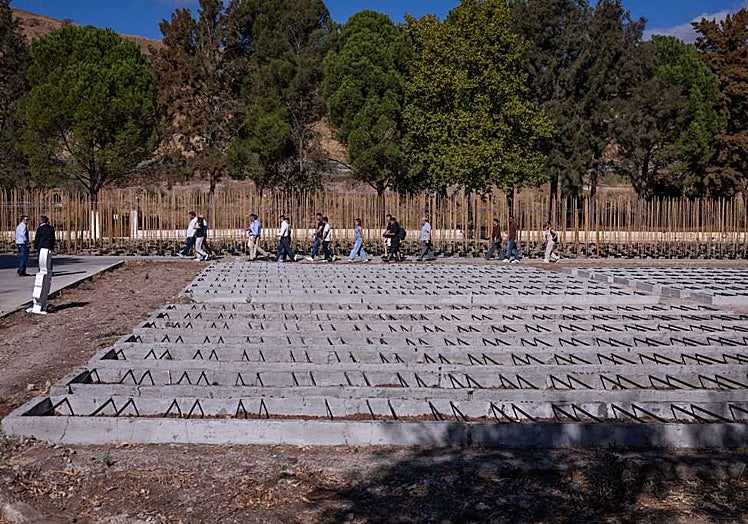
In terms of provision for research, the Málaga Viva Lab will feature an experimental area to learn how to respond to the climate emergency, an agrolab with veg garden where cultivation techniques will be developed to enable species to adapt to climate change and a seed bank of native plants that have proven to be the best adapted to the province's environment.
The last space set aside within the complex for a specific purpose is the biodiversity garden, featuring native wild flora and fauna. This will also be a recreational area for visitors to this educational space, with ponds for amphibian life, nesting boxes for birds and insect hotels.
Salado stresses that the centre will study how to mitigate the effects of desertification caused by heat in this part of Spain
Francisco Salado stressed that the research centre element within this facility will study how to mitigate the effects of desertification caused by heat, which is becoming increasingly prevalent in the province each year and is already having consequences, as is happening now with the death of pine trees. "That is why it is important to study which species can best adapt in our province to the evident increase in temperatures that we are experiencing," he stated.
Mayor of Ardales, Juan Alberto Naranjo, pointed out that, with this centre, Ardales once again becomes "a benchmark" at provincial and national levels in environmental matters and that the town "is fulfilling a dream" by recovering a space that is "part of our very being". Meanwhile, José Antonio Víquez (the Junta's environmental delegate for Malaga province) welcomed the launch of a centre that meets the objectives of combating climate change.
![[]](http://static.vocstatic.com/voc26/latest/assets/images/favicon/surinenglish/apple-touch-icon-57x57.png)