
Health
Cudeca launches new paediatric palliative care day unit on the Costa del Sol
The charity foundation has opened a much-needed facility with comprehensive and specialised treatments for the children and support for their families

The case of the Basque paediatrician who worked extra hours to look after children with palliative care, which came to light in May, has highlighted the need to restructure continuous care with more resources and professionals to be able to treat "complex cases" of terminally ill children.
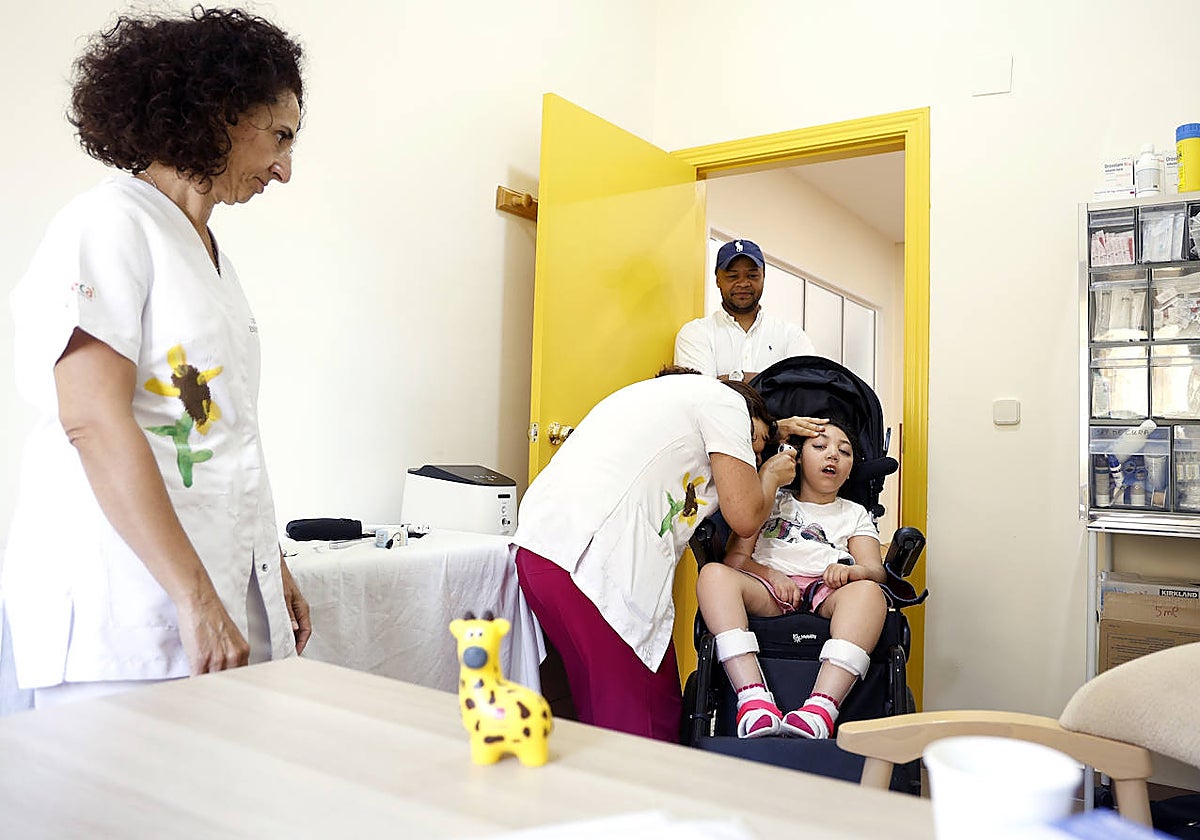
For years, the Cudeca Foundation on the Costa del Sol has been looking at ways to address this problem, which the public healthcare system does not cover. But now the association has managed to gather support to find a solution by setting up a paediatric palliative care day unit, in addition to the home follow-up they have been offering for years.
Today, the unit has around 20 paediatric palliative patients who arrive by referral from the Hospital Materno Infantil in Malaga city. A team of paediatricians, social workers, nurses, physiotherapists, psychologists and volunteers from the Cudeca Foundation are the driving force behind this initiative, which not only cares for the children, but also for their families with psychological, financial and medical advice throughout the care process and also during the grieving stage.
This free service is supported by grants and donations from private companies, charity shops and volunteers who collaborate with Fundación Cudeca so that it can continue the work it has been doing since 1992: offering professional palliative care totally free of charge to people with cancer and other advanced illnesses.
One of the main objectives
Cudeca Foundation's new paediatric palliative care day unit is colourfully decorated with décor that generates confidence in the children's visits. Paediatrician Ana Devesa talks to SUR to explain how this new space works. But, above all, to stress the importance of the fact that "at last" this service has been set up.
This Cudeca service improves child wellbeing and family rest with personalised therapies
"We feel that with this big step we are achieving Cudeca's goals. This is an idea that came up in 2023 because a social worker from the team, during one of her home visits, was treating a child who had a lot of insomnia problems; he could not relax despite trying different methods and medications. So we thought we could use the adapted bath which offers a relaxing bath while treating the child. We tried it one day and, indeed, that night the child slept. We realised that by creating this day unit we could alleviate many symptoms of children who needed it, in addition to offering comprehensive support to family members who requested it," recalls Dr Ana Devesa, who has been working at Fundación Cudeca since 2022.
At the same time as rehabilitative therapy is offered to the children, other professionals are available to any family member. It is not easy for parents to be the child's caregivers all day long; it also happens to siblings that they change roles, receive less attention or feel displaced. "We try to do our bit to make the family dynamics work better and as far as the child is concerned, we don't focus on how long he or she will live, but on how he or she will live and how he or she lives every day. That is the main objective of our day unit," the paediatrician points out.
Insufficient public resources
"These are children who have life-threatening illnesses, many of which have no curative treatment. They parents need to relax, have time for themselves, talk to the psychologist, disconnect or simply do an artistic activity or yoga that we offer thanks to the volunteers," explains Devesa.
Professionals denounce lack of public resources for paediatric palliative care in Malaga
This day unit currently offers its service from Monday to Friday, but its professionals believe that the health service should be covering the missing hours to complete the paediatric palliative care service. "Right now we have no support or resources to provide continuity at weekends and our colleagues at the Materno Infantil are doing their best, working 24-hour shifts or taking turns to provide care as best they can. But there are not enough resources for this and it ends up being a struggle in any province in the Andalucía region, not only in Malaga," Devesa points out.
"The care support of a palliative paediatrician is key to providing quality treatment and is still not specialised in Spain. That is why we are fighting so hard to give a voice to this service, which provides benefits that not just anyone can provide because the families who come here are accompanied 100% by an interdisciplinary team," Devesa and social worker Lorena Vanzini explain.
![[]](http://static.vocstatic.com/voc26/latest/assets/images/favicon/surinenglish/apple-touch-icon-57x57.png)