
Environment
Outrage in Torremolinos over town hall plan to 'remove' 14 large trees
Local residents have tried to stop the work despite the council making it clear it involves transplanting the trees elsewhere to make improvements to a road which has been affected by root growth
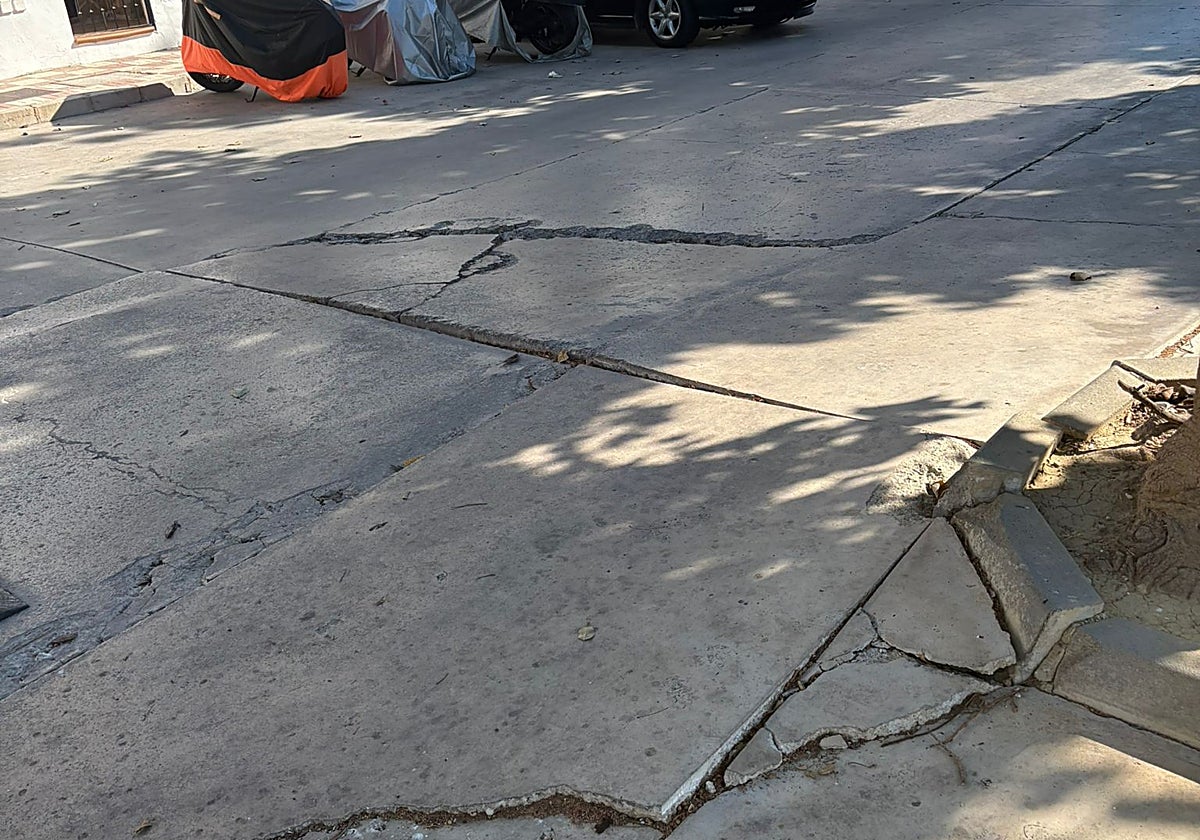
The residents of the La Colina district of Torremolinos have united to protest at the council’s decision to remove 14 large specimens of American sweetgum (Liquidambar styraciflua), weeping fig (Ficus macrocarpa) and southern magnolia (Magnolia grandiflora) trees, which, according to one resident, María, “have been providing shade on Calle Corelli all their lives. The improvement work on this road, included in the municipal resurfacing plan currently under way, foresees their removal or transplantation, as María points out. Fearing this might happen, she and other local residents began to mobilise and managed to collect 245 handwritten signatures, which, together with a written statement, were sent to the parks and gardens department and to the municipal groups.
"The renovation of the street is important and necessary. We want a renovated, safe and accessible road, but not at the cost of eliminating an irreplaceable green heritage," they say in the lengthy allegation addressed to the local administration. They argue, citing the World Health Organization (WHO), EU directives and ministerial and UN guidelines, that this will harm the area by immediately raising the ambient temperature. Although the local government stated its intention is to save these trees by relocating them, the residents claim the evidence clearly shows that this alternative will ultimately lead to their death.
In this respect, the town hall said that Calle Corelli is one of the largest interventions within the project being developed in the urban area, as it contemplates the repair of more than 3,000 square metres of road surface, with an estimated cost of between 80,000 and 100,000 euros: the trees and the repair of the pavement will amount to 35,000 euros, as detailed.
“I have a tree in my garden that I’m not allowed to touch — the council won’t let me — but they can. I don’t understand it,” says Daniel, another of the neighbours. He thinks that, as in La Alameda in Malaga, what should be done is to articulate solutions such as "shuttering" the roots, to limit their growth and, once this step has been taken, repair the street. As for the maintenance of this artery, he also claims that it has been conspicuous by its absence for years, without even being asphalted, as the road surface is made up of concrete slabs. He also recalls that this is not the first time that the trees in this part of Torremolinos have been threatened, since, as he points out, last year, some trees were felled next to the train tracks. This generated political controversy, when IU-Podemos denounced it, and even reported the felling to the Guardia Civil's nature protection service (Seprona).
"These trees are huge, necessary and create a lot of shade. This is where we park our cars and where our children play. There must be ways to save them. They are not damaging the pedestrian area. The pavement is completely straight. The street is slightly raised, however, certain mechanisms can be applied so that the roots grow in the opposite direction," local resident Anna insists.
The governing team, making it clear that felling has never been considered, explains that the presence of the trees has caused the road to lift and, consequently, poses a proven risk to traffic. They add that the work carried out to correct the situation has been unsuccessful, leaving only one viable option - “a severe pruning, which would merely delay their deterioration”. They also note that every step taken is based on prior analysis by professionals from the parks and gardens department.
Therefore, according to technical criteria, it is advisable to transplant them in an area where the growth of the specimens is optimal; one of the possible locations, they point out, is the Rocío Jurado park. In addition, municipal sources indicate that other trees would be planted in the street that are adapted to the environment and with a supervised evolution.
The council also points out that it has informed the neighbourhood of its intentions at all times, and a new meeting is planned to "gather all the sensitivities" and make a decision on the future of the trees.
Transplantation plan
As for the transplanting, the town hall announced that there is already a possible roadmap in place, "with full guarantees and in the hands of qualified personnel", which will be divided into three distinct phases. The first, pruning, to reduce the volume; this will be followed by the preparation of the root ball, to achieve a suitable state of the roots in order to achieve a correct maintenance of the water balance and good vegetation conditions and thus avoid damage. "The professionals will be especially careful with the protection of the bark of the trunk and branches, to avoid injuries from impacts of machinery," municipal sources indicate. The last step would be planting, with the hole perfectly levelled so that it is perpendicular to the ground, avoiding burying it more than it was before to avoid suffering in the root collar.
![[]](http://static.vocstatic.com/voc26/latest/assets/images/favicon/surinenglish/apple-touch-icon-57x57.png)