
Heritage
Benalmádena to invest 845,000 euros to make Roman salting factory accessible to visitors
The remains, part of a salting factory dating from between the 1st and 2nd centuries, were discovered more than 20 years ago

Benalmádena
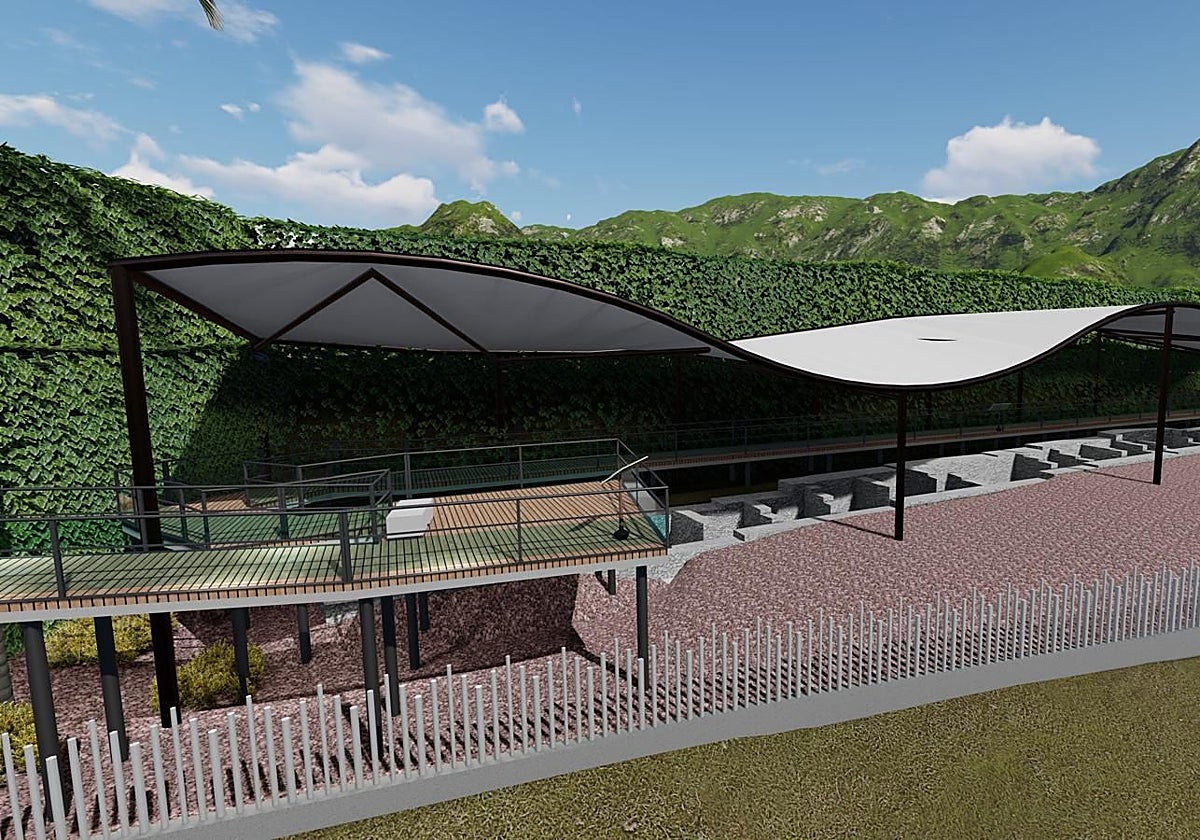
Benalmádena town hall has put out to tender the project concerning the recovery and improvement of the Torremuelle Roman salting factory remains to make them accessible to visitors. The regional Junta de Andalucía ministry of tourism will cover 255,000 euros of the 845,000-euro project, the ultimate aim of which is to open the site to public access from Calle Brújula.
In addition, the plan is to make the area inside walkable to allow visitors to get to know the industrial purposes of the site. Visitors will learn how the salted fish industry worked in Roman times. Information panels with historical recreations and text in Spanish and English will be placed along the path.
The salting factory remains were discovered in 2004, but they have not been properly maintained and protected for 20 years'
Fences and a canopy to provide protection from rainfall and shade from the sun will be installed. Lights will illuminate the site at night.
The Roman salting factory remains of Torremuelle were discovered in 2004, but they have been neglected for 20 years, as councillor for culture and historical heritage Jésica Trujillo said. She stated that the town hall is committed to preserving the historical value of these remains.
Brief history of the site
The Roman villa itself was discovered in the mid-20th century. Numerous remains of Roman buildings were found during construction work on the N-340 road, along with other structures related to an industrial installation based on the exploitation of marine resources.
In 1951, local delegate Juan Temboury highlighted the discovery of a vaulted structure next to the road. Unfortunately, all that remains of it are photographs.
That same year, a mosaic of white, black and red tesserae was found on a piece of land between the road and the beach. It is believed that it used to decorate one of the rooms in the town in the 3rd century. During the first few years after its discovery, it was left out in the open a few metres from the road, until the owner of the land gave it to the Royal Academy of Fine Arts of San Telmo. In 1957, the mosaic was removed, restored and installed in the Palacio de los Condes de Buenavista in Malaga. It is now kept in the Museo Provincial.
The structures of the Villa de Torremuelle were lost, buried under the road or destroyed with the widening of the N-340 and surrounding constructions
All these structures of the Villa de Torremuelle were lost many years ago, buried under the road or destroyed with the widening of the N-340 and surrounding constructions. It was not until 2004, when what seems to correspond to the industrial part of this villa was located. An entire industrial complex for sauces and fish preserves was discovered, consisting of 19 opus signinum-coated tanks, arranged in rows, with a total length of 50 metres.
These structures are located next to the watercourse of the Lagar stream, which would have provided the fresh water necessary for the salted fish factory. They were in use during the 1st and 2nd centuries, with a small cove that must have functioned as a dock, perhaps in relation to the transport of products produced in the town, such as garum and other products derived from fishing. It is precisely these structures related to the industrial area that are now being protected.
![[]](http://static.vocstatic.com/voc26/latest/assets/images/favicon/surinenglish/apple-touch-icon-57x57.png)