
History
The story of a grandmother who fled Malaga as Franco's troops entered wins national prize
Extremism is not good, and anyone who doesn't see it knows nothing about history," says the writer of the essay, Miguel Ángel Vertedor Alabarce

Rincón de la Victoria
A student from Malaga has won a national school competition 'Vivir, Sentir y Contar la Democracia: España en libertad. 50 años (experience, feel and tell the democracy: Spain in freedom. 50 years), organised by the Ministry of Education, Vocational Training and Sport, for the essay who wrote about based on his grandmother's tales about Spain's Civil War
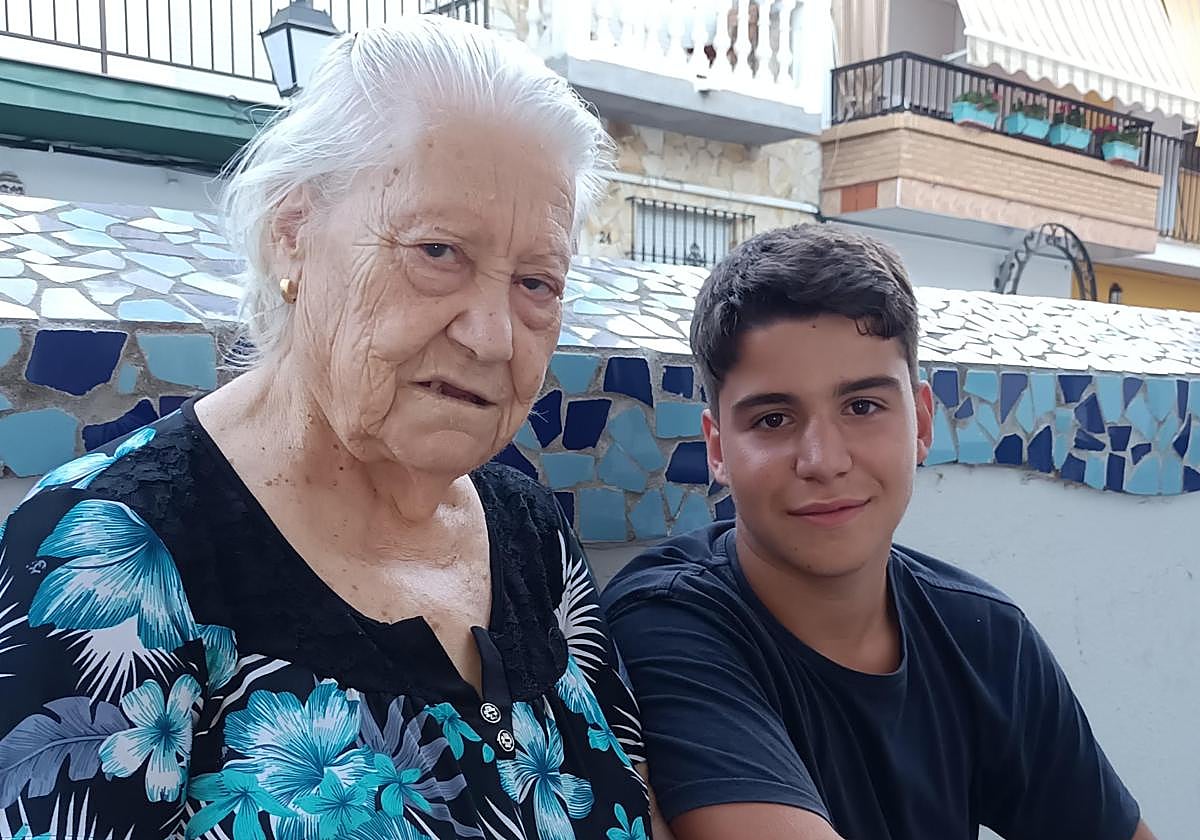
From his grandmother Lola's story, 19-year-old Miguel Ángel Vertedor Alabarce, who has just started a degree in History at the University of Malaga (UMA), wrote an essay during his final year at the Ben al Jatib secondary school in Rincón de la Victoria, which asks whether the dictatorship really ended with the death of its leader, Francisco Franco.
Lola was just a toddler when she and her mother left their home in La Cala del Moral on the eastern Costa del Sol as Franco's troops entered Malaga city in February 1937. They were just two of thousands of others who joined what is known as 'La Desbandá': the people who fled along the old N340 coastal road, hoping to reach the relative safety of Almeria during one of the Spanish Civil War's darkest episodes.
Lola remembers that they didn't stop until they reached Almería; they were some of the fortunate ones who made it that far. From there, the little girl ended up in Valencia, in barracks on Malvarrosa beach. It wasn't until many years later that she returned to her home in La Cala del Moral. Lola, now deceased, spoke of her experience many times to her grandson, who was 16 when Lola died.
Wanting to know more about his grandmother's story, Miguel Ángel continued to research and realised that Lola was one of the survivors of the Desbandá. In the Cantal tunnels in La Cala del Moral there are traces of the cannon fire that was aimed at the civilian population, huge holes in the stone that are proof of the disproportionate nature of the attack by German and Italian troops which were supporting Franco.
Spain's Official State Bulletin (BOE) published on 7 February 2025, marking the 88th anniversary of the tragedy, recognised the tunnels as a 'Place of Democratic Memory' of the exodus, persecution and massacre that took place between Malaga and Almeria.
"Oral testimonies are a very good way for microhistory to become History with capital letters," says Luis Delgado Mata, head of the Geography and History department of Ben al Jatib and Miguel Ángel's teacher, who guided him through the writing of his essay.
A taboo subject
"He makes a very intelligent reflection on the importance of knowing the past and of being aware of all the collective effort that Spanish society has made to build a democratic state," says Delgado Mata.
Another pillar of the essay brings to light testimonies which, in many families, have been hidden for decades, so much so that they have created gaps about what many of that generation did when they were young, as if they had no past.
"I think that the opportunity I have had for my grandmother to give me details about La Desbandá is an isolated case, since the Civil War has been a taboo subject for many people, a forced silence", says Miguel Ángel, convinced that this obscurity is contributing to the revival of some extreme political tendencies, supported, in many cases, by people his own age. "Extremism is not good, and anyone who doesn't see it knows nothing about history", insists Vertedor Alabarce.
"It is a source of pride that the history of the Desbandá in La Cala Del Moral has become a first national prize for essays and research. It is a forgotten subject that we have only recently begun to know about, but which has always been there, precisely in the family testimonies", says the mentor of the essay.
He says that Miguel Ángel is a "brilliant" student and predicts a great future with his passion for unravelling historical events. "In Andalucía we have public educational centres of extraordinary quality and professionals who strive to do the best we can with the resources available. This project is a good example."
Miguel Ángel says he plans to make the most of everything he learnt at his secondary school, with a very clear vocation: "My aim is to be a teacher, I wouldn't understand my life without history".
![[]](http://static.vocstatic.com/voc26/latest/assets/images/favicon/surinenglish/apple-touch-icon-57x57.png)