
Hiking in Malaga
An easy hiking route in Malaga province that takes you to a hidden sanctuary of the Virgin of Belén
This local path in Riogordo (SL-A-392), which is circular and of low difficulty, runs along two river courses

Riogordo
This circular path starts in Riogordo in the east of Malaga province and is currently approved by the Andalusian Mountaineering Federation as SL-A-392. It runs along the perimeter of the town centre, passing alongside the River de la Cueva and one of its tributaries, the Arroyo de las Morenas.
-
Route data
Area: Axarquía
Municipality: Riogordo
Difficulty level: Low. This route has some slopes, but they are short and not too steep. There are numerous signs and indications so that you don't get lost at any time.
Type of route: Circular
Approximate duration: 1 hour 45 minutes
Length: 5.5 kilometres.
Minimum altitude: 368 metres
Maximum altitude: 475 metres
Nearby places of interest: Riogordo ethnographic museum, Virgen de Gracia church, Virgen de Belén sanctuary and old mill, El Paso (Passion Play) ground and Los Olivos bridge.
-
How to get to the starting point
To begin this route, head for Riogordo and look for the end of the Paseo de Andalucía, where the Vera del Río park is located (near Los Olivos bridge). There you will see the sign describing this circular route. Try to park your vehicle in the area around the Paseo de Andalucía or Calle Real.
-
Route description
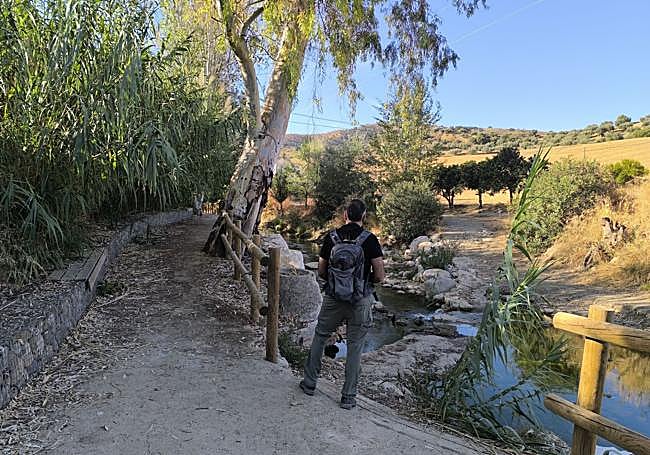
1Once you have located the starting point, you will have to go along Calle Galeote and then along Calle Salcedo to reach Calle Virgen de Belén, the road that leaves the town centre. Right there it joins the River de la Cueva along a riverside walkway that is quite shady for the first few metres. The riverbed will be on the right and you will walk along an asphalted, slightly descending path, for the first few metres.
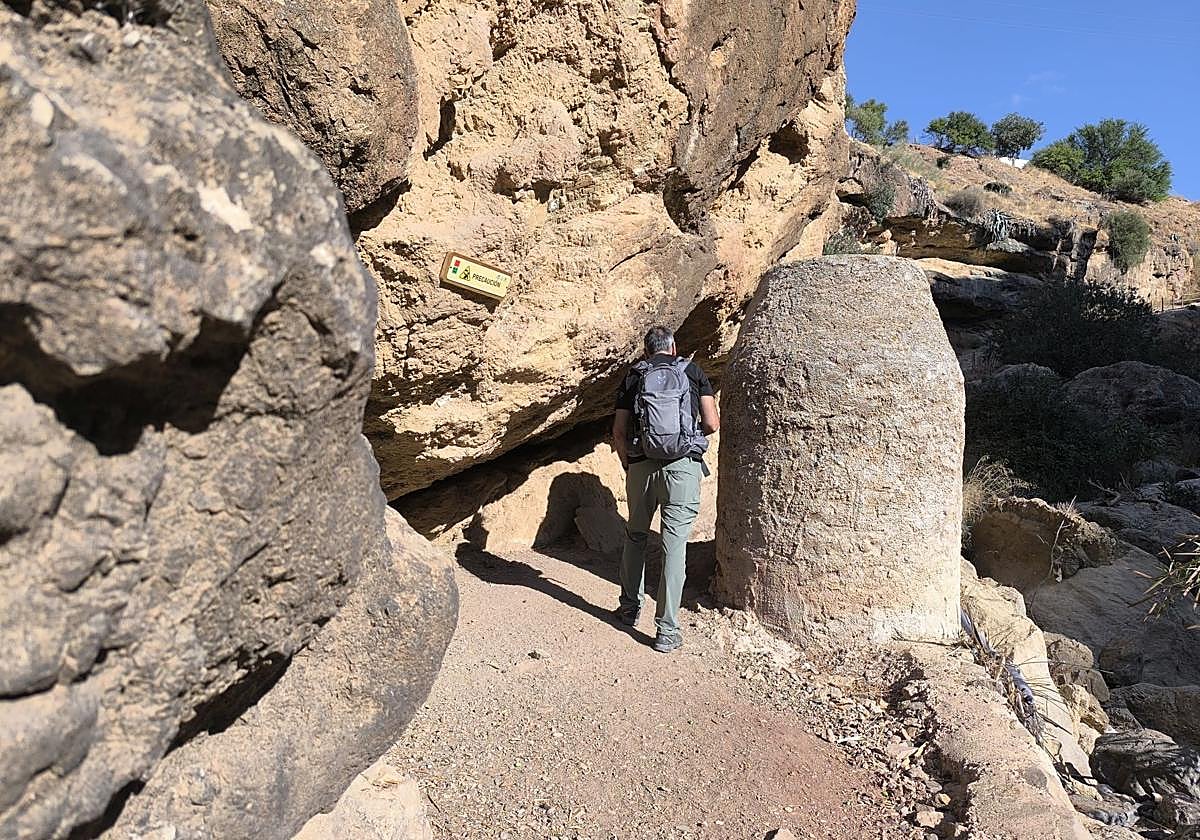
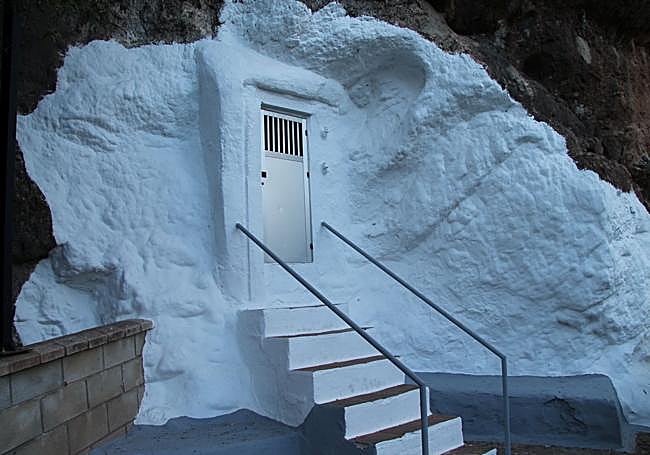
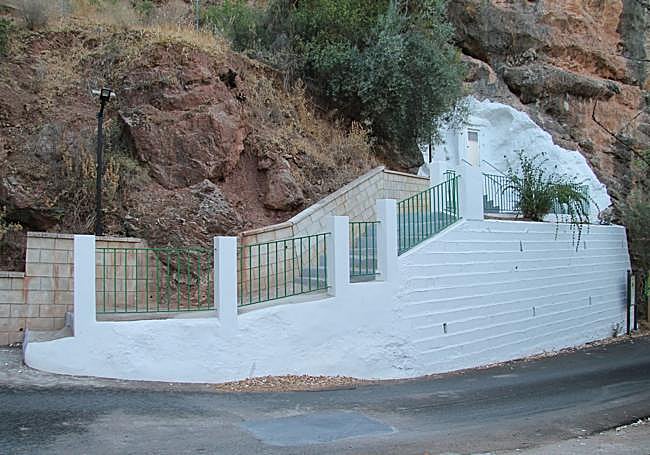
2A little more than a kilometre from the start of the walk you will reach one of the most emblematic places for the people of Riogorde, the Virgen de Belén sanctuary and the old mill of the same name. The former is known for having a painting of the Virgen de Belén, which, according to legend, appeared after a flood in 1907. The canvas was left among the rocks and is still there today, although it is difficult to see it, as it is protected by a gate and a metal net.
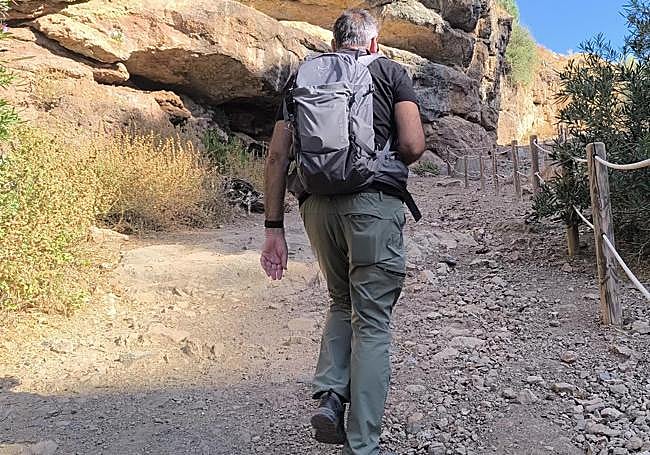
3From the sanctuary the path begins to ascend slightly, at the same time as it moves away from the River Cueva. It will continue to the right, but with a better perspective. You can see several vegetable patches that use water from the river for irrigation. Shortly after, the path makes a 180 degree turn to face northwards to a section where it joins a tributary of the River de la Cueva, the Arroyo de las Morenas. Here there is a steep uphill climb that brings the path back to the centre of Riogordo, but this time it reaches the eastern part of the village.
4After crossing a zebra crossing, the path continues along the perimeter of Riogordo. To do so, it will go up Calle Jorge Guillén and then Calle Rafael Alberti. At this point watch out for the bridge over the Morenas stream (on the right). From there, the path continues parallel to the river, but, in this case, it is on the left.
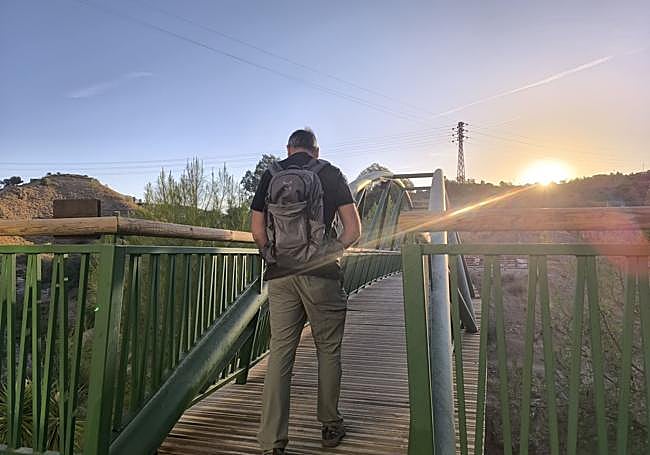
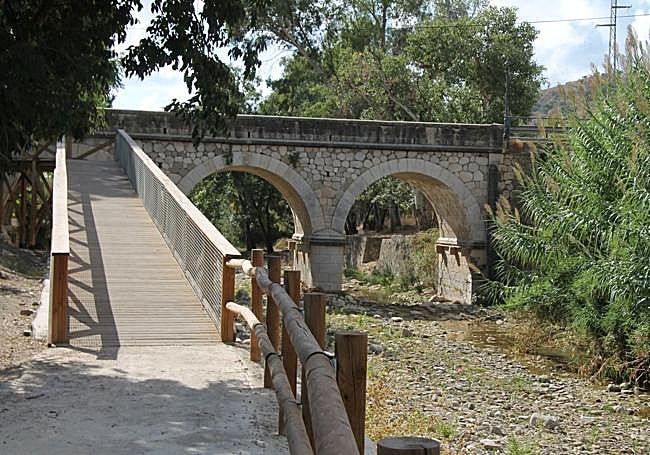
5From the olive oil cooperative turn left onto a wide track known as the Camino de los Baños de Vilo to reach the town centre from the north. Then take Calles Calvario and Blas Infante until you reach a roundabout where you have to take the Camino del Bujeo a few metres further on. At the beginning of this road, take a wooden footbridge on the left that goes back to La Cueva river. Here awaits one of the most pleasant parts of the route before reaching Los Olivos bridge. Once there, the only thing left to do is to climb a ramp to reach the starting point.
Flora and fauna
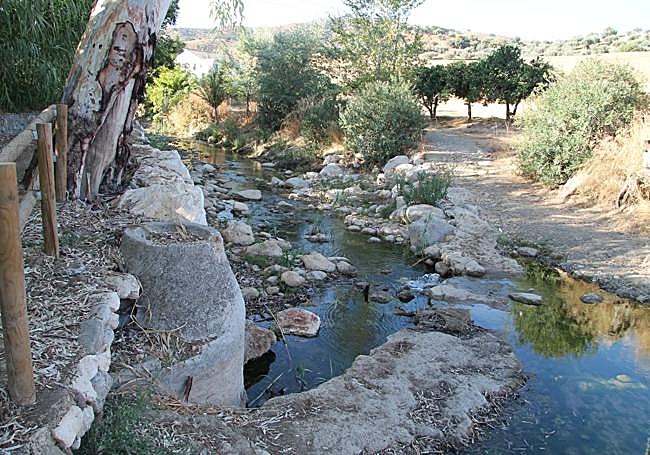
This route, which runs along the perimeter of Riogordo, offers a lot of biodiversity including birds of prey and rock birds. There is also a valuable ecosystem in the olive groves and on the banks of the Morenas stream and the Cueva river. You may see or hear frogs, hoopoes, kestrels, wheatears, foxes, wild boars and badgers, among others. As far as flora is concerned, in addition to the olive trees, there are wild olive trees, holm oaks, eucalyptus, almond trees and pines, among others, as well as different bushes and aromatic plants such as wild thyme, thyme and rosemary, among others.
![[]](http://static.vocstatic.com/voc26/latest/assets/images/favicon/surinenglish/apple-touch-icon-57x57.png)