
Employment
Almost 60% of Malaga province's unemployed are over 45 years of age
Experts state that the improvement in employment figures does not reach all people equally and, as well as affecting older people, it also has an impact on women in particular
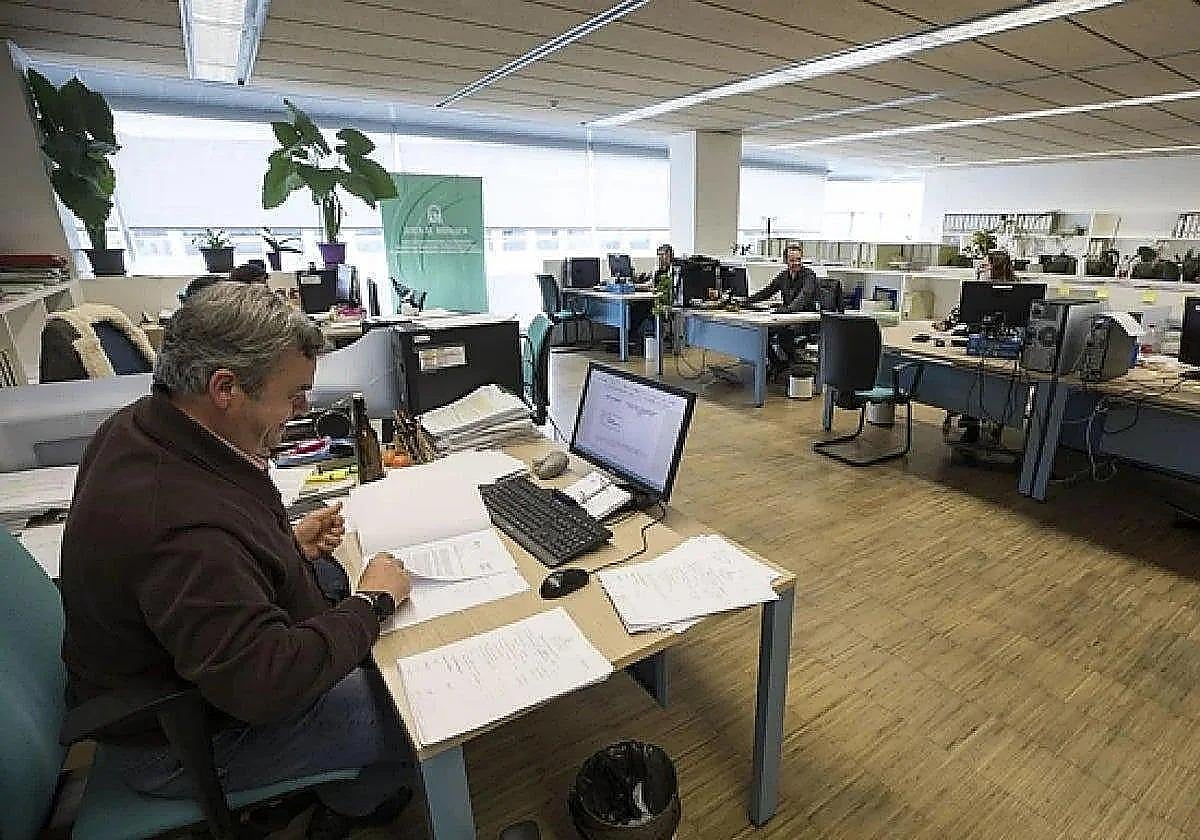

Unemployment is highest among older workers. And figures are rising among people over 45 years of age. According to the latest data from the Ministry of Labour, the number of unemployed people in Malaga province in November exceeded 110,800. Of these, 64,546, or just over 58%, are over 45 years of age.
This is not an exceptional occurrence in Malaga. Something similar is happening in Spain as a whole: of the total of 2.4 million unemployed in the country, 1.4 million have already reached the age of 45. The provinces in which the over-45s account for the highest percentage of unemployment are Las Palmas and Santa Cruz de Tenerife, where this age group exceeds 62%. Pontevedra, A Coruña, Alicante, La Rioja, Zamora and Asturias are also above 60%. At the other end, the only areas of the country where the over-45s account for fewer than half of the total number of unemployed are Ceuta and Melilla (around 45%), followed by Huesca, Granada, Navarra, Teruel, Jaén and Almeria, where the figure is around 50%.
To confirm that older people are more heavily represented among the unemployed, it is also necessary to measure their share of total employment. According to the Ministry of Inclusion, the average number of affiliated workers in November was over 743,000 in Malaga province, of which more than 367,000 are 45 or older, which means that they account for around half. Effectively, their weight is greater than their weight in the labour market (+10%).
'The decrease in unemployment is not uniform: it mostly affects people who have more difficulties entering the labour market, either because of age, education or both'
According to Fedea researcher Marcel Jansen, these figures are "relevant". "In the last few years, we have seen quite significant growth rates in employment and a reduction in unemployment. But the fall in unemployment is not uniform: as it occurs, it mostly affects people who have more difficulties entering the labour market, either because of their age, education or both," he says.
Malaga University Professor of Economics Alberto Montero brings the two issues together and concludes that perhaps what lies behind the higher unemployment rate among older adults is the obsolescence of their training - a phenomenon that, he predicts, will increase.
At the same time, Jansen confirms the existence of "ageism" in the Spanish labour market. "The older you get, the less likely you are to be called back" while applying. This aggravates the situation of older people, because the longer you are unemployed, the more difficult it is to get a job again: after one year of unemployment, the probability of finding a job drops by half, and then by another half after one more year. In short: after two years of unemployment, the chances of finding a job are only 25%. That is why older people are more likely to be unemployed and also to be long-term unemployed.
"The situation of older people in Spain is particularly bad because of institutions: public employment services focus on paying benefits, but they fail to actively support the unemployed and with older people you have to start working immediately," Jansen states.
Ageism and feminisation of unemployment
There is a widely spread phenomenon among the over 45s: women bear the greater weight of unemployment. In the province of Malaga, there are 67,124 unemployed women and 43,713 men. This means that women represent 60% of everybody registered in public employment offices. Among people over 45 years of age, women account for more than 40,000 while men barely exceed 24,500. This means that women account for more than 62% of the unemployment suffered by middle-aged individuals, up to the moment they retire.
72%
of the unemployed are within the service sector
In the province of Malaga: there are 80,144 unemployed in the service sector, out of a total of 110,351
The service sector accounts for 72% of all unemployment in the province of Malaga, with 80,681 out of the 110,837 unemployed in total. Among the over 45s, the services sector accounts for 60% of all unemployment: 48,053 of the 64,546 unemployed of this age group belong to this sector. It is also here that the gap between men and women is widest: women (32,709) are more than twice as likely to be unemployed as men (15,344).
Unemployment also has a higher incidence among women in the industry sector (1,707 compared to 1,414 unemployed men). The same equation applies to the unemployed without a previous job: among those over 45 years of age, there is a total of 4,510; while men barely exceed 900, there are 3,593 unemployed women, which can be attributed to the fact that many of them have to leave their careers to look after their children.
At the same time, there are two sectors where male unemployment is higher than female unemployment. The first is agriculture, where there are 810 unemployed men compared to 633 unemployed women. In second place is construction, where there are 4.3 times more unemployed men than women.
Youth unemployment
In the province of Malaga, those under 29 years of age account for 14.9% of the unemployed, as there are barely 16,500 of them. Practically the same is true for Spain as a whole, where the youngest people account for 15.2% of the total unemployed.
15%
young people among unemployment figures
same as their weight in the workforce
Do young people suffer less unemployment than would correspond to their weight in the labour market? There are 115,000 social security affiliates under the age of 29 in Malaga province, i.e. 15% of the total. Therefore, they have the same weight in unemployment as they do in the province's labour market. The least likely to be unemployed are those between the ages of 30 and 45: they make up 35% of the labour force in Malaga, while accounting for only 27% of the unemployed.
The 'prime' age
According to Marcel Jansen, this last generation (30-45 years) represents the usual 'prime age' - the age at which people are in the best working conditions. However, he points out that this is also the generation that has lived through three crises, which means they have had a bumpy entry into the labour market.
Jansen adds that the over-45s have had a good working life because they have been able to weather the major crises of recent years, given that they have generally had long service. However, if they become unemployed, they are the ones who find it most difficult to find a new job. To this, Alberto Montero adds other observations: there are companies that prefer to hire seniors rather than juniors because of the different attitude they have towards work (more committed to the company than juniors, who are more detached), although older people also tend to ask for higher salaries. Another point for analysis: the unemployment rate of young people is always, not only in Spain, but in Europe as a whole, higher than that of older people - up to twice the national average - although young people find it easier to get a job.
![[]](http://static.vocstatic.com/voc26/latest/assets/images/favicon/surinenglish/apple-touch-icon-57x57.png)