
Andalusian escapade
La Malahá: A therapeutic gem nestled in Granada's Alhama district
This historic town is ideal for nature lovers and boasts one of the oldest salt marshes in Andalucía
Tony Bryant
La Malahá
Granada is a popular destination for those looking for a different kind of escape away from the norms of the coastal towns due to its diverse terrain and its continental Mediterranean climate. Inland Granada has numerous delightful villages and towns, some of which are not easily accessed, but are worth the effort due to their individuality. Probably one of the lesser-known villages is La Malahá, located in the northeastern part of the district of Alhama, which is easily reached from Granada city centre in around 30 minutes by car.
La Malahá is a true gem, filled with picturesque and historic spots that captivate visitors, especially the breathtaking Mirador Tajo Las Palomas and its panoramic views. Another popular attraction is the Camino de la Malahá route which winds gracefully through olive groves, leading to the iconic Atalaya, or watchtower, an imposing structure of Arab origin that dates back to the 13th century and which has witnessed countless battles throughout the centuries.
This picturesque rural route is surrounded by imposing mountains and is ideal for nature lovers. The natural beauty of the area invites you to immerse yourself while enjoying a pleasant walk along its paths beside the old Roman bridge.
The village, with a population of under 2,000, is famed for its salt marshes, supplied by the Salado river, which have been exploited since the Roman era, while the Arabs later introduced a complex irrigation system.
Among the oldest salt marshes in Andalucía, they are unique due to the fact that the extraction of salt in inland areas is relatively rare as there is no sea water.
The salt extracted in Malahá remains completely pure and well preserved and visitors can purchase it directly on site from the Salinas de Malahá shop.
The salt flats are located in a peaceful and picturesque setting, perfect for enjoying a relaxing walk and connecting with nature.
Malahá's thermal waters, which Isabel García Lorca, sister of poet Federico García Lorca, described in her memoirs as "incredible, with an unbelievable temperature and transparency", have been used since ancient times.
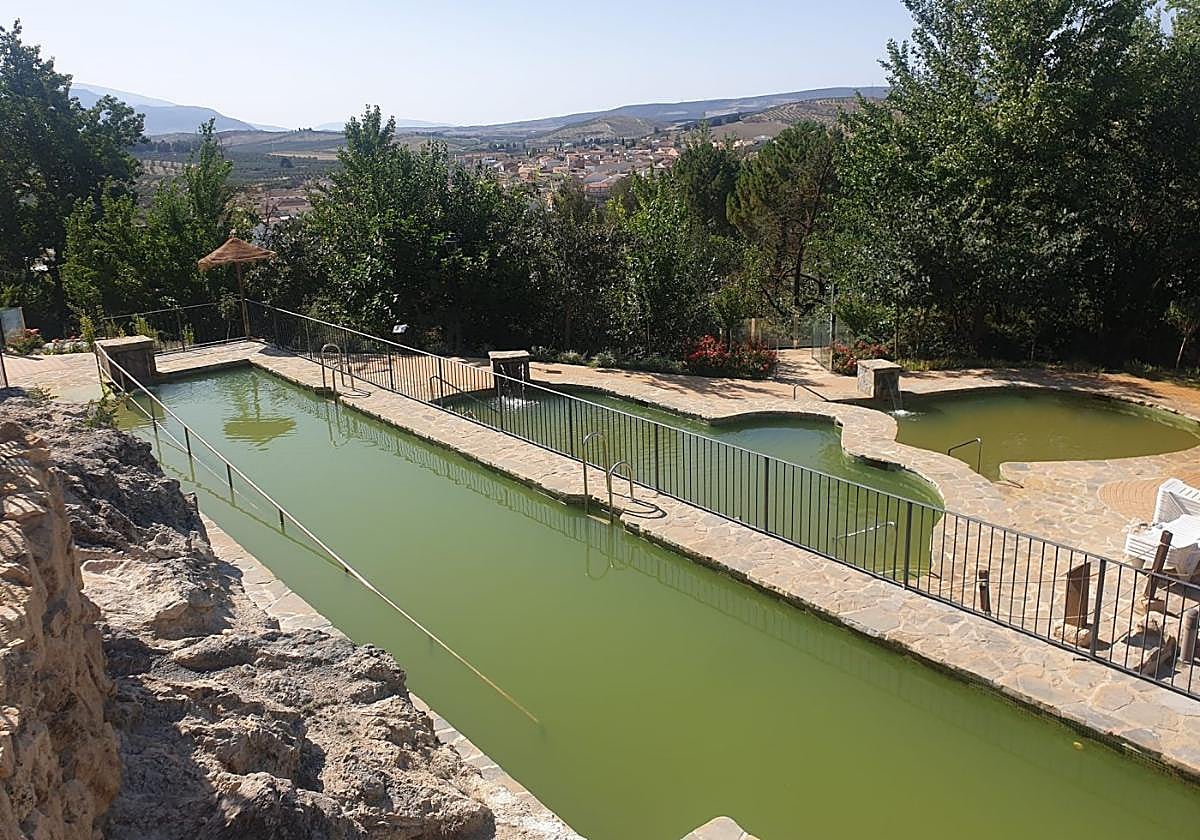
At the end of the 19th century, the spa featured numerous rooms housed in the same building as the thermal baths, along with a recreation and games area, a chapel and a garden. The spa was demolished due to decay in 1987, but today, one can visit a complex consisting of three thermal pools offering therapeutic benefits for nervous system and skin conditions, as well as ailments such as rheumatism. There are also two cold-water pools, gardens and a restaurant. The site, which opens Tuesday to Sunday between 11am and 8pm, features archaeological remains including a Roman pool, a Hammam vault (Turkish bath) and an Arab pool.
Mummy of San Vicente
However, La Malahá has more to offer than its natural beauty, as a trip into the delightful village centre will reveal. One of the strangest attractions can be found in La Capilla de San Vicente, located in a well-preserved manor house known as the saint's house, situated near the parish church.
The house, which also boasts a restaurant, has a small chapel with the mummified body of the Roman soldier, Saint Vincent, in typical attire decorated with golden embroidery. His right hand holds a sword and his left hand holds a feather, symbolising that he was a martyr. Next to the mummified body are a chalice and a Roman helmet.
Its origin has never been verified, but the most credible account of how the saint came to this village is that it was given to a wealthy local family who made a generous donation to the Vatican to help restore Saint Peter's Chapel.
![[]](http://static.vocstatic.com/voc26/latest/assets/images/favicon/surinenglish/apple-touch-icon-57x57.png)