
Green fingers
Recommended for your garden in the south of Spain: Jelly palm
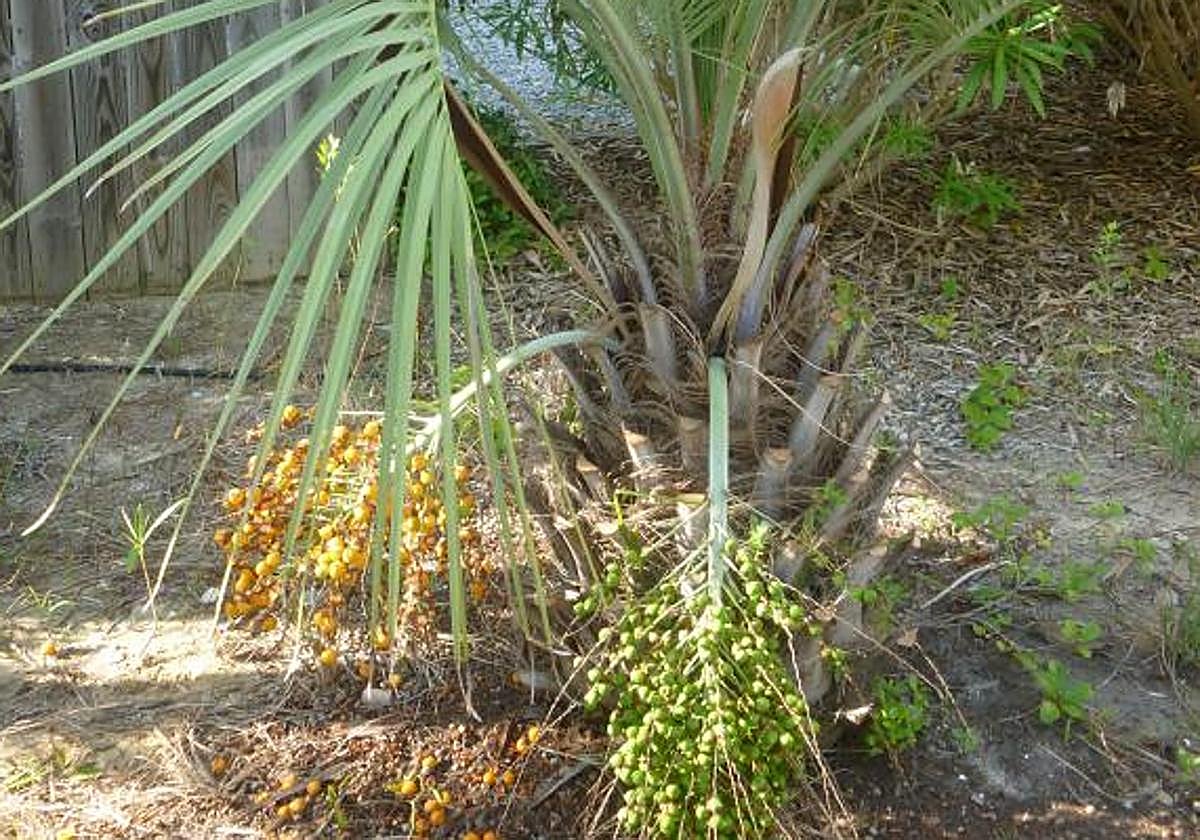
Butia capitata is an elegant tropical palm native to Brazil and Paraguay. They grow hard green fruits that can be fermented to make jams
Denise Bush
Malaga
Native from southern Brazil to Paraguay, Butia capitata is an elegant tropical palm with long, arching, grey-green fronds and a thick, sturdy trunk. In summer it has tiny racemes of yellow flowers on stems up to a metre long which develop into hard green fruits. They ripen to a yellow-orange and it is then that they can be eaten. It is said they taste like a cross between a pineapple and an apricot, and are very sweet and juicy. They have a high content of Beta carotene and Vitamin A. The central seed contains an edible oil similar to coconut oil.
Common names include pindo, yatay and jelly palm, the latter because the naturally high pectin content of the fruits lends itself to making jams and jellies. The fruits are also fermented to make wine.
Butia capitata, synonym odorata, loves hot, dry weather and full sun but will grow in partial shade. It hates to be waterlogged so shouldn't be watered until the top 10 centimetres of soil has dried out. Fully grown, and in ideal conditions, it can reach eight metres in height and can tolerate some cold but not frost.
For the best fruit and foliage production it is advisable that a specialised granular palm fertiliser is spread under the palm's canopy and watered in well.
Propagation is by seed although the hard casing will need splitting in a vice or nutcracker before planting and keeping warm and moist. Germination can take 18 months.
![[]](http://static.vocstatic.com/voc26/latest/assets/images/favicon/surinenglish/apple-touch-icon-57x57.png)