
Gardening
Recommended for your garden in the south of Spain: Cordia boissieri
A very ornamental bush or small tree that will resist extreme heat and some drought once established

Malaga
Cordia boissieri is native to Texas and Mexico, inhabiting dry prairies and scrubland, meadows and roadsides. It is extremely heat tolerant and once established, will survive periods of drought.
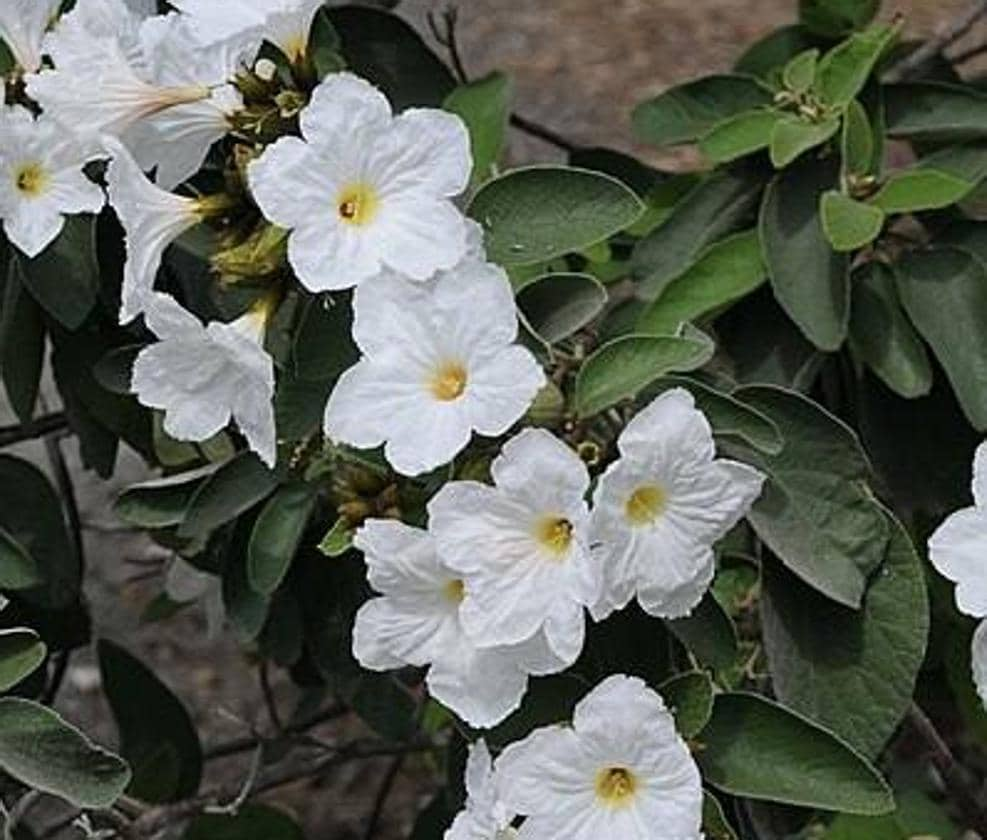
It is a very ornamental bush or small tree (up to eight metres), with fuzzy, dark-green leaves and white, trumpet-shaped blooms with yellow throats. The large, showy blooms, whose petals look very delicate like crushed tissue paper, are rich in nectar and attract lots of bees and butterflies. The main flowering period is from early spring to early summer but in mild climates, the Texas olive will flower all year.
It is evergreen but in cold winters it may lose some leaves and may even die-back. It will not withstand salt winds or waterlogged soil and a prolonged frost will certainly kill it.
In colder areas of southern Spain, the Texas olive can be grown in a large container and moved under cover during the winter. It can also be pruned during the cold months to keep it in good shape.
As the flowers fade, green drupes appear. Once ripe, they attract birds and mammals who feast on the sweet fruits, sometimes becoming intoxicated.
In Mexico the ripe fruits are made into a jelly and used to treat colds and coughs. The leaves are used to treat rheumatism and bronchial problems.
Propagation can be carried out by seed but a more successful method is to take semi-ripe or softwood cuttings in summer and root them in potting compost mixed with grit and kept in a warm spot.
![[]](http://static.vocstatic.com/voc26/latest/assets/images/favicon/surinenglish/apple-touch-icon-57x57.png)