
Hispanophile
The indomitable Hemingway who lived and breathed wild Spain
A century has passed since the American writer first arrived in Madrid and Pamplona, cities that left a deep impression in the writings of this Nobel prizewinner
Miguel Lorenci
Madrid
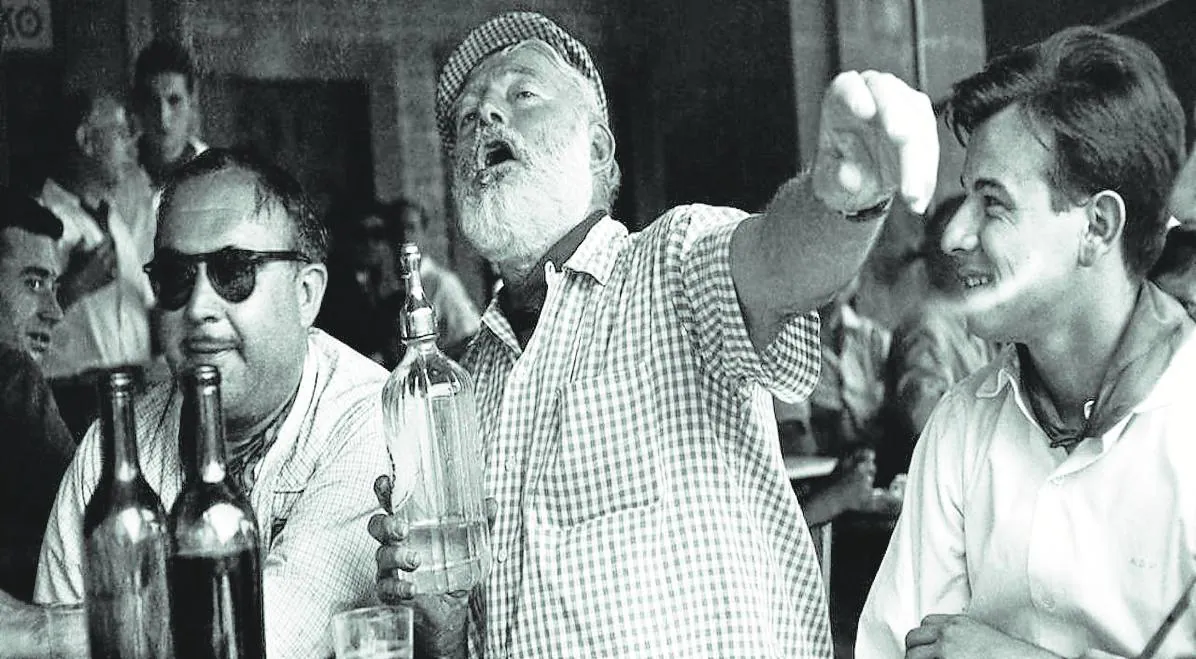
Gertrude Stein, writer, patron of Picasso and godmother to the Lost Generation, advised a young and indomitable Ernest Hemingway to visit Spain after World War I. The then journalist, and future winner of the Nobel Prize for Literature, had visited Algeciras in 1919. He landed in Vigo in 1921 as a passenger on the transatlantic ship, Leopoldina, from New York. In the spring of 1923 he arrived in Madrid and Pamplona and was captivated by a “genuine” country and its people. A land “wild, with bulls and drink” that, according to Stein, had not been “crushed” and in which the people lived “with a spontaneity that does not exist in the rest of Europe.”
This was the beginning of a relationship that is reflected in the writings of Hemingway, lover of a drink, the Prado Museum and bullfighting, in that order. Legions of tourists are still eager to follow in his footsteps, in particular in Pamplona and the Sanfermines, the festival that he made known around the world.
One hundred years have now passed since he first arrived in Madrid. He would visit Spain at least twenty times more and become regarded as almost Spanish. “I was not born in Spain, but that is not my fault,” said the winner of the 1954 Nobel Prize for Literature.
Bars and other hangouts
In Madrid, from June to November, the Soy de la Cuesta literary association is piloting initiatives, one being a gourmet route through the places frequented by Hemingway, such as the Chicote cocktail bar and the Cervecería Alemana (German Brewery). Also the Aguilar boarding house, Hemingway’s first accommodation in Madrid and where he was inspired to write his short story The Capital of the World. Hemingway fans still turn up at this establishment, number 32, Carrera de San Jerónimo, demanding room number seven, once occupied by Hemingway. Many also ask for room 201 in La Perla hotel in Pamplona.
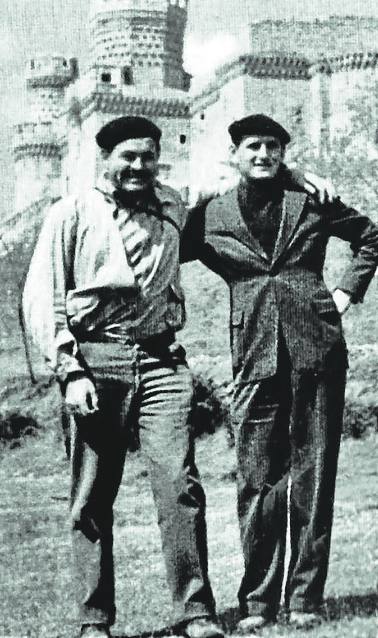
A great connoisseur of Hemingway’s adventures in Madrid is Ramón Buckley, son of Henry Buckley, a correspondent for the Daily Telegraph in Spain during the Spanish Civil War. Ramón fulfilled Hemingway’s wish and stayed in Spain and has developed his career as a scholar of Spanish and American literature.
Hemingway and Buckley Sr. met in 1936, when they were, like so many foreign correspondents in that time of war, staying at the Florida Hotel in Madrid’s Plaza de Callao, which was demolished in 1962. “My father told me that his North American colleague earned ten times more than any other foreign journalist, since he had an agreement for some of his stories to be published in about 40 different newspapers,” said Buckley Jr.
From the Florida hotel they would walk to the Telefónica building, a few hundred metres away, to submit their stories. “It’s a few minutes walk away, but they’d invest more than an hour getting there with stops at the bars,” said Buckley.
”Hemingway fell hopelessly in love with Spain. That obsession would make him return on numerous occasions. But he was outraged when people said that he came just for the bulls. His true love of Spain, apart from the drinking, was the Prado Museum”, stressed Buckley Jr.
The Cervecería Alemana in Plaza de Santa Ana, and Chicote, on Gran Vía, were two of the places he frequented in a Madrid mercilessly bombed by the Nationalists. “In Chicote Hemingway set his best short story, The Denunciation, which tells of a waiter suspected of betraying some colleagues who were then shot,” said Buckley.
“He was a hard drinker, very temperamental and very grumpy,” he said of the corpulent American writer, who once smashed a table at the Cervecería Alemana. In the Battle of the Ebro, several foreign journalists tried to cross the mighty river to interview Enrique Líster, stationed in the republican army’s positions. Franco’s planes bombed their boat, which began to sink. Hemingway shoved the boatman aside, grabbed the oars, and managed to get them across the river.
A silent pact with Franco
In 1956 Hemingway, committed to the Republican cause and already the winner of the Nobel prize, was able to return to Spain. Buckley is convinced that “there was some negotiation” with Franco for him to be able to return.
The 100 years of Hemingway in Spain programme is part of the Cultuletras Festival organised by Madrid’s Literary quarter. In addition to the gourmet route of dishes inspired by the writer, it includes the Bulls and Letters meeting in which writers and journalists talk about bullfighting and literature. Also the literary route For Whom the Bell Tolls, which covers the many scenes from the Sierra del Guadarrama that appear in the iconic novel set in the war.
![[]](http://static.vocstatic.com/voc26/latest/assets/images/favicon/surinenglish/apple-touch-icon-57x57.png)