
Foreign influencers in southern Spain
Miss Whitney: An artist who left her mark in Andalucía
Gertrude Vanderbilt Whitney was an art patron, collector and sculptor; she created monuments and shattered patriarchal foundations
Alekk M. Saanders
Huelva
She was born 150 years ago, at a time when women were not supposed to be artists. Gertrude Vanderbilt Whitney had to fight stereotypes and go against the grain in order to achieve her ambitions. Being rich, she cared about the poor. Being American, she loved Europe, which inspired her to devote herself to sculpture.
By doing what she dreamed of and wanted, she inspired other women to be bold in pursuing their ambitions. Gertrude Vanderbilt Whitney is someone who can definitely be considered an influencer.
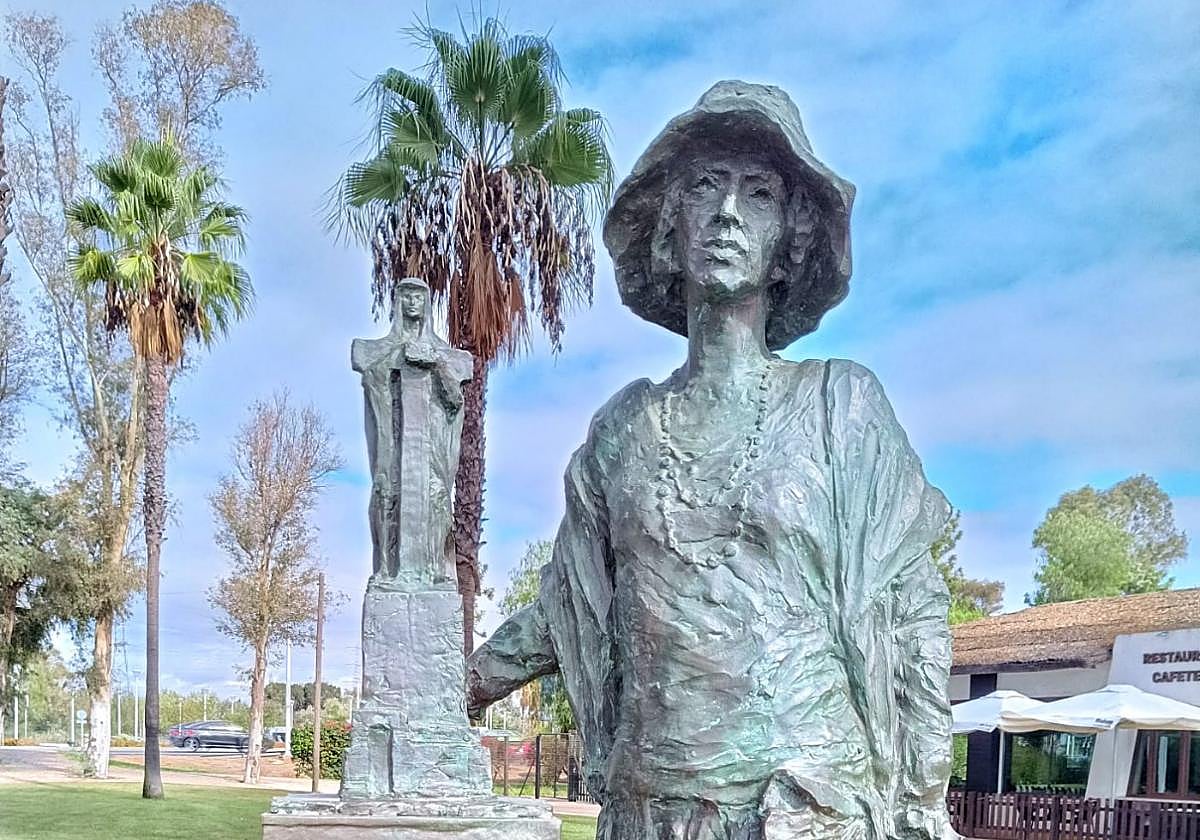
In 1929, a monument to Christopher Columbus was erected in the city of Huelva. The giant commemorative sculpture is dedicated to the sailors who, with their faith and perseverance, helped the discoverer of America successfully complete his epic journey. The project was designed by American sculptor Gertrude Vanderbilt Whitney, better known in Huelva as Miss Whitney. This year, a 1.80-metre bronze statue of Miss Whitney, alongside a sketch of the Columbus monument, appeared next to her masterpiece to mark the 150th anniversary of the American sculptor's birth.
Miss Whitney (as she is better known in Huelva) was born on 9 January 1875 in New York. From an early age she was interested in drawing and painting and wanted to become a professional artist. In the USA, this was practically unacceptable. Her artistic ambitions took her to Europe but she later returned to study at the Art Students League of New York.
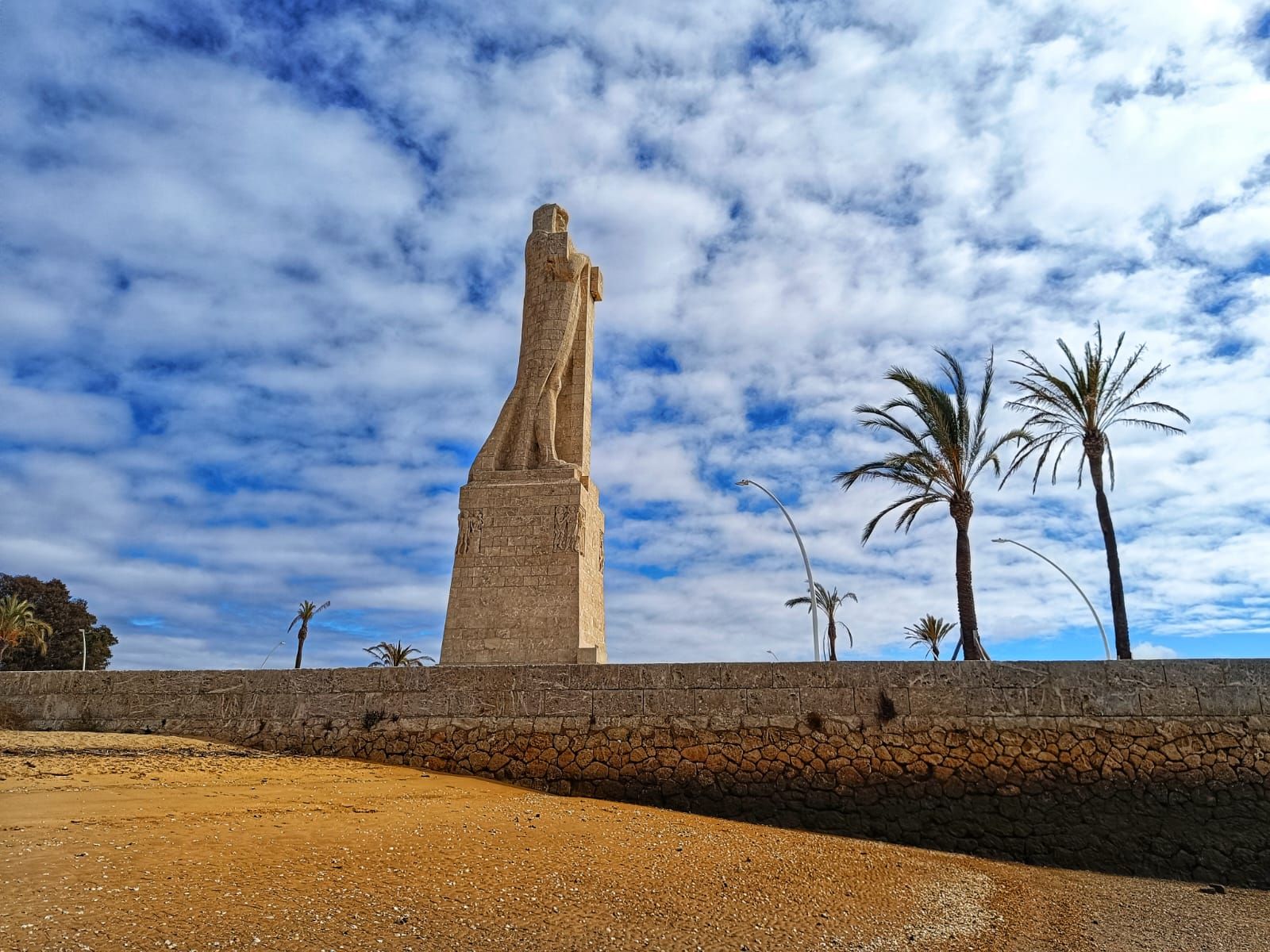
Even as a professional, Gertrude Whitney had to fight to be taken seriously as a woman artist. A life-size male nude figure made of plaster was her first public commission as well as first success and recognition. Called Aspiration, it was selected for the 1901 Pan-American Exhibition. Over time, Miss Whitney gained fame and respect. In the second half of the 1920s, the Columbus Memorial Foundation of New York, which decided to commission and finance a monument to Columbus in Huelva, chose a statue designed by Whitney. This marked her first experiment with a new, abstract style and allowed her to further build her international reputation. Whitney arrived in Huelva in March 1929 to supervise the final stones being laid on the Columbus monument. Incidentally it is reported that during her stay, she lived in a modest rented room at the back of a noisy local restaurant
The 37-metre monument, also known as the Monumento a la Fe Descubridora, erected on Punta del Sebo, was officially unveiled on 21 April 1929 in the presence of Prime Minister Miguel Primo de Rivera and US Ambassador Ogden H. Hammond.
This year, Miss Whitney herself was immortalised in bronze in Huelva. At the ceremony, attended by her great-granddaughter, the president of the Port of Huelva, Alberto Santana, said, “With the unveiling of this sculpture by the Port of Huelva, we are paying a well-deserved tribute to a courageous woman, committed to art and ahead of her time.”
The mayor of Huelva, Pilar Miranda, stated that Miss Whitney's presence and work “were a true feminist revolution in Huelva in 1929".
In addition to the monument, Whitney, who died in 1942, was named an 'adopted daughter' of Huelva and one of the city's main streets bears her name.
![[]](http://static.vocstatic.com/voc26/latest/assets/images/favicon/surinenglish/apple-touch-icon-57x57.png)