
Health
Spotlight on alopecia: revealing those bald patches and more
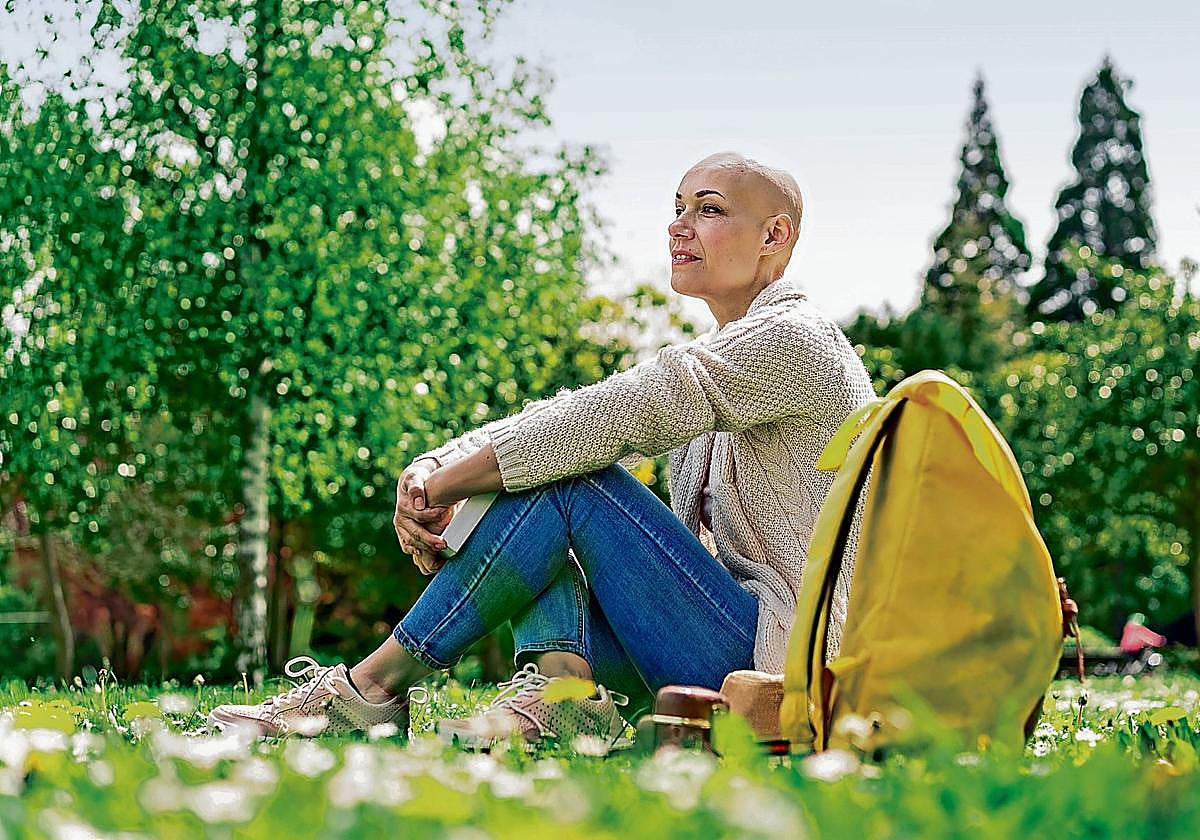
The fear of rejection: 30% of alopecia cases diagnosed in Spain are women, so actresses and models are helping to raise awareness of this problem
Izaskun Errazti
Iris Apfel, the late American interior designer and fashion icon, will also go down in history for her witty sayings: "With good hair and good shoes you can get away with anything," something that wouldn't go down well with the growing number of women suffering from alopecia. there's some consolation in another Apfel saying: "Being different is not something to hide, but to celebrate and embrace."
Dora Gálvez from Seville took 3.5 years to accept how hair loss has marked her, but she now faces life boldly bald. She has left behind "the fear, the uncertainty" and even "the rejection" she had to endure for being bald. Her best therapy? Her daughter and writing the book, 'Las Calvas Existimos' (bald women exist).
Spain is a country of baldness, only second to the Czech Republic. Nearly 50 per cent of Spain's population suffers from alopecia with 90 per cent of them being 'androgenic' (common baldness). Androgenic alopecia also affects women: up to 20 per cent by the age of 50 and around 42 per cent from 60-plus.
A growing problem apparently, or perhaps it is becoming "more visible", says Marta Ballestero, a dermatologist at IMQ (private healthcare provider) and hair treatment expert.
Some celebrities have also gone public on alopecia: models Naomi Campbell and Irina Shayk, actresses Kristen Stewart and Lydia Bosch, Princess Caroline of Monaco, singer Lady Gaga and Will Smith's wife Jada Pinkett. However, Gálvez notes that "the social issues" connected with this disorder "are still very heavy".
Female alopecia is primarily hormonal in origin and worsened by changes caused by menopause and postpartum, when hair can weaken and fall out in patches. "During Covid-19, we also observed intense, alarming and early hair loss," says Ballestero.
Stress can hide behind nervous alopecia. Another possibility: "a poor diet that creates an imbalance in our macrobiota, or certain medical treatments" can affect hair health to the point of causing hair loss, as can constant tension in hairstyles, dyes and extensions. Such cases require a multidisciplinary approach, noting that, for many, baldness is temporary.
The experts have solutions: "The good news is that we can recover hair by correcting the causes of loss and lengthening the growth phase with medications such as minoxidil, platelet-rich plasma (PRP) and/or microneedling with sulphur-containing amino acids, vitamins that improve metabolism and plant growth factors that stimulate hair bulb regrowth."
A land of bald people: Spain comes second only to the Czech Republic for the high quantity of alopecia sufferers - nearly half the population
The incidence in women of frontal fibrosing alopecia, "the third most prevalent", has increased in recent years. Clinically, it is characterised by a receding hairline, frequently accompanied by loss of eyebrows. "It must be treated early to prevent progression," says Ballestero. Treatments include anti-inflammatory drugs (typically corticoids, immunomodulators, minoxidil, anti-androgens).
The 'bogeyman' of all alopecias is alopecia areata, affecting a "not insignificant" two per cent of the population, mainly children and young adults, with its causes still uncertain.
"It's an autoimmune disease with a genetic basis," explains Marta Ballestero, "meaning it appears more frequently if a family member is affected and it's our own immune system that reacts against the hair root, causing inflammation and subsequent acute and alarming shedding."
It can manifest itself in one or several circular patches, either across the scalp or all over the body. It wreaks havoc and Dora Gálvez vouches for this.
"I was disappearing"
"You see your hair falling out, then your eyebrows, your eyelashes... And you go to the doctor, to professionals, and nobody gives you a reason why," she recalls. "And I considered myself a strong woman," ... "I loved my hair, well, it was hair... But I was surprised to find it completely knocked me down. I hated myself. I couldn't look at myself in the mirror, it disgusted me tremendously. I felt like I was disappearing." So she gave in to social pressure and ended up hiding behind a wig that made her feel "disguised".
Dora struggled to cope, but her training as a coach and educator in gender equality helped her. Fact: widespread alopecia often causes serious psychological disorders in sufferers, especially women.
"Alopecia causes a significant emotional impact on the patient. It generates a lot of anxiety and anguish from not knowing how their treatment will progress. Sadness and low self-esteem are the main repercussions of this disorder because the patient doesn't recognise herself and because losing something as characteristic of a person as their hair is practically a grieving process they have to endure alone," says Dr Vanesa Fernández, a psychologist from Madrid's Complutense University (UCM), who is receiving "increasingly more patients".
Alopecia areata: an immunological problem in which our defence system makes a mistake and attacks the hair root
What's the psychologist's role in such cases? Fernández explains: the specialist helps the patient identify "which emotions may be involved in the origin of the alopecia and manage the associated emotional discomfort, because, if left untreated, it can hinder recovery. We help them accept their situation, focus on the present, without asking them to resign themselves, rather preparing them to accept what is there and learn to work from there. It's about giving them tools to overcome the insecurity that is causing the alopecia."
Trichologist Marta Ballestero also agrees on the importance of psychological support for alopecia sufferers. "The incident involving Will Smith and Chris Rock at the 2022 Oscars highlighted the emotional impact of alopecia areata on our patients and their families." Gálvez adds: "It was a real door-opener. There were people who, for the first time, realised what could happen when offending a bald woman."
Areata is not the only alopecia type to influence our psyche. "All alopecia types can damage it, hence why it's essential to take care of it, not only psychologically, but also personally," says Ballestero. Gálvez confesses: "My daughter helped me the day she was playing and grabbed the four hairs I had, and still have, and started laughing and screaming. That was my awakening."
An association to confront "aesthetic violence"
After Dora Gálvez's book publication, many people sought her out, not all were alopecia sufferers. "I was contacted by women who had gone bald for other reasons. Even men. But also people who had identified with me following the consequences of psoriasis, a mastectomy.... Even a blind girl, to whom we sent the book in Braille." All of them felt "rejected". That gave her the idea to found an association aimed at all women, not just bald women, who suffer from what she calls "aesthetic violence". A phenomenon she observes even in the fact that "we have to apply make-up, concealer, just so society sees us better". With no help other than her own enthusiasm, Gálvez has been organising talks on sexism in hair loss and performing her monologue about being bolder when bald for some six months. She knows that changing attitudes is complicated, but she's not giving up.
![[]](http://static.vocstatic.com/voc26/latest/assets/images/favicon/surinenglish/apple-touch-icon-57x57.png)