
Green fingers
Gardening in southern Spain: Tasmannia lanceolata
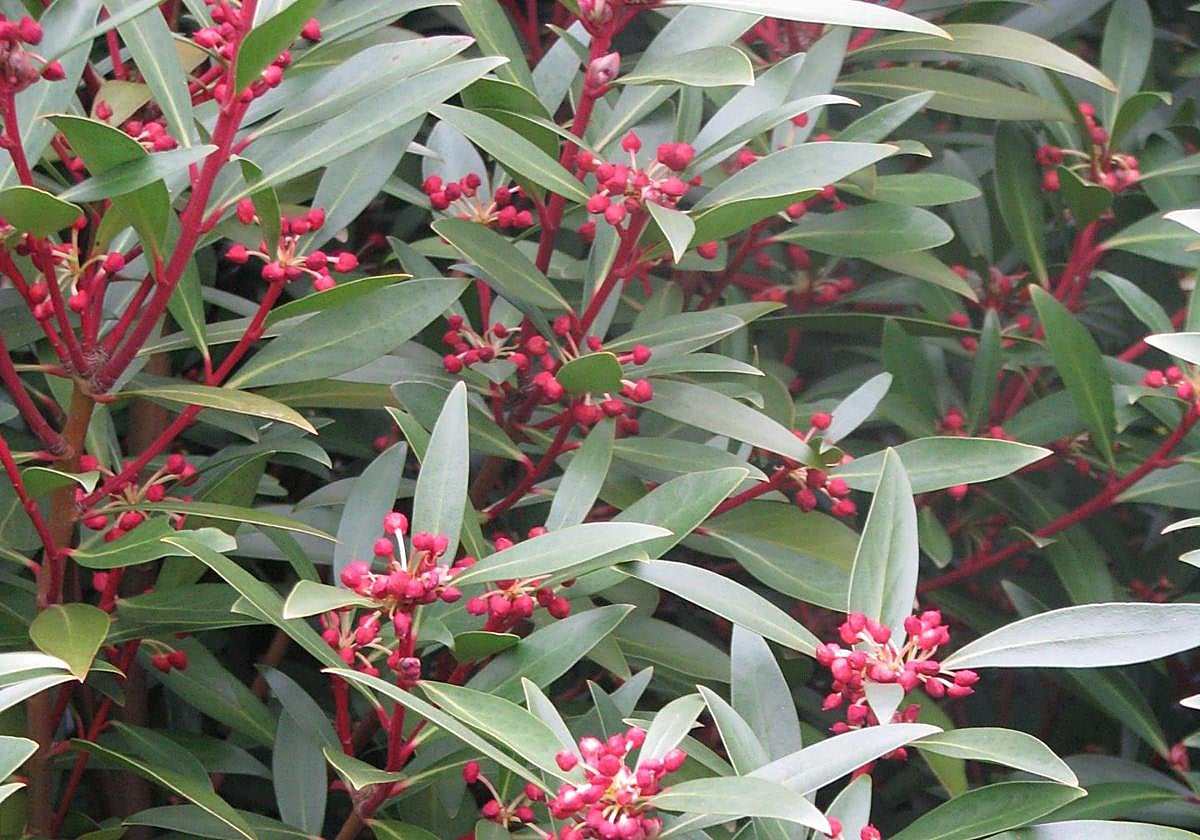
Commonly called mountain pepper or winter's bark, this medium to large shrub provides all- year colour with dark-green leaves, red new shoots and flower buds and dainty clusters of greenish-white blooms in spring
Denise Bush
Tasmannia lanceolata, synonym Drimys lanceolata or aromatica, is an evergreen shrub up to four metres tall native to Tasmania and eastern Australia.
Commonly called mountain pepper or winter's bark, this medium to large shrub provides all- year colour with dark-green leaves - paler on the undersides - red new shoots and flower buds and dainty clusters of greenish-white blooms in spring. The new leaves have a copper tint before turning completely green.
The whole plant is aromatic and smells of cinnamon. The fruits and seeds are edible and were traditionally used as a pepper or allspice substitute.
Tasmannia is a member of the Winteraceae family and has around 50 different species which grow in mountain forests and alpine zones. It is not drought tolerant although it will withstand short periods without water. It is happier in rich, acidic soils although it will grow in clay and coastal locations. It is dioecious, meaning to get the black fruits in the autumn you need both male and female plants.
Propagation is by ripe seeds sown in the autumn or semi ripe cuttings taken in midsummer. Tasmannia lanceolata has several uses, as a cottage garden plant, in Mediterranean gardens, in a large container in a patio or as a hedge or screen. It needs little maintenance, an annual trim and the removal of dead or damaged stems.
![[]](http://static.vocstatic.com/voc26/latest/assets/images/favicon/surinenglish/apple-touch-icon-57x57.png)