
Green fingers
Gardening in southern Spain: Plectranthus ecklonii
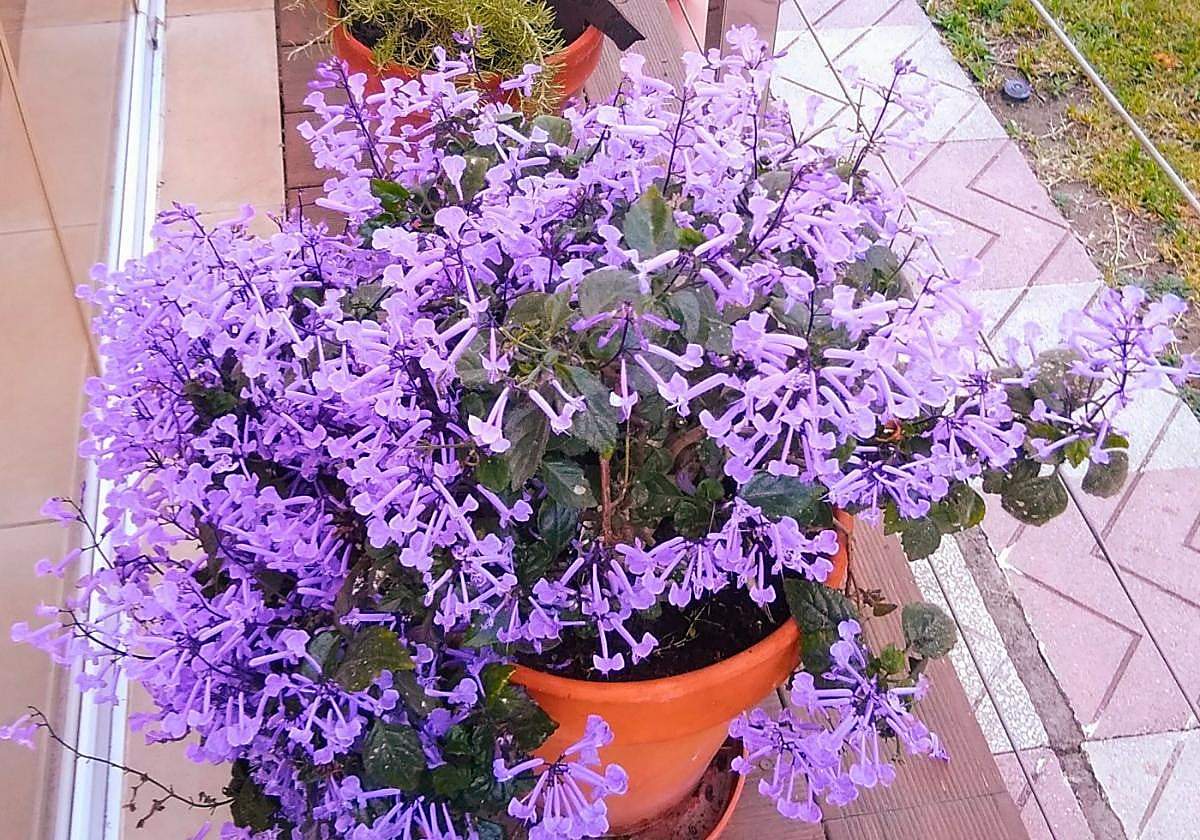
Commonly known as Swedish begonia, is native to the semi-tropical forests of South Africa
Denise Bush
Plectranthus ecklonii, commonly known as Swedish begonia, is native to the semi-tropical forests of South Africa. The Swedish begonia has dark-green, aromatic leaves that are elliptical in shape. The foliage is glossy dark green on top and velvety brownish-red underneath. Crushing or rubbing the leaves against skin will leave a yellowish stain.
From summer through autumn, the plant produces striking panicles of white, pink, or purple blooms that attract bees. These flowers are followed by small nut-like fruits, brown or black in colour and approximately 2mm long. In ideal conditions, this vigorous grower can reach three metres in height.
Plectranthus ecklonii performs best with some afternoon shade, particularly during hot, sunny days. The plant tolerates light frosts and short periods of drought once established. Its adaptability and vigorous growth, makes it suitable for growing in the ground, in containers, or even as a houseplant.
Propagation is by taking cuttings in spring or summer and planting them directly in situ, or alternatively, growing the plant from seed.
The genus name Plectranthus derives from the Greek word 'plektron', meaning 'spur', referring to a characteristic of the flowers. The specific epithet honours Danish pharmacist and plant collector Christian Frederick Ecklon (1795-1868).
![[]](http://static.vocstatic.com/voc26/latest/assets/images/favicon/surinenglish/apple-touch-icon-57x57.png)