The ‘Houston’ for dogs and cats
Pets from all over Spain are being taken by their owners to a veterinary clinic in Cordoba province for radiotherapy treatment which costs around 3,000 euros
CARLOTA EZQUIAGA
Viernes, 21 de abril 2017, 11:22
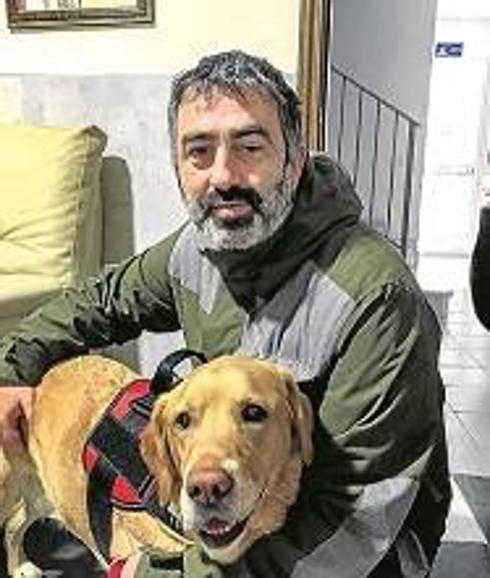
When Tono Calleja, a journalist from Asturias who now lives in Madrid, was told that there was something that could be done for his dog, he didnt hesitate. Laika was five years old and had been diagnosed with inoperable intracraneal tumour. She couldnt sleep, had difficulty in breathing, and when an emergency scan was done one Saturday evening the vet confirmed Tonos worst fears: the tumour could not be removed surgically.
However, she did suggest an alternative: in Cabra, a village in Cordoba province, she said, there was a veterinary clinic which was using an unusual technique. There was no guarantee that it would work, but it just might. It was a last resort.
The clinic to which she was referring was Ciovet, which has been open less than two years but has already become a benchmark in Spain for cancer treatments for animals. The owners are proud of being the only clinic in the country with a lineal accelerator, and it enables them to give radiotherapy treatment to its canine and feline patients if surgery or chemotherapy are not possible.
Cabra, a small town of 20,000 inhabitants, has become the Houston for domestic animals: in the same way that cancer patients from all over the world travel to the Texan city in search of a miracle, four-legged patients visit this town in Andalucía.
Usually, when a dog is diagnosed with cancer, it is put down. There are a lot of people who cant afford to pay for their dogs treatment, or they are not aware that anything can be done for them, but an increasing number of owners consider their pets to be part of the family and decide to try to save them, explains Ana Ray, a vet at the clinic.
It is not a treatment that everyone could afford. Treatment lasting two or three weeks costs 2,783 euros, plus boarding costs if the owner cant take their dog home between sessions. Despite this, most of the pets come from outside Cordoba, many from northern Spain but also from Portugal and Gibraltar.
Some people stay in Cabra during the treatment. María José Guerrero, who runs a small hotel there, says more than 12 owners have stayed in her establishment, which has been adapted for animals. We help the owners, we feed the animals, play with them...., she says. Others leave their pets in the hands of the vets at Ciovet, where there are carers 24 hours a day who phone them and send them WhatsApp messages with photos and videos every evening after the treatment. The staff at the clinic are well aware of how hard it is for pet owners to be apart from their faithful friends.
From humans to animals
Until a couple of years ago Ciovet, which is part of the Oncosur group, used to be an oncology centre for people. When they opened a new branch in Cordoba city, they decided to convert their old premises into a veterinary clinic, through an agreement with the Veterinary faculty in Cordoba, which is one of the most prestigious in the country.
As the cancer treatment is the same for humans and animals, they were able to make use of the same equipment. They only needed to acquire the anaesthesia equipment; this is not needed for people, but it is for the dogs because they have to be kept completely still. This is one of the delicate parts of the process: although the treatment takes a very short time, there is always a risk in using general anaesthetic.
At present only dogs and cats are being treated at the centre: More dogs than cats, because dog owners tend to be closer to their pets, says Ana Ray. We could treat many types of animal, even exotic ones or small mammals, but there are also logistical problems. We wouldnt be able to get a horse onto the table, for example. We are limited by size.
It is not an easy decision to take. Tono Calleja was in two minds about it. The night before I was due to take Laika to Cabra, I thought hard about it. It was a long journey and she was very ill. She was finding it hard to breathe, she looked dreadful... I honestly thought she was going to die that night, he says. Finally he decided that he would go, even though he kept wondering if he was doing the right thing during the treatment. I kept asking myself, am I making her suffer?
She can walk on her own
Now, after 11 sessions of radiotherapy, it is obvious that Laika has improved. Her back legs are very weak, and Tono and his father have made a type of chair so that she can walk on her own. Its not very elegant, is it? says Tono. We made it with PVC tubes. But whats important is that now she can move without help.
Its still too early to say how Laika has reacted to the treatment. She will have another CAT scan in three months to see what has happened to the tumour, but so far Tono is satisfied. Even if she lasts for another month, I have had another month with her. What is important is that during that month, she is well, he says.
He understands that not everyone shares his opinion. Some of my colleagues say Im mad, because its only a dog. But she isnt only a dog, shes part of my family. I also realise that a lot of people couldnt afford it, because it is expensive. I had to ask my parents to lend me some of the money. But in the end, it costs the same as a holiday in Vietnam, so it just means that this year I wont be going on holiday! he says.