
Granada earthquakes 2026
Granada tries to get back to normal after recording more than 3,000 incidents following several earthquakes
Volunteers, technical staff and firefighters are inspecting and assessing the damage so that the city and the province can get back to normal
R. ALCÁNTARA/C. ÁLVAREZ/ P. MORENO/M. NAVARRETE
GRANADA
Despite the risk of further milder tremors, following magnitude 3-5 earthquakes over the past few days, Granada city and province are slowly trying to ... get back to normal.
After the first (and strongest) earthquakes on Saturday and Tuesday, various parts of the province felt tremors of magnitude three (Churriana de la Vega) and two (Armilla and Alhendín) on Wednesday.
Everyone agrees that it is impossible to predict either when more earthquakes will occur or how strong they will be.
Related story
Related story
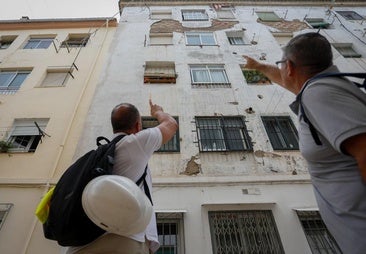
Technical and fire services have received more than 3,000 incident reports over the past few days, the majority of which have come from the Zaidín area in Granada city and the commuter area.
The emergency services have handled more than 5,000 calls. The local authorities have already inspected hundreds of buildings, the vast majority of which show no structural damage. All personnel are on standby.
How long will the emergency response remain in place? It is difficult to say. It depends on seismic activity.
On Tuesday afternoon, municipal, regional and provincial authorities, supported by volunteers from the associations of architects and quantity surveyors, set to work assessing the damage.
At the same time, at help centres staff were working to address the concerns of residents. The services are stretched to breaking point, but they continue to work tirelessly.
The Alhambra reopens
Early on Wednesday morning, health centres reopened. The Alcazaba remained closed, while the Alhambra reopened.
Despite this, there are still people who have been evacuated and experts are assessing the damage. They are working in the areas with the highest number of incidents, including the Zaidín and various parts of central Granada, as well as municipalities in the commuter area such as Ogíjares.
Initial efforts focused on properties where the damage could compromise safety or habitability. Once the most urgent situations had been dealt with, the teams began a systematic sweep of the areas to identify damage and assess the condition of buildings.
In Granada city, around 50 buildings were inspected, including municipal facilities, schools, community centres, sports facilities such as the Los Cármenes stadium and the Palacio de Deportes, heritage buildings and private homes.
Mayor of Granada Marifrán Carazo said that the city council had made all resources available to residents from the outset.
Nearly 50 firefighters, comprising both municipal and provincial personnel, are currently focusing on operations related to the earthquakes.
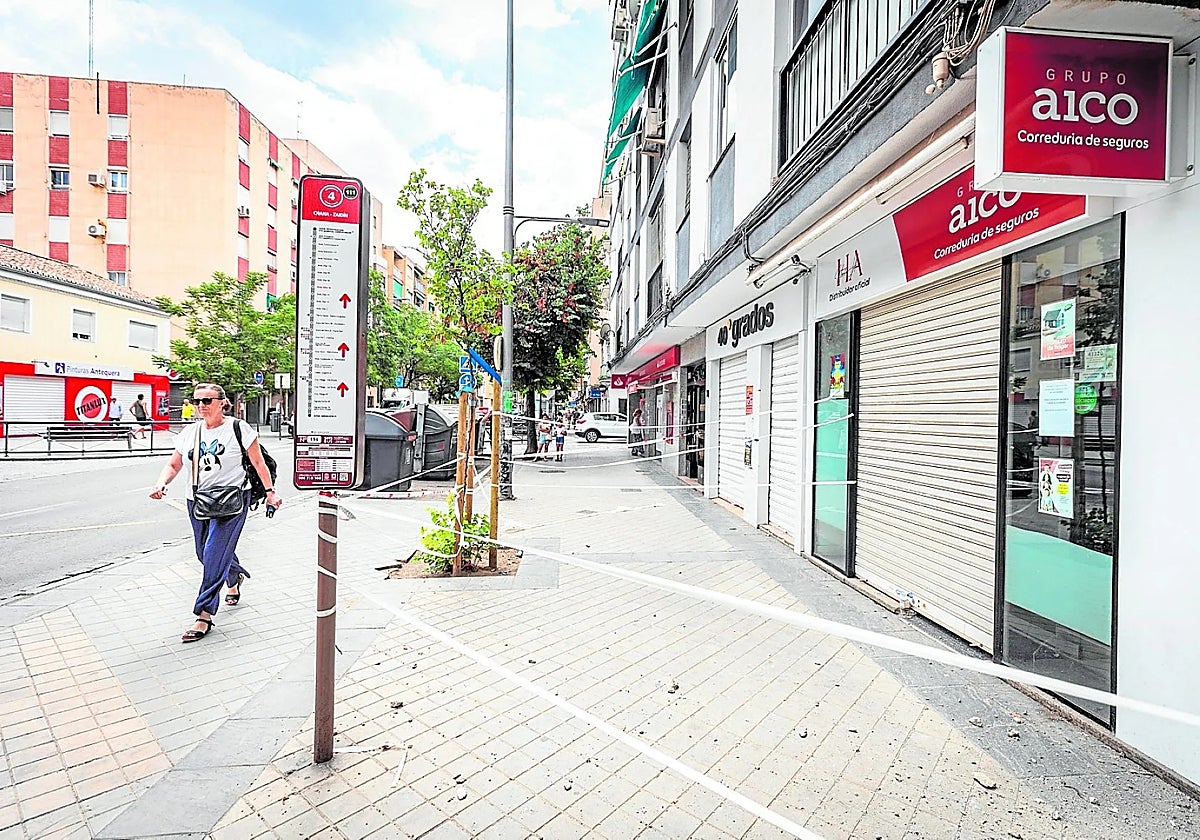
In the meantime, the city has cordoned off some streets. The worst-affected municipalities are also working, alongside the provincial authority, to restore normality.
In Armilla, experts have assessed around 200 buildings since Saturday, most of which have sustained only minor damage. The regional authority, which is working with the local authorities, has set up a forward command post in Ogíjares. From there, it provides services to Alhendín, Churriana de la Vega, La Zubia, Cúllar Vega, Gójar, Cájar and Armilla.
No structural damage
Speaking on behalf of the regional government of Andalucía, regional minister of emergencies Antonio Sanz said that, for the time being, there is no evidence of widespread structural damage.
The level 1 emergency phase remains in force and efforts to inspect and cordon off affected areas will continue.
Government delegate Pedro Fernández stated that impacted residents will be able to access the support programmes of the central government.
Granada's tourism sector has also addressed the incidents and the concerns of the hospitality industry. "Granada has been situated in a seismically active area for centuries and is not a city that was built without taking this risk into account. Precisely because of this, there are regulations governing earthquake-resistant construction," representative Gregorio García said.
![[]](http://static.vocstatic.com/voc26/latest/assets/images/favicon/surinenglish/apple-touch-icon-57x57.png)