
Economy
Economic growth allows Andalusian regional government to once again approve record budgets for health and investment
The Junta's governing council gives the green light to the draft bill for next year's budgets, which will be 5.6% higher than this year's, with an expected drop in unemployment to 2007 levels

Sevilla
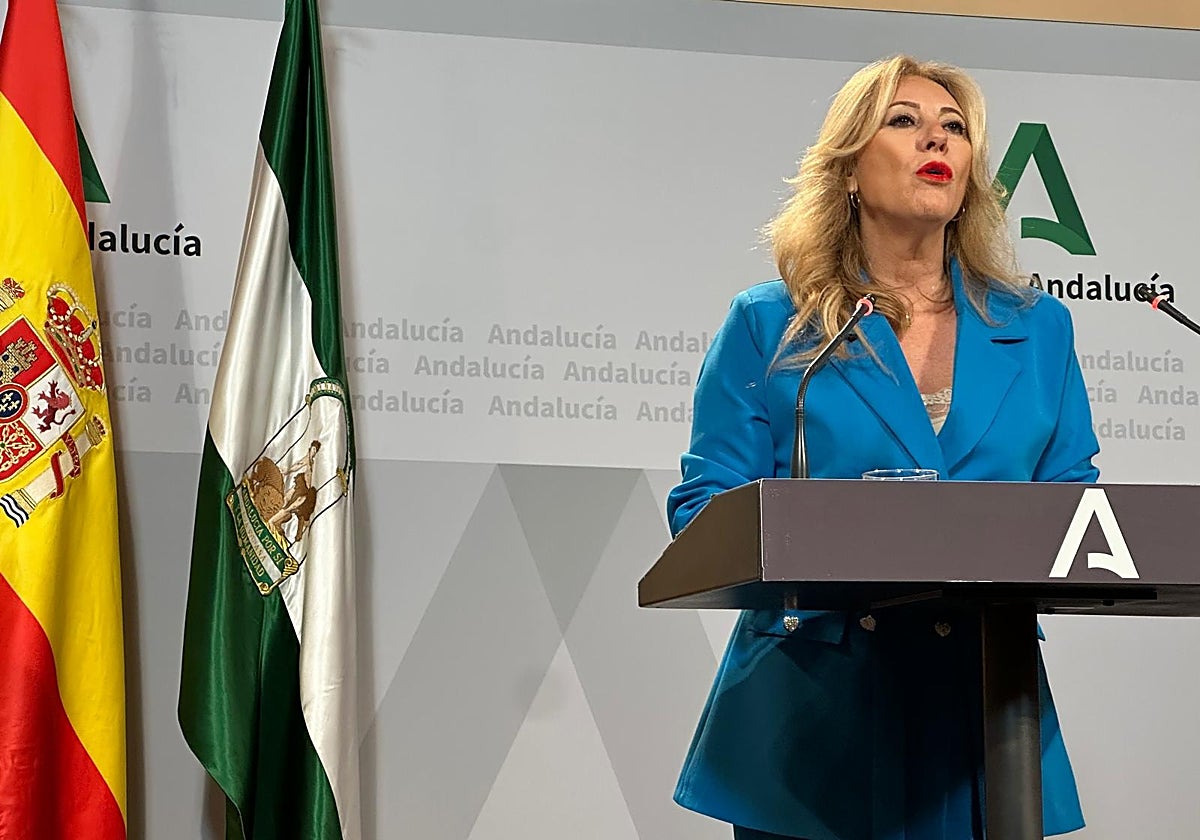
With a growth forecast for the Andalusian economy of 2.3% and an unemployment rate that is expected to remain below 14% - a rate as low as before the Great Recession in 2008 - the governing council of Andalucía's regional government (the Junta) has approved the draft for the 2025 budget law, expected to come into force on 1 January, once it has been endorsed by Parliament.
Two thirds of the budget will be allocated to social spending, half of them to health. The budget will be fundamentally supported by the Junta's own resources. Almost 77% of expenditure will be covered by self-financed funds, compared to 6.5% coming from earmarked transfers provided by the Spanish government to fund specific initiatives, as regional finance minister and spokesperson for the Andalusian government Carolina España has stated.
It is also the largest investment budget in Andalucía's history, with a 10% year-on-year growth, well above the overall growth of the budget. Allocations to the self-employed are also increased by 50%.
Optimistic forecast
The calculations, which include a total of 51,597.9 million euros, are based on an optimistic forecast for the performance of the Andalusian economy, with an estimated growth of 2.3% and the creation of 85,750 jobs, which would reduce the unemployment rate to below 14%.
However, España warned that employment predictions might fall short, as they usually do, except during the pandemic. In 2023, for example, when the forecast was 68,300, the number of jobs that were finally created in Andalucía rose to 108,100. The following year, there were 78,273 jobs compared to the 53,400 forecast.
Although this is a historic budget for the region, España has stated that it is still not enough. "There is still a lack of 1.5 billion euros every year due to a system of regional funding that has neglected Andalucía since 2009," she said.
Higher regional income
The regional minister stated that, despite insufficient financing, what allows the budget to grow is the increase in revenue thanks to more taxpayers, more companies, more economic activity and more and better employment. This is also the seventh consecutive year with an extensive tax cut policy in the region, "that is helping improve the lives of families, leaving more money in their pockets and, at the same time, promoting greater economic activity".
España attributed the increase in tax collection to the boost of the economy and not to a greater tax burden, as Andalucía now has one million more taxpayers than when Juanma Moreno became president of the Junta.
According to España, it is a "serious, rigorous, prudent" budget, designed with the objective of containing debt and enhancing Andalucía's financial reputation. She expects that the Junta will achieve full financial autonomy next year, which means that it will be able to obtain resources by tapping the debt markets without having to resort to state loans.
While she highlighted Moreno's budget capacity, España criticised PM Pedro Sánchez for systematically failing to present a draft budget in the central government. She stated that the Junta is aware of its responsibility to "provide Andalusian residents with a clear direction" and policies. She compared the regional government to the central government, stating that the former faces the "uncertainty and disorder" caused by the latter with "stability", proof of which is the budget.
![[]](http://static.vocstatic.com/voc26/latest/assets/images/favicon/surinenglish/apple-touch-icon-57x57.png)