
History
The village in Granada that had 34 shelters for shepherds and farmers to protect them from the rain
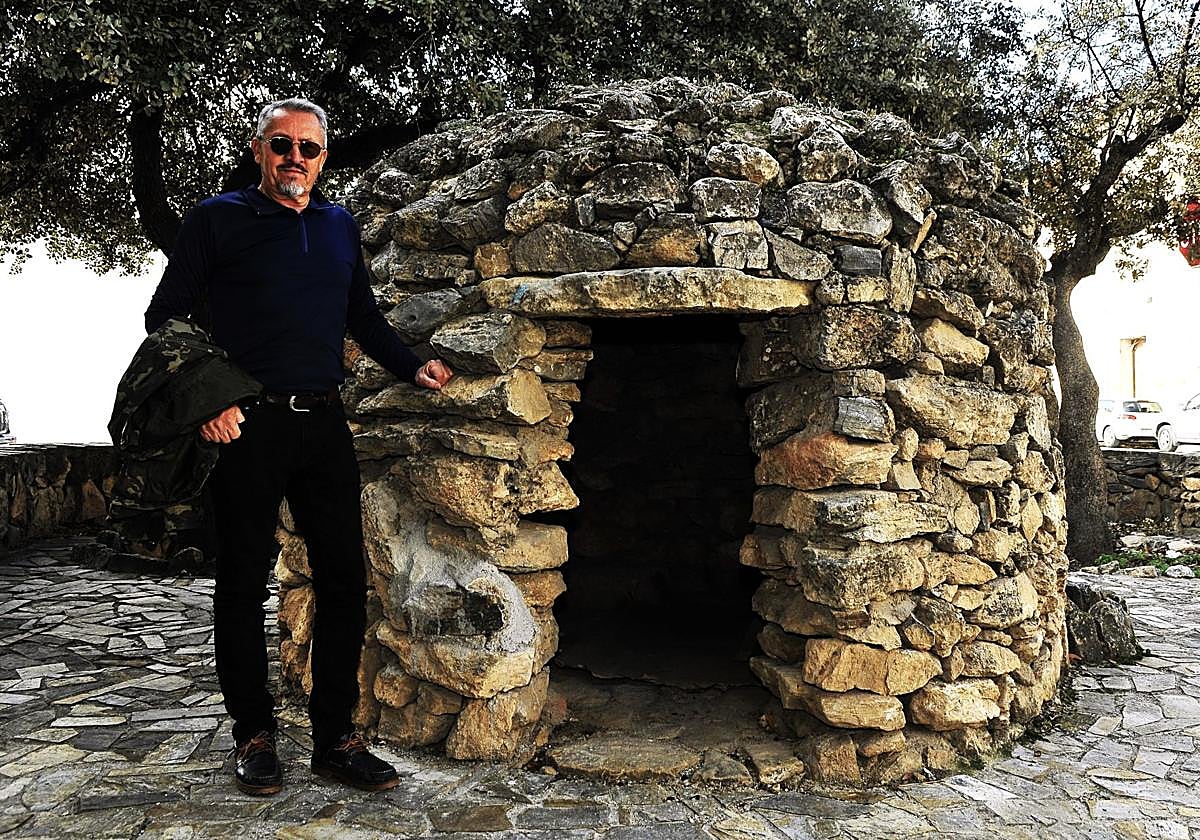
In Padul and other places they were made with dry stone from the surrounding area and there is a replica in the centre of this town in the Lecrin Valley, from where a hiking trail that takes in nine of them begins

Rafael Vílchez
In Padul, in Granada province's Lecrín Valley, there were once 34 shepherds' and farmers' shelters which formed part of the cultural identity of the town. According to one of the great promoters of the culture of Padul, Julio Martín "these shelters tell us about the very recent way of life and work in the countryside. These unique constructions inform us of the life and social relations that existed in the rural environment, as well as the relations with nature of the generations that preceded us. These constructions were used as shelters when the weather conditions were particularly adverse".
Martín says that "the shepherds' and farmers' shelters in Padul are in danger of disappearing because they have lost the functionality they had in the past. Many shelters have disappeared and others have collapsed because they have been abandoned, despite having Unesco Intangible Cultural Heritage status".
"The shelters have various names depending on the place where they are located: catifas, chozos, cucos, bujardas, bohíos, caracolas... The architecture of the shelters is dry stone, without any other element or mortar to bind it together," Martín explains.
"The dry stone technique is a very ancient tradition that dates back to the first urban and peasant cultures and which, due to its effectiveness and limited means, has survived over the centuries. They usually have an entrance facing east and above it, there is a stone lintel that serves to support the weight of the dome, understood as the enclosure of a circular space by making the diameter of the successive rows smaller and smaller, so that little by little, the enclosure of the whole is produced," Martín describes.
He goes on to say that "the exterior surface area is usually approximately eight square metres, the interior between 1.50 and 2.50 metres. The shelters are scattered throughout the dry land area: Camperte, Llano Borete, Las majadillas, Gororón, Chiribaile, Cerro del Aulagar... There is a circular route starting from the shelter that was installed in the centre of Padul as a new point of interest. From this place you can visit nine more in the countryside".
Portable huts and caves
Ancient shepherds' shelters in Spain, known mainly as 'chozos', were rustic dry-stone buildings, adapted to inclement weather and shepherding life. They normally faced east to take advantage of the sunlight and the smoke from the fire came out through an opening at the top. The structure was solid and took advantage of gravity to enclose the roof with a stone vault. The shelters were used for shepherds to rest, spend the night and shelter from inclement weather.
In some areas they were also used to store provisions or protect small animals and the stone roof was often reinforced with a covering of branches and earth for better insulation. In Asturias for example, wood and rock huts with roofs made of vegetation and sticks, called 'brañas', were used. Now some of the brañas have been restored by associations to preserve this ethnographic heritage. Nomadic shepherds also built portable huts and others used caves and corrals as shelters to keep their livestock.
The shepherding profession is now disappearing due to lack of profitability, harsh working conditions and management problems in some areas of Spain. Low wages, rising costs and a lack of young people willing to take up the work contribute to its decline. In some places like natural parks, shepherds and livestock keepers have to deal with conflicts with other users and the need to keep herds under control, which makes the work difficult.
Some universities have begun to offer training to attract young people and teach sustainable techniques such as regenerative grazing. However, the long-term sustainability of the trade remains uncertain and depends largely on measures to support herders and make the work more attractive to new generations.
![[]](http://static.vocstatic.com/voc26/latest/assets/images/favicon/surinenglish/apple-touch-icon-57x57.png)