
Art
Frank Rebajes, the artist with work in the Metropolitan Museum who Malaga left in a drawer
An exhibition at the Mucac La Coracha revives the works of the North American with Dominican and Spanish origin who settled in Torremolinos after his success on New York's Fifth Avenue

Málaga
Every weekend he would stop by Tiffany's. But not to the cult classic film location made famous by Audrey Hepburn on New York's Fifth Avenue, but the no less legendary nightclub in Torremolinos. But first, he took the opportunity to see other jewels, those exhibited by the artist Frank Rebajes in Calle San Miguel.
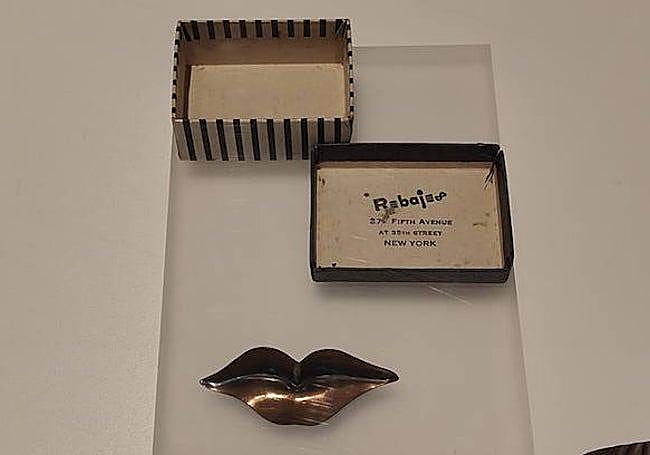
Pieces of modern and ground-breaking work made by the goldsmith could be seen in the shop window, where two white cats walked among them with almost choreographed steps designed not to tread on anything. Their creator had also brought brooches, pendants and copper necklaces over to Torremolinos from the same Fifth Avenue, where he also had his workshop, frequented by distinguished clients such as Jackson Pollock and Peggy Guggenheim.
One afternoon, Frank was smoking outside his shop when he invited in a young man he had seen loitering there on other occasions. The visitor didn't have a penny to his name and didn't buy anything, but the American artist and jeweller of Dominican and Spanish origin opened the doors of his refuge to him. The refuge he had come to in order to escape success and which few managed to penetrate.
This gesture has now been repaid by that same young man, now grown up, the artist and collector Diego Santos. He has curated the exhibition currently at Malaga's Mucac La Coracha, From the Egg to the Origin. A Journey in Reverse (Del Óvulo al origen. Un viaje a la inversa) which revitalises the works of the artist who donated his most exclusive pieces to Malaga, only for them to be left at the bottom of a drawer, or rather a warehouse, for more than 35 years.
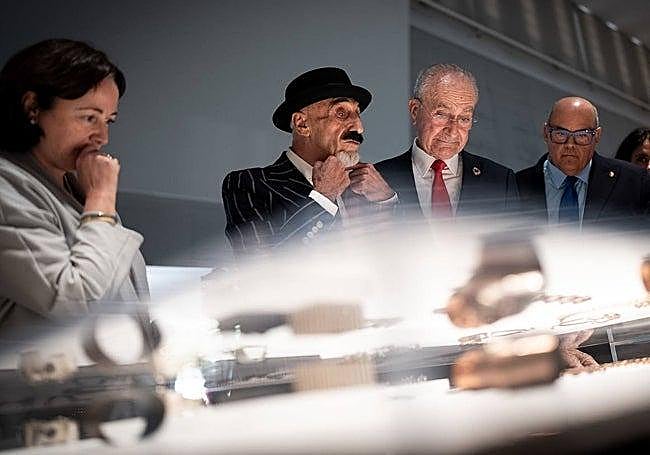
"The town hall has a very important collection of his work, with more than 200 pieces, and in some way it should be valued because any museum in the world would give anything for this work, as Frank is on a par with top level creators," claimed Diego Santos when he presented the first exhibition this Tuesday. Sin
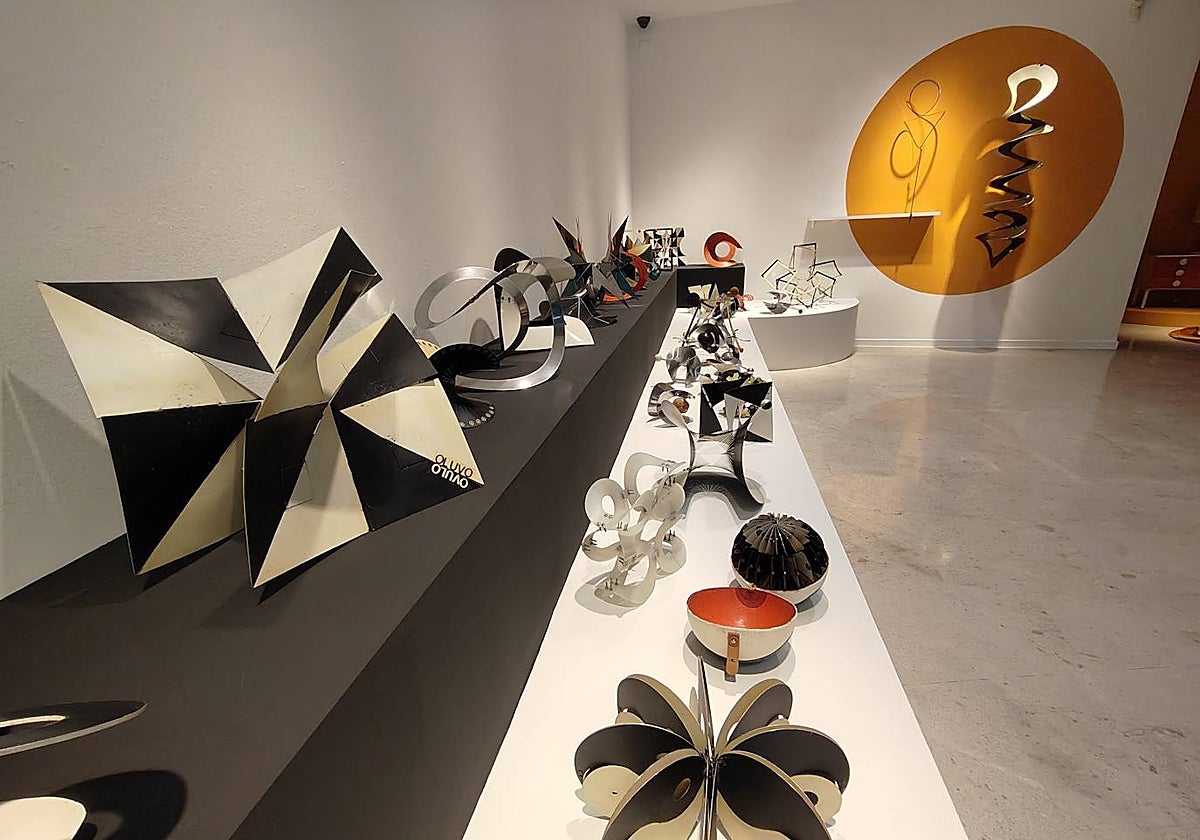
ce the donation in 1988 from Rebajes (born 1907 in Puerto Plata and died 1990, Boston) to Malaga, where the collections have been stored among works belonging to Picasso's birthplace museum, they are now being exhibited in all of their glory - a showcase of more than 60 sculptures.
The sculptures from the Óvulo series are the main highlight of the collection, which in this exhibition is also joined by the curator's own personal collection of jewels belonging to Rebajes' American period. Hence the title 'Del Óvulo al origen' (From the Egg to the Origin), is based on his final works, telling the story of how he made his way back to Malaga from New York's Fifth Avenue as a successful jeweller and goldsmith.
"He came from New York tired of success, looking for joy and another way of life," said Diego Santos, curator of the exhibition
"The piece that I had most trouble finding and buying is this antelope," explained Santos, pointing to a precious brooch in the shape of the swift animal. What he has kept quiet about is how much he paid for this jewel with the official stamp of Rebajes, the artist who had up to a hundred goldsmiths working for him in his workshop in New York; who pioneered the use of copper in the USA.
This was the turning point in his career, and as a result of his success, he ended up fleeing to seek refuge in Torremolinos. "He came from New York tired of success. He had started in poverty, slept on cardboard and was able to set up a very small shop that quickly took him out of that situation and to Fifth Avenue with a spectacular clientele because his jeweller's was the most modern and innovative in the city," stated Diego Santos.
He added that Rebajes sold the business to his partner and "came to Torremolinos looking for happiness and another way of life, opened his shop and turned his workshop on the third floor of his building into a temple, a secret space that very few people had access to".
His most exclusive work, in Malaga
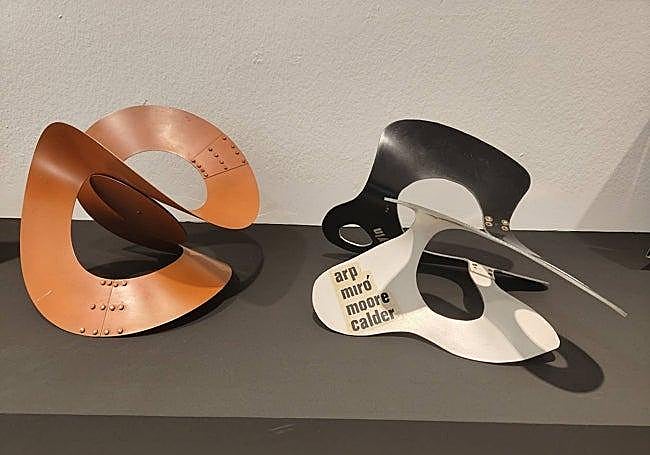
It was in that studio, which smelled of "saltpetre and rusted metal", that for several decades he produced his most complex and decisive work, the sculptures of the 'Óvulo' series.
"In New York the simple becomes essential and his jewels have their own voice, inspired by cubism, surrealism or Dadaism, while the Torremolinos period inspired the most intimate and philosophical Rebajes, who emerges with his most enigmatic work inspired by the Möbius strip, without beginning or end, from white to black or yin and yang as references," explained the curator. Each sculpture becomes a "labyrinth", a "tactile poem, a meditation in the form of metal". A journey through the artist's universe, ending with a recreation of a 1970s style room in Torremolinos and nine watercolour works painted by Diego Santos and inspired by works from his own collection.
Santos stressed that the groundbreaking work of Frank Rebajes is part of the collection at the Metropolitan Museum (MET) and Brooklyn Museum in New York. To the Mayor of Málaga, Francisco de la Torre, and the director of the agency that manages the Pablo Ruiz Picasso Birthplace, Luis Lafuente, he stressed that since the city council has custody over his most exclusive work, "it should be exhibited" permanently.
Santos recalled that Frank Rebajes was the 153rd member of the Ateneo de Málaga cultural association and that, two years before his tragic death, he donated his work to Torremolinos which at the time was still part of the municipality of Malaga. And without intending to do so, he ended up recounting the sad farewell of the sculptor, jeweller and goldsmith.
"I don't tell the end because his wife (Pauline Schwartz) died in 1989, after five years with Alzheimer's disease. Frank did not get over the loss and died by suicide in 1990 after giving a lecture at MIT in Boston," he recalled, while also saying that, even in his farewells, he was original and avant-garde.
"His friends Diego Moya and Enrique Brinkmann told me that he took the poison with him from Malaga inside a ring," and so as a result, the cyanide he used to oxidise his sculptures was also what he chose to end his life with. "Death is just another part of life and it was his way out, but here his work is alive and full of light," said the curator about this necessary resurrection of a forgotten artist whose work is still radically modern 35 years after his death.
![[]](http://static.vocstatic.com/voc26/latest/assets/images/favicon/surinenglish/apple-touch-icon-57x57.png)