
Safety
DGT explains what to do if you get caught in a flash flood in your vehicle in Spain
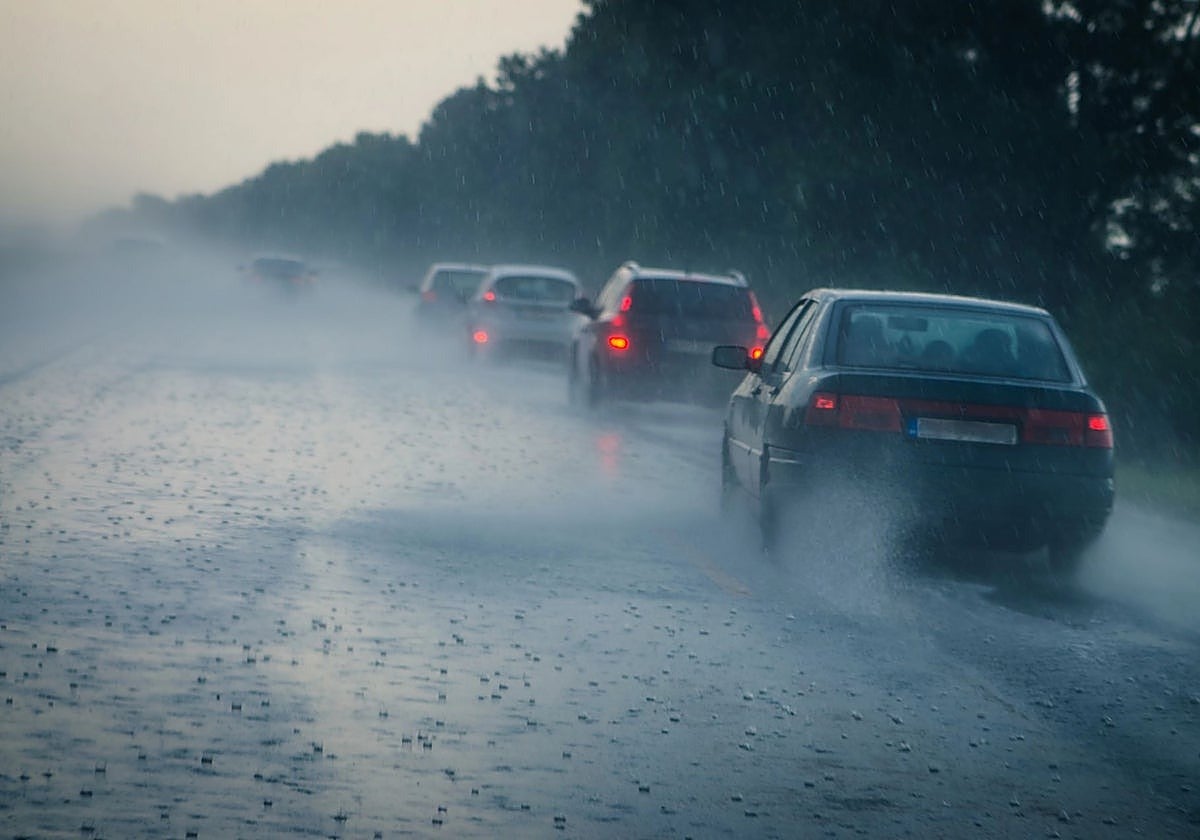
Torrential downpours that cause flooding are common phenomena at certain times of the year, especially in the Mediterranean region
Canal Motor
Madrid
The torrential rains of the last few days in some parts of Spain have once again highlighted the danger of driving in adverse weather conditions.
The state meteorological agency (Aemet) establishes that the meteorological risk begins with heavy rainfall, i.e. rainfall of between 15 and 30 millilitres per hour. So, in the event of heavy, very heavy or torrential rain, it is vital to heed the warnings issued by Aemet, the Civil Protection agency, the DGT roads authority and local authorities.
Torrential rains that cause flooding are common phenomena at certain times of the year in Spain, especially in Mediterranean areas. In these situations, the Civil Protection service recommends first and foremost "locating the highest areas to be safe from rising water".
The most common risks are the presence of large puddles on roads which prevent further progress. The DGT recommends, in this case, to turn back immediately, and on motorways or dual carriageways, to call 112 and wait in a safe place for rescue. In flooded stretches of water with currents, although at first glance they may seem harmless, the force of the water can sweep a vehicle away. "It is preferable to turn around and look for another road. When you can't, don't force it", explained the DGPCyE.
When a flood invades the road, the first and best option is to avoid crossing the body of water. Even if you know the area, the risk of being swept away is very high, as the current hides dangers such as changing depths or dragging of soil and other materials, which distort the situation as it appears to the naked eye.
To avoid being caught in a flood, it is advisable to stay away and not to park near rivers, dry streams and riverbeds and low hillside areas. "Nobody expects a flash flood, it can be a matter of minutes. That is why they are the most dangerous," stressed the DGT.
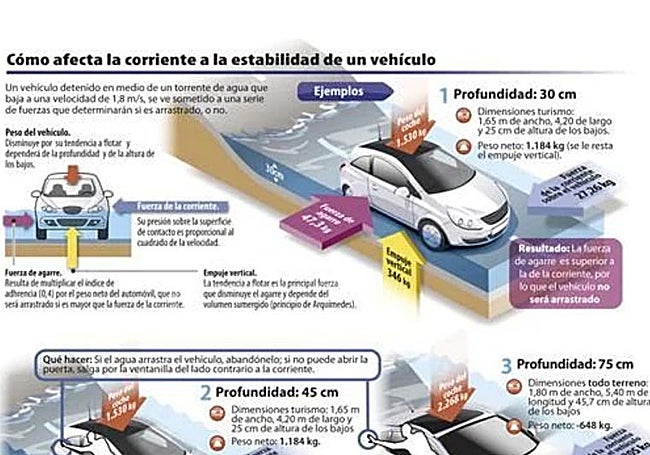
According to experts in the DGT's 'Tráfico' magazine the belief that a vehicle is safe from the force of the water is false. Even at a depth of 30-45 centimetres a driver can start to lose control of a car and if the depth reaches 60 centimetres, the vehicle, regardless of its size, can be swept away by the current.
The DGT and specialists in natural hazards agree that the most important decision in the event of a flood is when to leave the vehicle. Studies carried out in the USA show that more than half of the victims of this type of disaster drown inside their cars, probably because they feel safer inside the vehicle. However, once the car stops in the middle of the current and begins to slide, the only solution is to get out as quickly as possible.
Recommendations from the DGT on how to act in the event of flooding
Do not cross. If you do not know the area, look for an alternative road or ask for information from 112.
Leave the car. If the water rises above the axle height and the vehicle starts to be dragged, get out immediately.
Exit on the opposite side. Try to escape through the window or door on the opposite side to the direction of the current.
Do not fight the water. Once out, swim with the current but steer your course towards the shore or a safe point (a tree, house or high ground).
Always have a plan. Carrying a glass breaker is a simple measure that can save a life.
The force of the water can make it difficult to open the doors. If the water rises above the height of the lower part of the door and the pressure is equalised, the door may be blocked.
If the engine has stalled, the electric windows may stop working, preventing the windows from rolling down. The recommendation is to always carry a rigid steel-tipped object, such as a small emergency hammer, which can be used to break the window glass in order to escape. The windscreen, being laminated, will not break, so it is best to aim for the side windows.
![[]](http://static.vocstatic.com/voc26/latest/assets/images/favicon/surinenglish/apple-touch-icon-57x57.png)