
Infrastructure
Family business revives railway for transport of cereals between Salamanca and Portugal: 'As kids, we used stations that no longer operate'
The company is refurbishing an 1898 flour mill in La Fuente de San Esteban to convert it into a modern railway terminal for the transport of cereals and reopen this connection after more than ten years of disuse

Félix Oliva
Salamanca
The business of the Cosme family, with years of expertise in cereal logistics, is on the path to revive and modernise Salamanca's historic railway infrastructure and the connection by train between Spain and Portugal for the transport of cereals. To do this, the Cosme family has taken over the old La Fuente de San Esteban station to create a state-of-the-art terminal, equipped with automated systems.
This is the first cereal loading terminal to be installed in Salamanca this century. Its conveyors, silos and loading/unloading systems form a digestive apparatus ready to process 1,000 tonnes of grain every eight hours. By returning to railway transportation, the Cosme family interestingly advances into the future with methods from the past.
For the first time in years, a railway facility in the province will move grain between Spain and Portugal - a connection between La Fuente de San Esteban and the border that fell into disuse over the years when road transportation gained precedence over trains.
In fact, major EU policies favour rail for freight to reduce carbon emissions. There are initiatives such as the Salamanca dry port and the growth of intermodal rail terminals throughout the country. Almost every self-respecting station or city wants its own freight terminal. The aim is to divert to rail part of the transport that is done by lorries, reduce emissions and consumption, gain in efficiency and revitalise rail freight traffic.
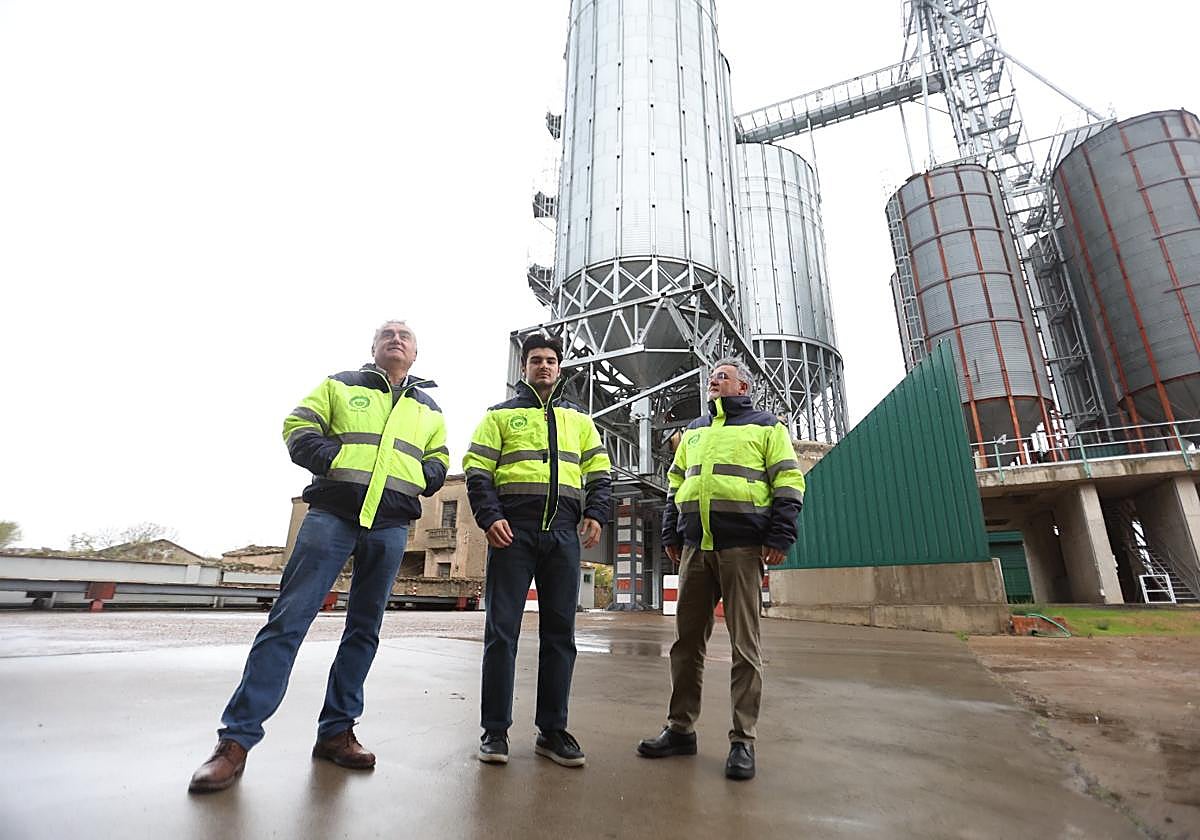
Although this has not been easy, the Cosme family has made it a reality at the foot of the enormous 80-metre silos of the La Fuente de San Esteban station. Its members have done it as a personal endeavour, gambling their life's earnings on the transport of grain.
Originally from Alba de Tormes, they have dedicated their entire lives to loading cereal for all the flour mills in Castilla y León. The company founded in 1947 is 100% family-run. It is now facing the entry of a new generation that will benefit from a deep expertise in cereal logistics. It has taken the Cosmes ten years of efforts to bring the idea to fruition and do what no one has done successfully so far: bet on the train.
The Cosme family was there when the last train with rapeseed from Portugal and flour from Spain passed through La Fuente de San Esteban
"The last 30 years have seen the annihilation of freight transport by train," Agustín Cosme says. He knows this because he and his family were there when, ten years ago, the last train coming from Portugal with rapeseed and returning with flour passed through La Fuente de San Esteban.
Also ten years ago, the family business decided to set up its own freight terminal and chose this station. They acquired the private track and, with the collaboration of state railway infrastructure company Adif, began to update the transport system and maintain the track. Now the line is electrified and remotely controlled from León, but they have all the authorisations to operate their siding. This means they can receive and send trains and carry out manoeuvres independently, with their own staff of seven people.
A 100-year-old flour mill and 21st-century silos
"As kids, we used to load at this station and others that are no longer in operation," Agustín Cosme remembers. This is what inspired them to initiate the dry port project at this precise location in the province.
Its office is now the old 1898 flour mill that the station used to have, which is being refurbished to house offices and facilities. The family discovered some curious documents during the process, such as the cereal delivery books of some companies, with operations from the 1930s or personalised sack bags.
The next step was to erect the fabulous grain loading and unloading facility. The 80-metre-high silos stand out, but the whole system is astonishing. You can load from truck to train or from train to truck. The truck section unloads from below, through hoppers (grates through which the grain falls) and can also load trucks through tubes carrying the material. The facility includes scales to weigh everything.
For trains, unloading can also be done from the sides to empty the wagons. It can accommodate up the to 750-metre-long trains that will run between Vilar Formoso and Salamanca. The certified railway scales can weigh up to 160 tonnes. Grain, whether unloaded or coming from the silos, is poured into trains through an automated top-loading system of belts and ducts. In addition, there are 140,000 square metres of industrial land linked to the station, with access to the siding for companies that want to set up operations.
The terminal allows all operations: it can load and unload, select the product, weigh it, store it and take it away. In addition, it will be able to operate in both directions due to its capacity for manoeuvres: it will receive trains from all over the west and will be able to send them to Portugal and back. They have the capacity to receive 50 trains a day. In addition to freight wagons, they can operate with containers, platforms or tanks.
'Road transport is showing signs of exhaustion (...). The train worked in the 19th century and it still can'
The Cosme family believe in railway transport. "Road transport is showing signs of exhaustion, there are no staff and there is no money to be made," Agustín Cosme says, adding that only those who enjoy the profession sign up to be lorry drivers and their number is decreasing as they grow older.
The future is railway, which has potential to improve. Rail freight accounts for 3.5% of the national total and the aim is to increase this to at least 6%. This means the transfer of many lorries to the tracks. Facilities like the Cosme family's can receive one of those big 750-metre trains a day and change the paradigm. "It depends on people signing up for the train. The train worked in the 19th century and it still can," he says. Just as La Fuente de San Esteban and the Salamanca family that loaded their trains were active back then, these tracks will now see the resurgence of cereal-filled wagons moving between the Spanish plateau and Portugal.
![[]](http://static.vocstatic.com/voc26/latest/assets/images/favicon/surinenglish/apple-touch-icon-57x57.png)