
Heritage
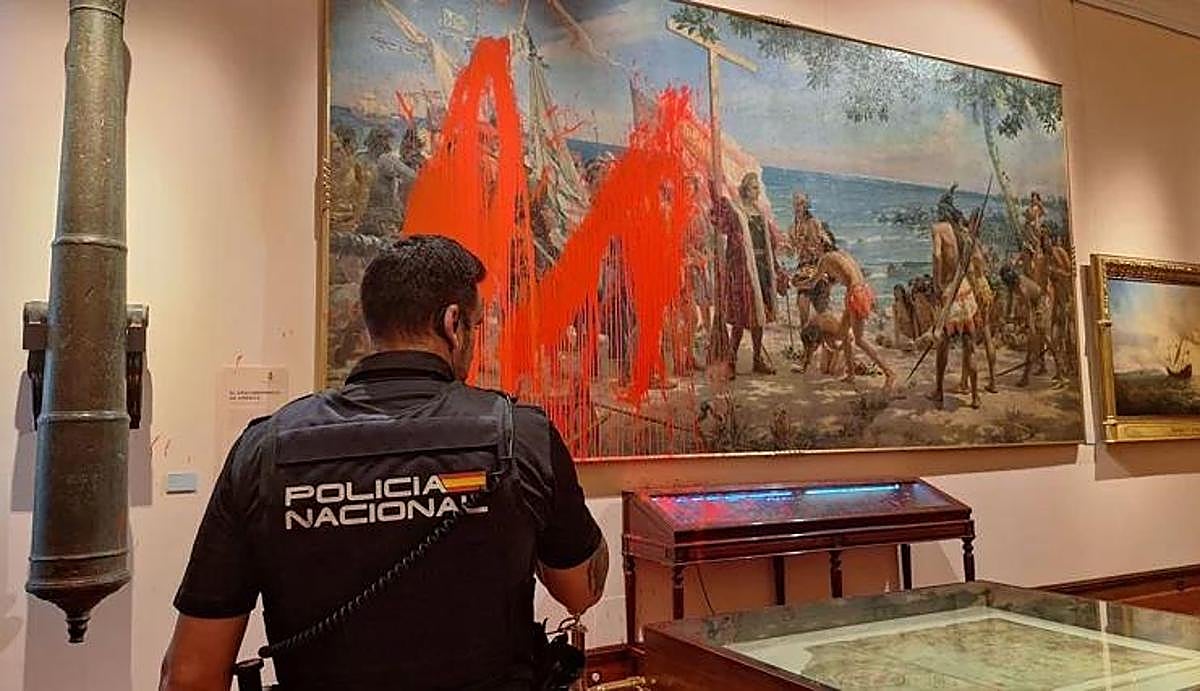
This was the moment activists splashed red paint over huge Christopher Columbus canvas in Madrid museum
A team of conservators was quickly mobilised to try and save José Garnelo's 1892 work, El Primer Homenaje a Colón

Jesús García Calero
Madrid
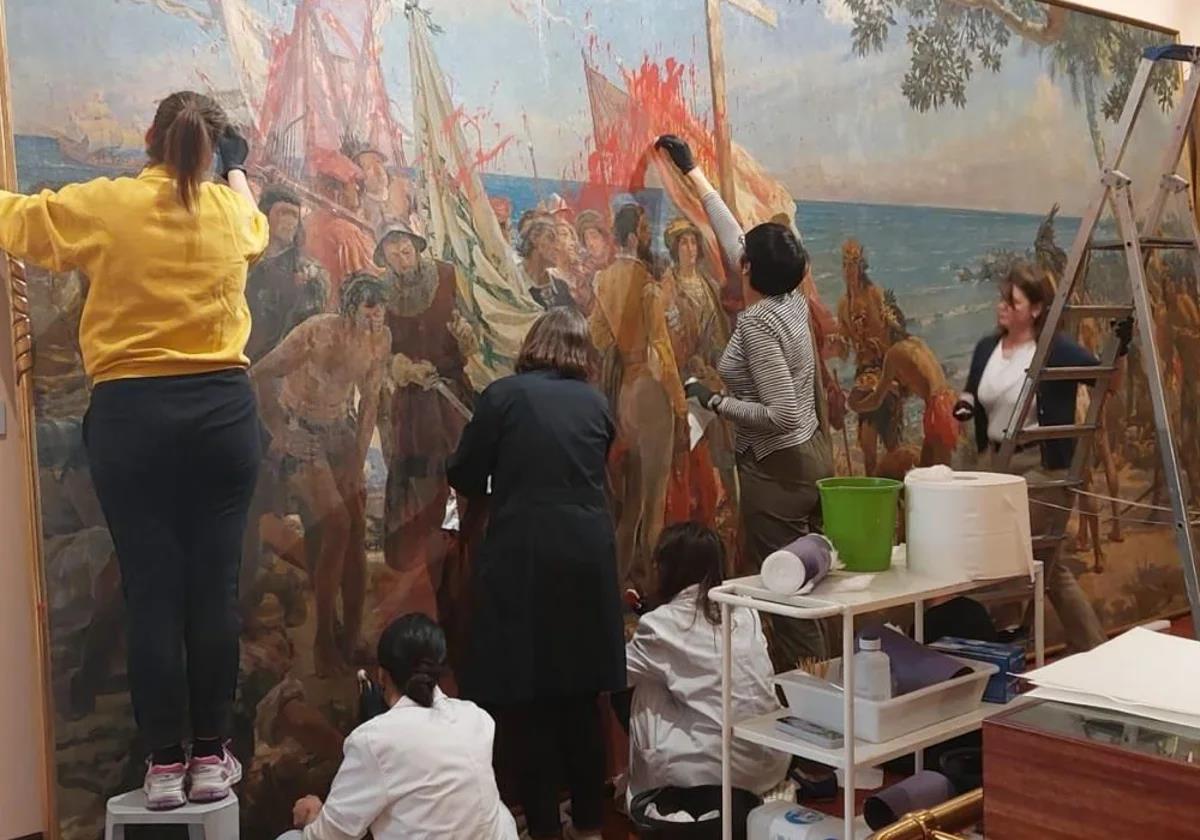
It was a long, hard day for staff at the Museo Naval in Madrid during this year's 12 October Spanish national holiday celebration. After Futuro Vegetal activists splashed paint over José Garnelo's 1892 work El Primer Homenaje a Colón painting, showing a Native American tribe offering gifts to Christopher Columbus, curators, volunteers and conservators worked tirelessly to prevent the paint from causing devastating damage to the painting.
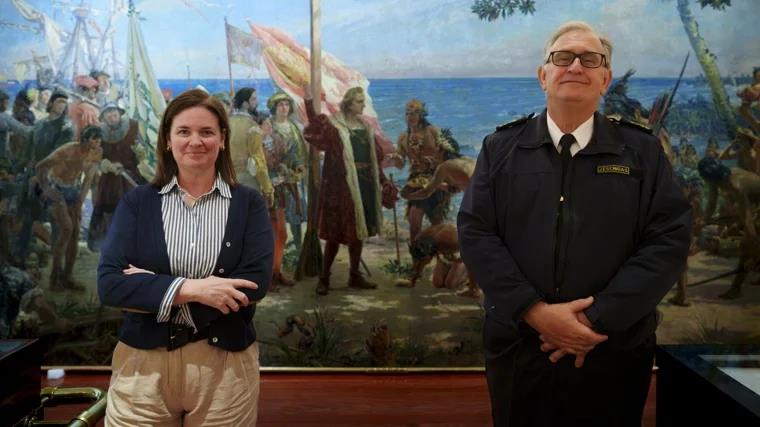
Although immediate damage has been prevented, the museum's technical director Berta Gasca said that further interventions costing "thousands and thousands of euros" will be necessary to preserve Garnelo's work. In addition, she stated that experts must carefully choose the exact restoration technique, which could take some time.
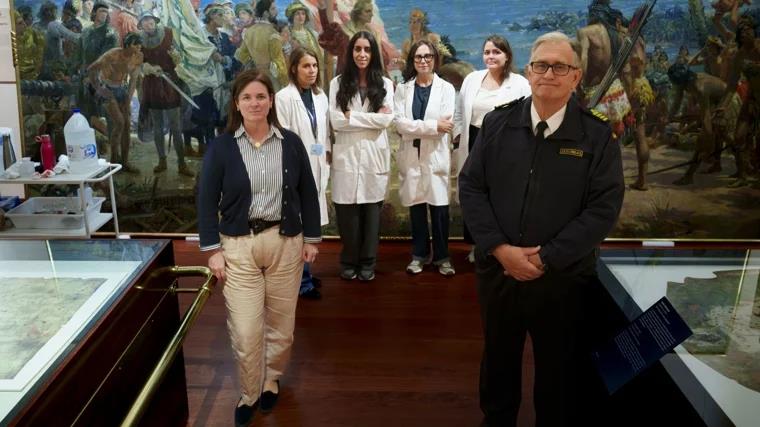
However, the incident will not deprive future visitors of contemplating Garmelo's masterpiece. "We will continue to show the painting with its wounds," vice admiral Enrique Torres Piñeyro said, standing in front of the six-metre-wide and three-metre-long canvas. He highlighted the "rapid reaction" of conservators, military personnel and even several external volunteers who stopped whatever they were doing on Sunday to help curb the assault consequences. Museo Naval director captain Juan Escrigas thanked everyone who joined the efforts.
Eco-terrorism
Although it is usually closed on Mondays, Museo Naval was buzzing with people focused on the protagonist - Garnelo's painting - on 13 October.
ABC spoke to Daniel Vasile Antal, who saw the eco-terrorist attack on Sunday. The 57-year-old security guard was approached by two young women, one of whom asked where the toilet was.
Minutes later, he saw them in front of the painting and then heard shouting. As he recalled, it was around 1.45pm when they threw red paint at the left half of the canvas. "I don't know what they said. A protest about the Día de la Hispanidad, I think," Antal said. Within seconds, he lunged at them to stop them. "I slipped on the paint, but I caught them as I was falling," he explained, adding that that was an instinctive reaction. "I haven't had anything like this happen to me since I arrived from Romania in 2008, but it's simple: when you see someone doing something wrong, you have to act as quickly as possible." Two plainclothes police officers who were visiting the exhibition helped him restrain them while calling the authorities.
From then on, emergency measures at the Museo Naval were set in motion. "I was with my parents, we were about to start eating... and the phone rang. It was the deputy director who informed me of what had happened," Gasca said. She asked for photographs to be sent to her to assess the damage and the worst was confirmed. "I then spoke to the team. We all went to the museum. Many of them were on a trip, which they interrupted," she said. In less than an hour, a team of seven people was on site to start working against the clock. "From the beginning, we saw that the key was to prevent the paint from drying," Gasca explained.
Among the emergency restoration workers was curator and head conservator at the Museo Naval, Regina Zurdo. She called several colleagues of hers, including a Museo del Prado conservator, and asked them if they would volunteer. They worked at lightning speed to save the painting, because the supersaturated pigment would only need a second to "wreak havoc". Initially, they used paper and cotton, after which they started cleaning with swabs. They did this for hours, carrying out different tests to assess the best product to use.
Long-term damage
The long-term damage is pending assessment. The paint has passed through the varnish, which means that "water particles have gotten between the cracks, leaving it whitish", as Zurdo explained. This damaging process increased during the cleaning work, but the restoration team had no other alternative. To make matters even worse, the removal of the red paint has dragged pollution from the surface, which has generated "lighter areas that will have to be restored".
Gasca is aware that the process will be long, laborious and expensive. It doesn't matter that the paint used, as Futuro Vegetal has said, is biodegradable and environmentally friendly. "To begin with, I don't think it is, because some staff members have had allergic reactions. Any material that is applied to another material produces a series of chemical reactions that we cannot assess until we proceed with the analysis," Gasca said. Although they have "removed the visible layer", there are still residues, which will be very difficult to get rid of. "That's why we can't restore the painting from today to tomorrow. This will have a very serious impact on the work," she explained.
The red paint also reached the walls and the ceiling. The painting's frame will also have to be restored. All the damages will amount to great expenses. As Gasca explained, a painting cannot be partially restored.
Nevertheless, Escrigas chose a more positive conclusion - gratitude for the cooperation of all the conservators and volunteers that worked together. "We were up and running in barely 20 minutes," he said, highlighting the "enormous amount of work" done in such a short time. "The miracle is called love and effort and that is what all the people who came yesterday showed," he stated.
![[]](http://static.vocstatic.com/voc26/latest/assets/images/favicon/surinenglish/apple-touch-icon-57x57.png)