
Innovation
Tesla tests 'full self-driving' feature in Madrid
Elon Musk's car company is already testing the supervised system on the streets of the Spanish capital, with the aim of launching it in Europe after its success in North America and Asia
Canal Motor
Madrid
The streets of the Spanish capital Madrid have become the latest test bed for Tesla's advanced 'full self-driving (supervised) system'. Elon Musk's car company has begun testing the new technology on the busy streets, following in the footsteps of other major European cities such as Paris, Rome and Berlin.
The goal is clear: to obtain approval from European regulators to make this innovation available to clients on the continent in the coming months.
The FSD (Supervised) system already operates in the US, Canada, Mexico and China. Its arrival in Europe represents a crucial step in the global expansion of Tesla's vision.
Elon Musk's company is working intensively with authorities to accelerate its implementation in both new and existing vehicles through software updates.
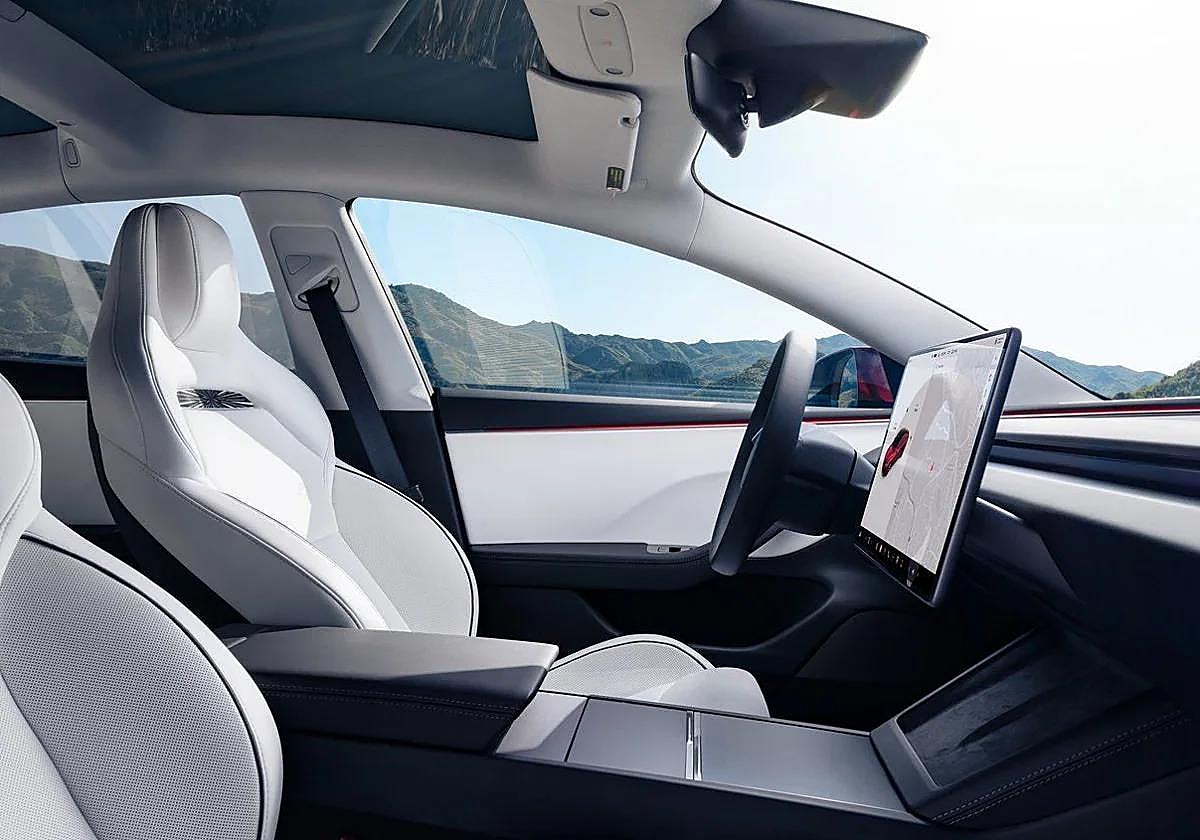
A Tesla Model 3, equipped with the same hardware that already in clients' cars, autonomously navigated its way around Madrid's iconic landmarks: from the majestic Puerta de Alcalá and the Fuente de Cibeles, around the Parque del Retiro and into the bustling downtown streets and residential neighbourhoods, the system demonstrated its ability to handle complex urban situations.
The aim was to show how self-driving reacts safely and efficiently to the presence of vehicles and pedestrians, ensuring a smooth ride for the occupants. The only difference between the test vehicle and the standard vehicle is the software, which is a development version.
Autopilot
Currently, all Tesla models already come with standard autopilot, which, according to the company, significantly improves safety and driving comfort. However, Tesla's ambition goes further. The vision for the future is for all of its vehicles - including Model S, Model 3, Model X and Model Y - to have full autonomous driving capabilities without supervision. This goal could be achieved through continuous updates that will add new assistance features.
Tesla's approach is based on a purely visual architecture, powered by neural networks trained on billions of real-world use cases. By dispensing with more expensive sensors such as LiDAR and high-definition mapping, the company aims for a more scalable and safer deployment in a wide variety of geographies and situations. The philosophy is to mimic human driving, relying exclusively on vision and powerful processing.
Tesla says that its driver-assist technologies are not only the future - they are already making roads safer. The company cites data from the first quarter of 2025 suggesting that drivers using autopilot technology are ten times less likely to be involved in an accident than the average driver. If this argument is confirmed, it could transform the perception of road safety in Europe.
![[]](http://static.vocstatic.com/voc26/latest/assets/images/favicon/surinenglish/apple-touch-icon-57x57.png)