
Ceuta migration crisis
Morocco promises European Parliament to receive all unaccompanied minors who crossed into Ceuta in July
In a letter on Tuesday, Morocco rejects any responsibility for the mass arrival of migrants in the Spanish territory

Bruselas
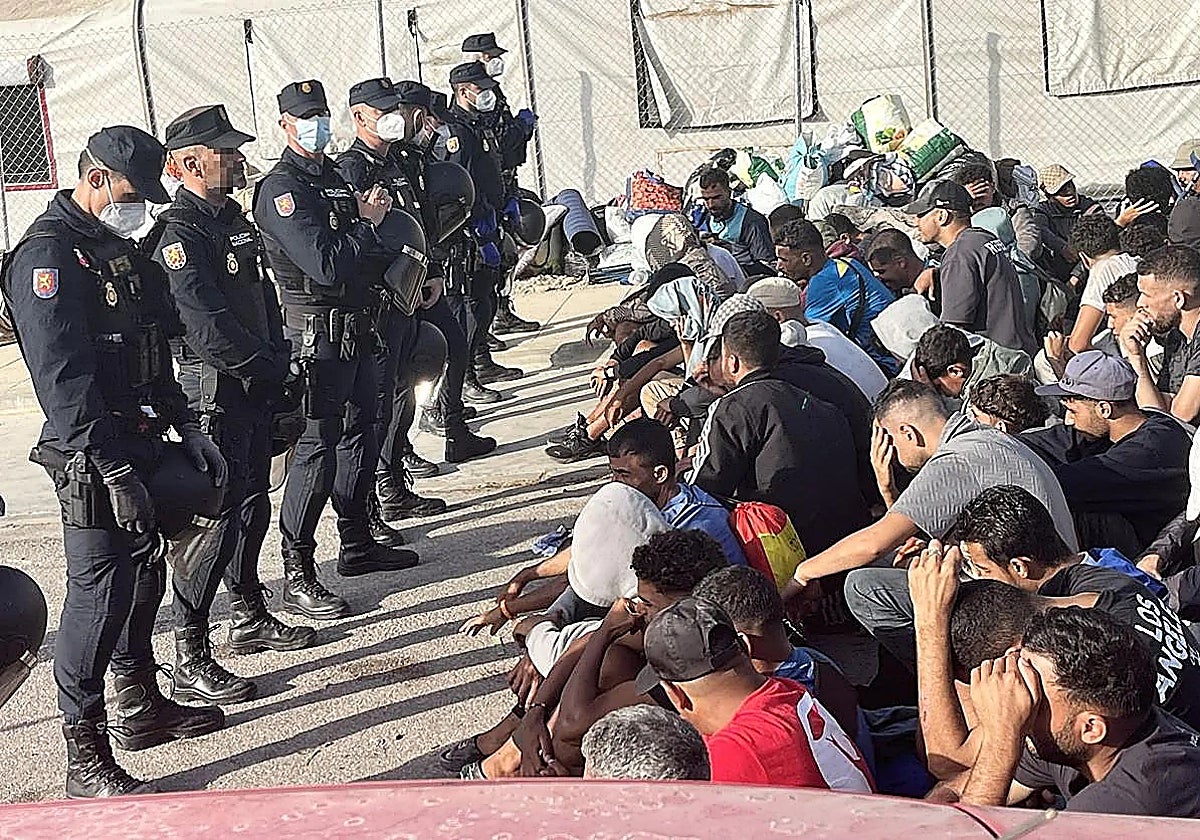
Morocco has once again denied any responsibility for the crisis in Ceuta and promised to take in all migrants, including unaccompanied minors.
In a letter ... addressing the European Parliament, Morocco says that Spain has no information that would allow it to hold Morocco responsible for what happened in July and blames the mass arrival of migrants on misinformation and criminal networks.
The letter arrived on the very day that the European Parliament debated the crisis in Ceuta, where thousands of migrants still remain.
Related story
-

Melchor Sáiz-Pardo
During their speaking slots, Spanish parties PP and Vox accused Morocco of being responsible for the mass influx of people and called for a review of the EU's agreement with Rabat in the wake of these events.
The Kingdom of Morocco describes the events of 30 July as "unfortunate". In the letter, the Moroccan authorities say they "are working" to determine the causes.
Morocco also notes that the Spanish government has publicly stated that the information at its disposal "does not allow" it to hold Morocco responsible for these events.
The letter states that PM Pedro Sánchez's government "has acknowledged" the country's swift and active cooperation in facilitating the return of the vast majority of migrants.
Furthermore, to demonstrate its good faith in light of "the exceptional nature, scale and complexity" of the events, Rabat has undertaken to accept back Moroccan citizens, unaccompanied minors and third-country nationals.
Close cooperation
Morocco also states that it has "systematically" fulfilled its commitments to Spain and the EU, with whom it maintains "close cooperation". It highlights that, every year, the Moroccan authorities prevent more than 75,000 irregular crossings.
It also says that the sudden arrival of tens of thousands of people "cannot be addressed through the use of lethal force" and that it does not consider the use of such force to be "either a means or a solution" to the management of migration flows.
Morocco defends its role as a reliable partner of the bloc, stating that between 2023 and 2025 it prevented 227,000 irregular arrivals in the EU and dismantled more than 1,000 human-trafficking networks.
The North African country concludes the letter by asking what interest Morocco would have in provoking a crisis with Spain and the EU, at a time when this relationship is "strengthening and consolidating".
The PP pointed out that none of its 22 MEPs had received any communication from the Moroccan Embassy. "Not all of us have received this email. I would like to see the list of recipients and find out if there are any Spaniards on the list," the PP's Esteban González Pons said.
![[]](http://static.vocstatic.com/voc26/latest/assets/images/favicon/surinenglish/apple-touch-icon-57x57.png)