
Ceuta migration crisis
Pedro Sánchez denies prior warning or 'solid proof' of Moroccan involvement in Ceuta migration influx
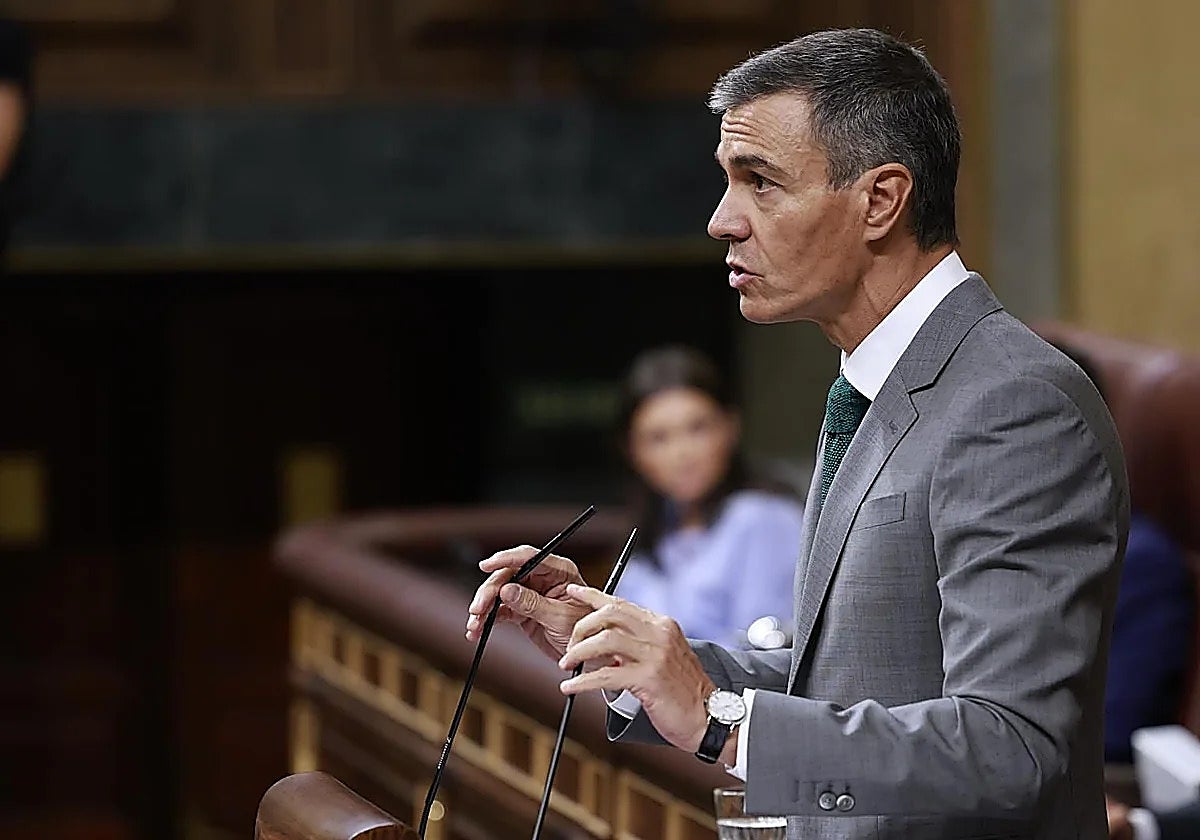
Spanish Prime Minister addresses Parliament over border crisis, rejecting opposition Pegasus spyware claims while promising to publish full intelligence dossier

Madrid
Parliamentary debate on Ceuta at a glance
-
Event: Mass border influx into Ceuta (30–31 July)
-
Key Figure: 70,000+ illegal entries recorded over two days
-
Intelligence: No advance warnings detected by CNI or police
-
Official Stance: Sánchez rejects state blame without solid evidence
-
Opposition Claim: Alleged fear over 2020–2021 Pegasus phone hacking
Spain's Prime Minister Pedro Sánchez has acknowledged that Moroccan security forces "allowed" the entry of over 70,000 migrants into Ceuta on 30 and 31 July ... , but insisted there is no conclusive evidence attributing the crisis to the Moroccan government.
At the same time, however, he states that it would be imprudent to attribute the organisation of the biggest migration crisis Spain has seen to date to the Moroccan authorities.
Before Parliament on Thursday, Sánchez stated that "neither the CNI, nor the National Police, nor the diplomatic service, nor the European Commission, nor any international body has provided the government with solid evidence that Morocco planned or carried out the incident". "None whatsoever," the PM said.
Related story

The government is aware that doubts regarding the role of King Mohammed VI in the events have taken root among parliamentary groups and the public.
Wednesday's disclosure of a report by the CENIF national centre for immigration and borders, which suggests that Moroccan police actively "guided" people towards the border, has fuelled these suspicions.
The opposition has no hesitation in suggesting that behind the government's refusal to acknowledge this lies a fear that Morocco might make use of the sensitive information it allegedly holds on the prime minister following the "hacking" of his phone between October 2020 and November 2021 using Pegasus software.
Sánchez, however, stated that he harbours no fear whatsoever and cited his stance towards Donald Trump as proof that he does not allow himself to be intimidated by foreign powers.
Although he spoke of a "hybrid attack" and said he understood why many people believe the Moroccan authorities are responsible, Sánchez said that his duty is to act on the basis of solid information. He said that he could not act like opposition party PP, which dragged Spain into the Iraq War without evidence that Iraq possessed weapons of mass destruction.
He also revealed that, on 21 August, the Moroccan ambassador was summoned following statements by two ministers from the neighbouring country regarding the sovereignty of Ceuta and Melilla.
In his speech, Sánchez also denied that the government had information that would have enabled it to prevent the mass influx. He even promised to "publish a dossier" containing all the reports that were available to the government at the time.
In response to the statements Defence Minister Margarita Robles made, the PM said that under no circumstances were the intelligence services, the police or the Ceuta authorities able to detect the scale of what was to come.
He described the incident as a "tsunami", which this time he did not attribute directly to organised crime groups, as he did on 31 July, nor to the manoeuvres of Russia and Israel, as he did last Monday, but rather to "a phenomenon with many causes and actors that fed into one another".
Sánchez stated that the "triggering news story" was the Supreme Court ruling of 8 July, which banned the immediate return of migrants who do face obstacles or physical borders upon arrival.
According to the prime minister, the ruling has been "gradually misrepresented" on social media by hoaxes claiming that the border was open and that anyone who swam across could not be returned.
That message spread to various platforms, but this time Sánchez acknowledged that analyses had been unable to determine whether there were any profiles behind it linked to Moroccan protest movements, the Moroccan state, Russia or Israel. "For the time being, our intelligence services have ruled this out," he said.
"It does appear that, from midday on 30 July, these were joined by numerous disinformation campaigns which exacerbated the crisis with fake images and distorted accounts. These were also encouraged by certain figures from the international far right and, I regret to say, from the Spanish far right, who exploited the tragedy to stoke fear and hatred," Sánchez stated.
The prime minister highlighted that, while these combined actions served to "accelerate" the "desire to emigrate" fuelled by "poverty, inequality and a lack of opportunities", it is currently "impossible" to say whether any one of them "would have triggered this crisis on its own".
In Parliament, Sánchez did not apologise for the neglect other parties and the public have accused him of. Instead, he defended the efforts of the government so far and said that they should have postponed the declaration of a matter of national security until 25 August.
Sánchez took great care to show empathy towards the people of Ceuta. "I am aware that you are going through very difficult times. You have experienced fear and distress and you are finding it hard to lead a normal life. I know that, so far, the response we have provided through the public authorities has not been sufficient. It will never be sufficient until we restore normality," he acknowledged.
According to Sánchez, the incident has not called his migration model into question. "On the contrary, it shows that the model we had until 2018, the one that still prevails across much of Europe, is falling apart," he said.
"We need to strengthen our border and our cooperation with Morocco, but we also need to provide a legal alternative for those who wish to come to our country and to support Africa's development. Simply by closing down aid agencies, as the PP and Vox do wherever they are in power, we will not reduce migratory pressure. We'll actually increase it," Sánchez concluded.
![[]](http://static.vocstatic.com/voc26/latest/assets/images/favicon/surinenglish/apple-touch-icon-57x57.png)