
Legal
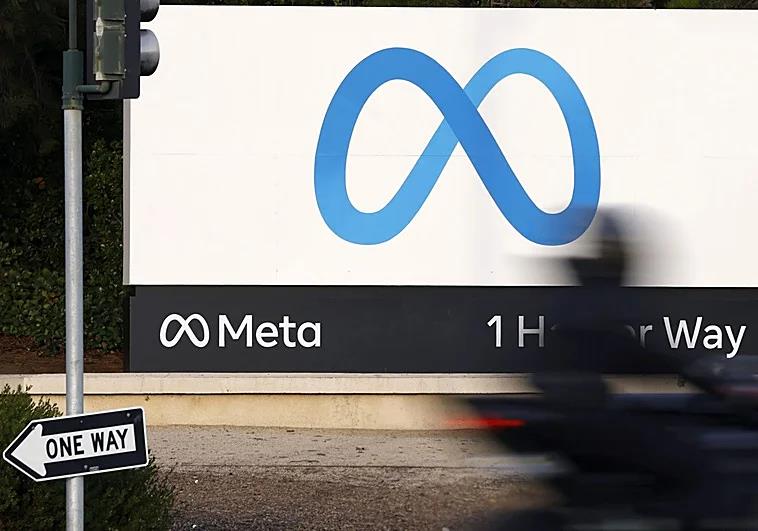
Meta ordered to pay 542 million euros to media groups in Spain for unfair competition
The owner of Facebook, Instagram and WhatsApp will have to compensate 87 Spanish media outlets for GDPR data protection violations

Madrid
A court in Spain has ordered Meta - owner of Facebook, Instagram and WhatsApp - to pay 542 million euros to 87 Spanish media outlets for GDPR violations. According to the ruling of the commercial court in Madrid, which is not final, Meta used a huge amount of personal data to create highly targeted ads without proper user consent, which gave it a competitive advantage in online advertising that newspapers could not match. The ruling could set an important precedent in the Spanish advertising sector and in Europe, which has several legal proceedings underway against Mark Zuckerberg's business conglomerate.
Judge Teodoro Ladrón ordered Meta to compensate the press outlets. A total of 87 Spanish publishers and news agencies, including the Vocento group which includes SUR, have been affected by Meta's irregular advertising policy, which, they claim, is in breach of the European data protection regulation (GDPR).
The 59-page ruling can be appealed by the US technology company. The magistrate partially upheld the Spanish media's claim, highlighting the "unlawful processing" of an enormous amount of personal data collected through Facebook, Instagram and "other internet pages where users browsed".
The ruling is based on article 15.1 of the unfair competition law (LCD), which considers it unfair to make use of a competitive advantage acquired through the violation of laws. This was the core of the legal proceedings, which took place on 1 and 2 October. The Spanish media's case against Meta dates back to December 2023 with the filing of the lawsuit, which now results in a first, albeit provisional, victory for the country's press.
Throughout the process, the media have stated that the US technology company has "systematically" failed to comply with the GDPR, according to which the express consent of users must be obtained before their data is processed for advertising purposes. "In November 2023, the company admitted that it did not ask for consent," lawyer Nicolás González-Cuéllar said at the preliminary hearing held in November last year. "All the data we collect is obtained with users' consent," Facebook's director of privacy policy in Europe Cecilia Álvarez-Rivera said.
According to the judge, in May 2018, the company changed the legal basis from user consent to the need for performance of a contract. According to the judge, citing EU regulation, the legal basis is what allows Meta to process Facebook and Instagram users' personal data lawfully. "If the legal basis is inadequate, the processing of users' personal data for advertising becomes unlawful," he said. Furthermore, Meta was sanctioned for this reason by the Irish data protection commission in December 2022. "If they had maintained user consent, this lawsuit could not succeed," the judge said.
For calculating the compensation, Judge Teodoro Ladrón used the national commission on markets and competition's (CNMC) guidelines. According to the ruling, the data contained demonstrates "with reasonable plausibility" the damages caused to digital media - profits they failed to earn due to Meta's conduct. He said that "the Meta subsidiary acting as headquarters for business in Spain did not provide the court with the accounting information corresponding to its activities in Spanish territory".
Given the absence of documentation, the judge applied the principle of burden of proof and validated figures published by various digital media outlets. He concluded that during the five-year period in which the infringement occurred, Meta obtained more than 5.28 billion euros in Spain from online advertising. The judge believes the real profits may be even higher, since if they were lower, Meta would have presented its accounts to prove it.
Hyper-segmented advertising
The hyper-segmented advertising market is one of the main sources of income for big tech firms. "Everyone does it," Meta's witnesses said in court, adding that audience segmentation is also used "by traditional media and new digital platforms".
The market share of tech platforms in advertising has soared in recent years, reaching four out of every ten euros invested in 2023, according to data from the i2p study. "This case is not just a business matter: what's at stake is the protection of the rights of millions of European citizens whose data has been exploited without their consent," director of the association of information media Irene Lanzaco said.
According to statements by Facebook executives, advertising on their platforms is allocated through an auction system. The highest bidder does not always win: the algorithm weighs the advertiser's bid, the perceived quality of the ad and the likelihood of user interaction. With those factors it chooses which ad to show. According to these witnesses, the key is not accumulating large volumes of data, but processing it efficiently and allowing campaigns to adjust in real time, so that both a large brand and a small business can compete on equal terms.
![[]](http://static.vocstatic.com/voc26/latest/assets/images/favicon/surinenglish/apple-touch-icon-57x57.png)