
Health
Government approves 500m-euro package for sufferers of ALS and other illnesses requiring 24-hour care in Spain
The new grade III plus of extreme dependency guarantees such care for patients with this and other very serious, incapacitating and irreversible conditions

Madrid
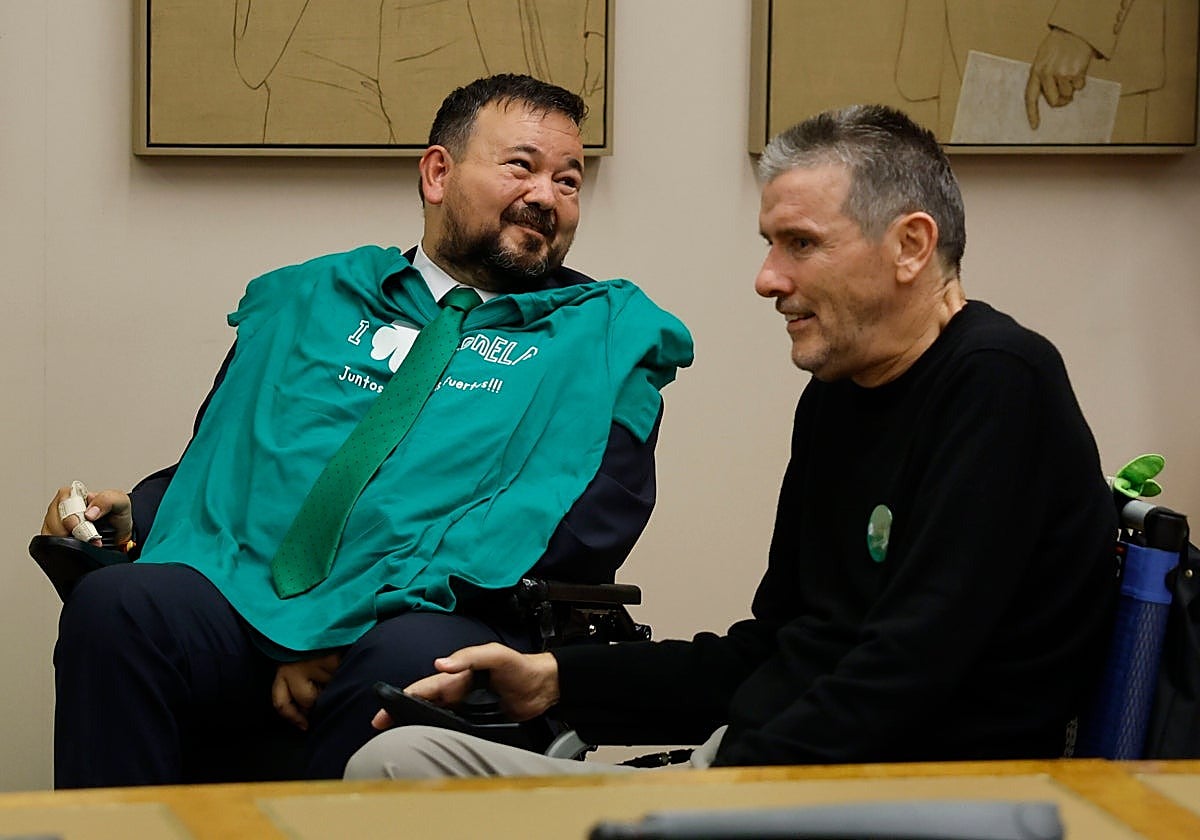
The Spanish government has approved a royal decree law for the regulatory development of its Amyotrophic Lateral Sclerosis (ALS) law - which includes an additional budget item of 500 million euros to guarantee the socio-health care of patients with this and other disabling, irreversible diseases with a very low life expectancy, which have complex care needs. The law also reinforces the national dependency assistance system, which provides care for this community.
The approval of the royal decree law proposed by the Ministry of Social Rights will ensure the implementation of all the measures of the law and in particular it will guarantee professional care 24 hours a day, 365 days a year for people in the most advanced stage of their illness, when they require constant care and support throughout the day with a minimum of five professionals in shifts.
The royal decree law, in fact, gives legal coverage to this new type of specific, specialised care with the creation of grade III plus of the dependency system, which entitles to intensive and extraordinary benefits. Those who are classified in this group will receive almost 10,000 euros per month (around 120,000 euros per year), which will be financed in half by the state and the region, so that they can cover all the costs of care.
The approval of specific funding for the law ends a year of waiting for patients, who argue that almost 1,000 had died without receiving the promised aid. In fact, the Ministry of Health, as an emergency stopgap, promised in June to give 10 million euros to the national confederation of ALS organisations (ConELA) so that, while the government approved the funding to finance the measures, it would immediately send the money needed to pay the professionals necessary to provide 24-hour care for the most advanced patients, those suffering from tetraplegia - paralysis below the neck - and who need permanent mechanical ventilation to prevent them from dying.
A study carried out by patient organisations indicates that there are some 3,600 ALS sufferers in Spain, who in the most advanced stages of the disease require around 115,000 euros a year to ensure adequate and permanent care, and they therefore considered that the law should be endowed with at least 184 to 230 million euros each year to cover this extraordinary care.
The ALS Act, passed by Parliament on 30 October 2024, incorporated patients' main demands, such as guaranteed round-the-clock care, the assistance of a physiotherapist, improved working conditions for carers, more training for healthcare workers and a boost for research.
It also obliges the public bodies to provide the teams in charge of recognising the degree of disability with sufficient means to be able to do so in a period of less than three months from the time these patients request the review. From now on this will be requested through specific protocols, channels and models, either in person or virtually and will be processed in a singularised manner. They must also guarantee accelerated authorisation of the most important social benefits to which they are entitled, such as those of the dependency system.
Other severe conditions
The Ministry of Health is also finalising another royal decree, which will have to be approved by the Council of Ministers and establishes the criteria that will allow the benefits of the ALS law to be extended to other people with incurable conditions which cause severe disability and lead to a very short life expectancy, as provided for in the law approved a year ago.
The decree sets out in detail the criteria that a patient must meet in order to be covered by this law, but does not establish a closed list of illnesses, as it considers that the right is obtained by the personal conditions to which the evolution of the illness leads the patient and not by the pathology or diagnosis. However, it does include in an indicative annex a group of neurological diseases that it considers very likely to be covered by the law in the majority of cases.
The illnesses mentioned are progressive muscular atrophy, primary lateral sclerosis, certain transmissible spongiform encephalopathies, captive syndrome due to cerebral infarction in the pons or type I and II spinal muscular atrophy that do not respond to treatment. In any case, and regardless of the pathology, the text indicates that only those who fully meet the four criteria set out in the royal decree will be eligible for this aid, once this has been certified by the treating specialist at the patient's request.
The State reaches a record level of dependency funding
The additional 500 million included in the Royal Decree-Law approved on Tuesday 21 October will bring the amount given by the state to the regions to finance the national dependency assistance system to 3,729 million euros by 2025, the highest annual amount provided since its creation 18 years ago. The Minister for Social Rights, Pablo Bustinduy, indicated that the enormous budgetary effort made by the Government over the last seven years to promote and equip the dependency system has made it possible to alleviate most of the 5.4 billion euro cut made between 2013 and 2018 by the Executive of Mariano Rajoy, which condemned it to collapse. In addition to the significant increases in the annual budget allocation, the state has financed a shock plan with an additional 800 million euros to reduce waiting lists (down 40%), increase the number of aid beneficiaries (up 60%) and for the regions to reinforce telecare and places in homes and day centres.
![[]](http://static.vocstatic.com/voc26/latest/assets/images/favicon/surinenglish/apple-touch-icon-57x57.png)