
The European Union gives green light to Pfizer's Covid-19 pill
Paxlovid is a course of 30 tablets over five days that stops the reproduction of the virus in the body and significantly reduces the risk of hospitalisation and death. Spain has, so far, purchased 344,000 treatments for this year
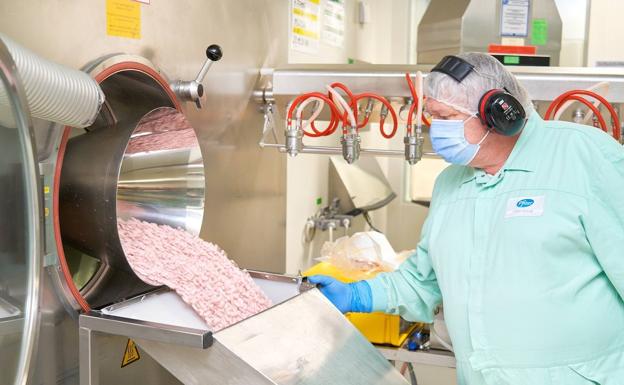
ALVARO SOTO
The European Medicines Agency (EMA) has authorised the use of Pfizer's oral drug against Covid-19, a pill that, according to clinical trials, significantly reduces the risk of severe disease (hospitalisation and death). As yet, however, there is still no date for Paxlovid, as the drug is called, to start being administered to European patients.
Until now, the pharmacological fight against the virus has focused on vaccines. But yesterday, the EMA opened another door by giving the green light, for the first time, to a pill that is recommended for patients "who do not need respiratory assistance, but who present a risk that the disease will worsen." The treatment consists of the administration of 30 pills, six a day for five days.
Paxlovid, an oral antiviral drug that reduces the ability of SARS-CoV-2 to multiply in the body, is a combination of a new molecule, PF-07321332, and ritonavir, an HIV antiviral, which is administered in tablet form. The active ingredient PF-07321332 blocks the activity of an enzyme necessary for the virus to reproduce, and ritonavir is a protease inhibitor, which prolongs the stay of PF-07321332 in the body.
A study shows that the administration of Paxlovid significantly reduces the risk of hospitalisation and deaths in patients who were at risk of severe disease from Covid. The trial was carried out in patients who received the pill or a placebo in the first five days after the onset of symptoms. Only 0.8 per cent of those taking Paxlovid had to be hospitalised for more than 24 hours, compared to 6.3 per cent of those taking placebo, meaning the antiviral reduced the risk of hospitalisation or death by 89 per cent (within three days of symptom onset) and 88 per cent (within five days of the onset of symptoms) compared to the placebo. No deaths were recorded in the group given the drug, but there were nine among those who received the placebo.
First days
Experts stress that the success of the pill increases significantly if it is administered as soon as possible after the patient has been diagnosed as coronavirus positive. When the patient reaches a serious state, the effectiveness of the drug decreases because the virus does not replicate as quickly.
According to the EMA, the most common side effects of Paxlovid, within 34 days after taking the last pill, were dysgeusia (taste disturbance), diarrhoea and vomiting. In addition, laboratory animal studies link high doses of Paxlovid to fetal growth problems, making it not recommended for pregnant women. It must also not be used in patients with severely reduced liver or kidney function.
The United States, Canada or Israel are some of the countries that have already approved Paxlovid.
As happened with vaccines, the European Union has started a negotiation process with Pfizer for the purchase of its antiviral, but this time, the member States are also buying pills on their own. The Spanish PM, Pedro Sánchez, announced on 10 January that Spain has purchased 344,000 treatments in 2022. The Minister of Health, Carolina Darias, explained on Wednesday that her department is still deciding the profile of the people who will receive Paxlovid first, although everything indicates that they will be those who suffer the greatest risk of severe disease: those over 60 years of age and patients with previous pathologies such as obesity or diabetes.
After Paxlovid, the EMA will have to study the authorisation of another oral drug, called Lagevrio, from the Merck company Merck. In principle it is less effective than that of Pfizer, because it reduces the chances of hospitalisation by up to 50 per cent.
![[]](http://static.vocstatic.com/voc26/latest/assets/images/favicon/surinenglish/apple-touch-icon-57x57.png)