
Economy
Why are electricity bills in Spain among the most expensive in Europe?
They have shot up by almost 17% in a year, to an average of 84 euros per household per month, some 12.64 euros more than in 2024

Madrid
Spain has gone from being one of the benchmarks in Europe for low electricity prices to heading the list of the most expensive bills in the EU in 2025. It is among the countries where the average household electricity bill has risen the most in the last year.
Several factors contribute to this. First comes the elimination of tax reductions on electricity bills applied in 2023 and 2024 to mitigate the effects of inflation due to the war in Ukraine. Next comes Spain's electricity operator Red Eléctrica's system boost mode applied since the major blackout in April. Spain reached the halfway mark of 2025 with 29.07 euros for kWh, compared to the EU average of 28.62 euros. With this, according to Eurostat data, Spain surpasses France and 17 other EU member states.
This price increase makes Spain an exception in the EU, where the average household bill in most countries has either dropped or remained stable. The average bill in Spain in 2020 was 23.94 euros per kWh. The peak was in 2022 (32.82 euros), which then dropped again in 2023 (26.32 euros) due to the tax cut. The abovementioned conditions have contributed to a 9% increase in the past 12 months.
This is the largest year-on-year increase among the main European powers. In comparison, France has experienced a 6% decrease since 2024, Germany a 2.5% drop and Portugal a 1.5%. The price has also grown in Italy, but only by 1%. In the EU as a whole, the average bill has risen by only 0.3% since last year.
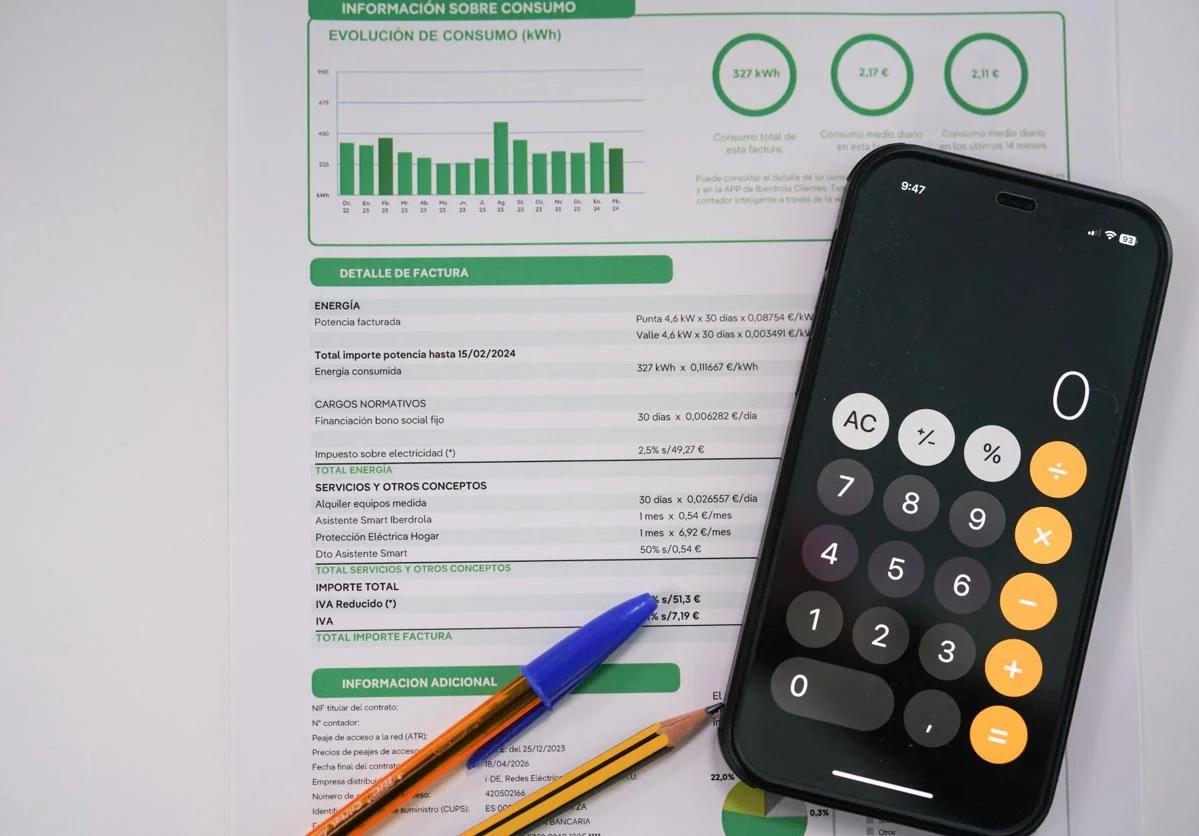
To translate the price growth in Spain into an actual bill, the average bill in October this year stood at 84.40 euros, compared to 71.70 euros last year.
Spain has gone from having the cheapest electricity in the EU to taking the lead after raising taxes and because of Red Eléctrica's measures after the massive nationwide power blackout in April
The nuclear dilemma
In fact, the highest increase in the last few months was in October (+3 euros). The record was in February, with an average of 95.70 euros. Since the pandemic, the bill has been climbing from 64 euros in October 2020 to 120 euros in October 2021 due to the crisis. It remained close to 100 euros in 2022 and stabilised at around 71 euros in 2023 and 2024 due to tax cuts. Therefore, this increase of 12 euros in 2025 has been the biggest increase since the inflation.
The Spanish government has decided to extend the life of nuclear power plants, which, experts claim, will guarantee lower energy prices. According to the economic research foundation Fedea, the closure of nuclear power could lead to a price increase of 58%.
Consumer organisations urge the government to lower taxes on electricity, as it is "a basic necessity" and, as such, should be taxed at a reduced rate of 10% or even 5% (the minimum allowed by the EU), instead of the current 21%. President of the European Commission Ursula von der Leyen has also urged leaders in Europe to lower electricity taxes in order to make progress in the energy transition.
![[]](http://static.vocstatic.com/voc26/latest/assets/images/favicon/surinenglish/apple-touch-icon-57x57.png)