
Deliberate forest fires rise to one in three cases investigated in Spain
The Public Prosecutor's Office recorded its highest proportion of intentionally started blazes in at least five years after an exceptionally severe 2025 fire season
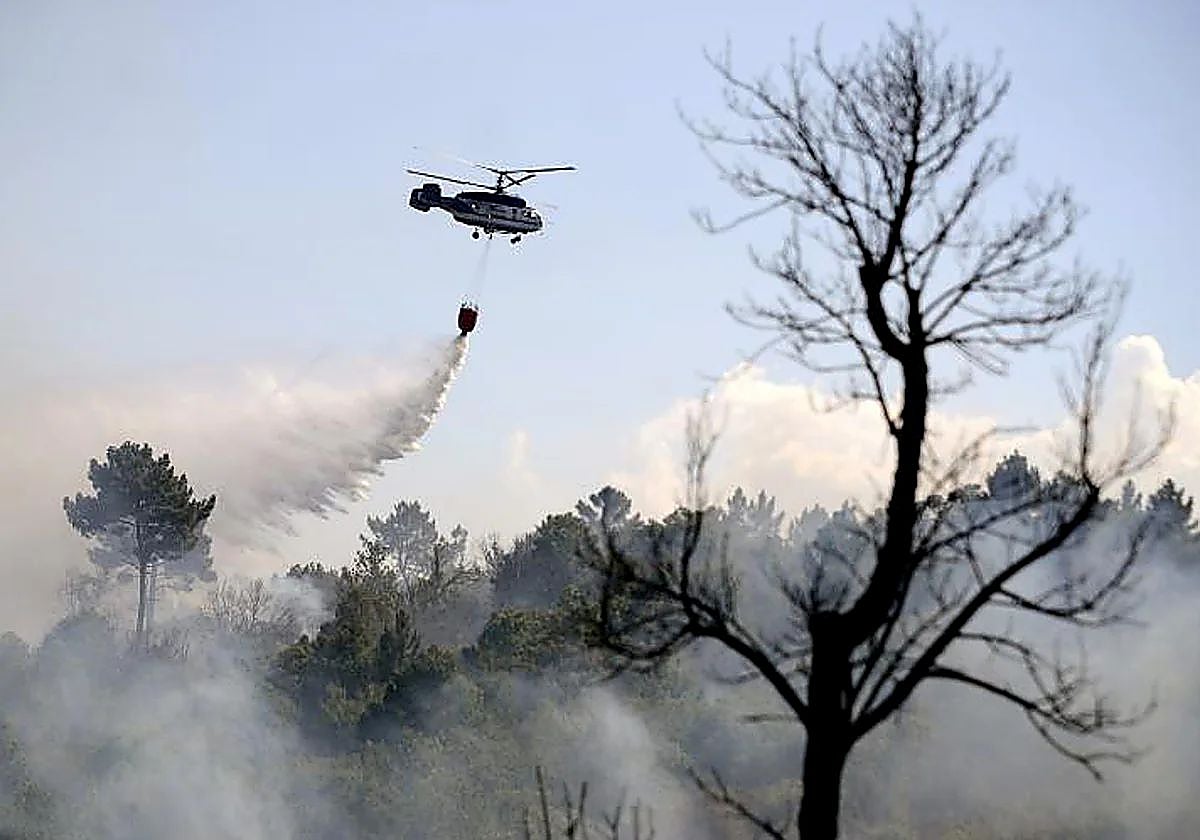

The wave of forest fires in 2025 was exceptional not only because of the area burnt, but also because of the number of fires that ... were deliberately started.
One in three fires investigated by the Environmental Prosecutor's Office was found to have been started intentionally. At 32.54 per cent, this was the highest proportion in at least five years, according to figures in the Annual Report of the Attorney General's Office, published on Thursday.
"2025 was one of the most severe years in terms of forest fires, with 354,793.50 hectares of forest affected, despite the fact that there were 8,189 fires, below the average for the past 10 years," the report states.
As many as 63 of those fires were classified as major forest fires after burning more than 500 hectares, twice the average for the past decade, highlighting the danger and complexity of the incidents.
They included some of the largest fires in Spain's recent history, such as those at Molezuelas in Zamora and Larouco in Orense, surpassed only by the exceptional fires recorded in 2026 at Niebla in Huelva and Burgohondo in Ávila.
Intentional, negligent or accidental
Investigations carried out by the Public Prosecutor's Office, excluding insignificant fires affecting only small areas and fires caused by natural phenomena such as lightning, resulted in 439 people being arrested or placed under investigation. "This is in line with the number of fires," the Annual Report states.
What stands out, however, is the proportion of fires deliberately started, which accounted for 32.54 per cent of those investigated, the highest figure in the past five years. Between 2021 and 2024, deliberately started fires never accounted for more than 25 per cent of those investigated.
Most investigations, however, concluded that fires had been caused by negligence. This means the person involved did not intend to start a fire but had carried out an activity that could cause one, such as agricultural burning, leaving a campfire improperly extinguished or throwing cigarette ends into dry vegetation. Glass and bottles can also contribute to the risk.
Accidental fires remain the majority, accounting for 52.38 per cent of those investigated. Human activity therefore starts most fires, but once a blaze takes hold, factors such as weather conditions, vegetation type and whether combustible material has been properly managed play a crucial role in how it develops.
A different approach to prevention
Following the 2025 wave of fires, prime minister Pedro Sánchez blamed climate change and proposed a national pact to address the climate emergency. The Environmental Prosecutor's Office, meanwhile, is taking a different approach.
It's working to incorporate drones and remote sensing technology to help tackle fires before they spread. It also aims to identify the "most problematic" areas so it can introduce a "higher level of control and surveillance" to "prevent and, ultimately, if possible, avoid forest fires" in those areas, according to the report.
The office has also launched a campaign to check whether municipalities have forest fire prevention plans in place. Environmental organisations currently estimate that 80 per cent of the country either lacks such a plan or doesn't implement it.
![[]](http://static.vocstatic.com/voc26/latest/assets/images/favicon/surinenglish/apple-touch-icon-57x57.png)