
Legal
Supreme Court rules that bricklayer's heart attack on building site was not a work-related incident
Spain's top court ruled out exertion as part of the job as a determining factor in the heart attack
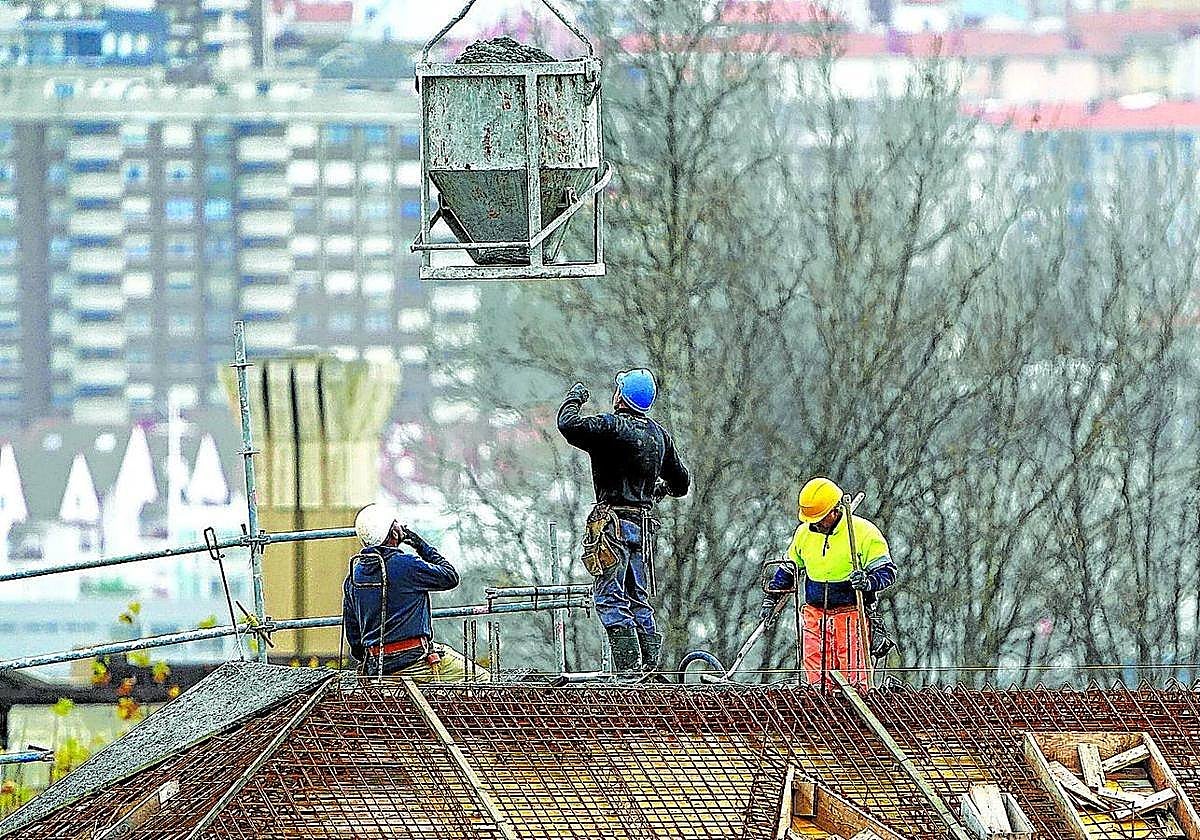

The Supreme Court has ruled that the heart attack suffered by a bricklayer in July 2016 cannot be considered a work-related accident, given that the man (who died in 2018) had started to feel symptoms the previous day and had refused to go to the hospital.
On the day of the incident, the man started working at 8.30am, but it wasn't until 10am when he began feeling unwell. He experienced "severe chest pain" while doing tiling and mortar coating work on a building site. A colleague accompanied him to the hospital where he was diagnosed with a myocardial infarction.
According to proven circumstances, the 56-year-old man had started feeling unwell the day before, which was a Sunday. He felt slight discomfort, which persisted throughout the day. He eventually went to the health centre, where he was immediately told to go to the hospital, accompanied by medical staff. However, he refused and went to work on Monday, as per usual. The pain intensified as soon as he started working, until it made it impossible for him to continue.
Social security officials initially ruled the incident a work-related accident. However, the insurance company filed a lawsuit, stating that the heart attack had started 12, 24 or even 36 hours before the deceased went to work on Monday, basing the statement on the level of the CPK enzyme. The court revoked the initial Social Security decision and stated that the worker had been carrying out "ordinary tasks" and not "heavier work than normal", which could classify the accident as work-related.
The man died in April 2018. His daughter appealed the ruling and the High Court of Justice of Andalucía (TSJA) confirmed the initial decision: her father's temporary incapacity was due to an accident at work. According to the TSJA, the man's complaints intensified while he was working on Monday, as he was "carrying tiles of considerable weight". Therefore, despite the earlier symptoms on Sunday, the TSJA said that his work had played a significant role in his state.
There are precedents that declare that it is not necessary for the injury to be a direct consequence of work, as long as it occurs at the time and place of work. However, these precedents can be revoked if it is proven that the ailment is unrelated to the work or that there was negligence.
Presumption of employment
The presumption that an incident is work-related does not automatically apply simply because the heart attack occurred at the workplace. It is necessary for the condition to be triggered or worsened while performing work duties. In this case, the worker had already shown symptoms the day before, outside of work, which prevents applying the presumption unless it can be proven that the work effort worsened his condition.
In this case, the Supreme Court stated that there was no evidence that the physical effort made by the worker had caused or aggravated the heart attack. Moreover, the worker had neglected the doctor's advice to go to the hospital on Sunday. "It is not reasonable to conclude that the work was the 'determining or triggering factor' of the cardiac arrest," the resolution stated.
![[]](http://static.vocstatic.com/voc26/latest/assets/images/favicon/surinenglish/apple-touch-icon-57x57.png)