
The Bottom Line opinion
The purity panic: notes from the museum of imaginary nations
Spain is not immune to this pandemic of patriotic delirium, writes columnist Troy Nahumko
Troy Nahumko
Malaga
Several years ago in the sleepy town of Völklingen, Germany, a neo-Nazi mayoral candidate pledged to defend Western Civilisation. Asked how he'd stop the rise of Arabic numerals, he said: "Just wait until I'm mayor. Then there will be normal numbers." One might almost admire the pristine idiocy of denouncing the symbols used to write one's own birthday.
Bigotry, it turns out, is Esperanto: universally spoken and pronounced with absolute self-confidence. In the United States, school boards in Republican enclaves swooned when trolled about - again - Arabic numerals. Outrage bloomed like algae. That these were the digits used to count their beers and bullets seemed to elude them.
Across the Atlantic, Brexit Britain - a nation that has invaded roughly 90% of the planet - declared itself under foreign occupation. The same empire that spread its language, laws and smallpox now trembles at Polish plumbers while shoveling tikka masala and washing it down with Indian tea. The dissonance is Wagnerian, though far less tuneful.
Spain is not immune to this pandemic of patriotic delirium. The far right thunders about foreign contamination while swaddled in American brands, praying for the resurrection of a country that survives mainly in the footnotes of its own delusions. They denounce globalisation - between Amazon deliveries.
And yet, in their crusade for "purity," they practise one of Spain's most endearing arts: syncretism. Nowhere else does a pair of Levi's 501s get the reverence of a dress uniform. The crease - razor-sharp, defying both God and denim - marches down the leg of the would-be patriot, a tradwife-ironed tribute to an imaginary homeland. Their cultural panic is as selective as their Catholicism. Charity for the poor, unless the poor are people.
This is the nationalist fantasy: a perfume distilled from amnesia. The myth of "purity" requires forgetting the obvious - that cultures grow through trade, theft, borrowing, mimicry and curiosity. Spain is a tapestry woven by Phoenicians, Romans, Visigoths, North Africans, Jews, Greeks...and every passing sailor with a story. To fear mestizaje is to fear our own reflection.
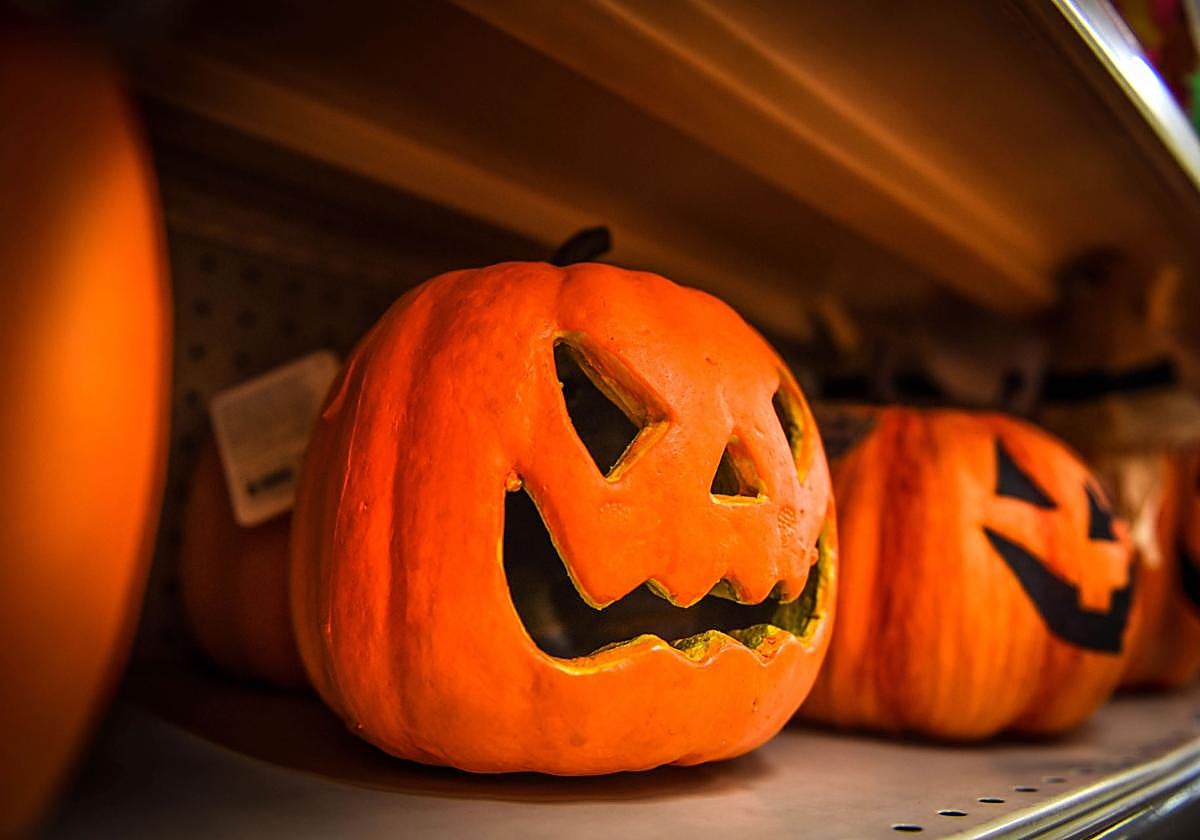
Which brings me to tonight: Halloween.
Nothing is more delightfully impure, more cheerfully syncretic. A Celtic ritual varnished by Catholicism, re-exported by American capitalism, now enjoyed by kids dressed as Mexican skeletons while collecting Dutch candy in Chinese-made buckets. It thrives precisely because it shed its original "purity". Halloween lives because it evolves - belonging to everyone and no one.
The far right despises it for the same reason they despise immigration, open borders and the dictionary: it proves culture is not a museum but a kitchen. Things mix. Spices travel. Recipes change. The result is better than what you started with.
Spain's greatest traditions - its literature, fiestas, language, hospitality - are products of generosity, curiosity and joyful contamination. At its best, the national character is open-armed and unafraid. It feeds strangers. It borrows. It improvises. It adapts.
Hence the final irony: the far right claims to defend "Spanishness," yet the Spain they want has nothing Spanish about it. They dream of a country without mezcla, outsiders, curiosity, or generosity - without the traits that made Spain Spanish.
In the end, they resemble joyless bachelors scolding children on Halloween: threatened by delight, offended by happiness, terrified by a knock on the door. They sit alone in the dark, hoarding their candy, aghast that anyone might share it.
And that is why they will always lose - because culture, like a costume, is meant to be borrowed, shared, paraded, and seen, while the worst of it withers in closets, embalmed by nostalgia, awaiting a past that never was.
![[]](http://static.vocstatic.com/voc26/latest/assets/images/favicon/surinenglish/apple-touch-icon-57x57.png)