
Legal
Two priests acquitted in Malaga of hate crimes against migrants and Muslims
The editor of the website on which the articles were published has also been acquitted
Europa Press
Malaga
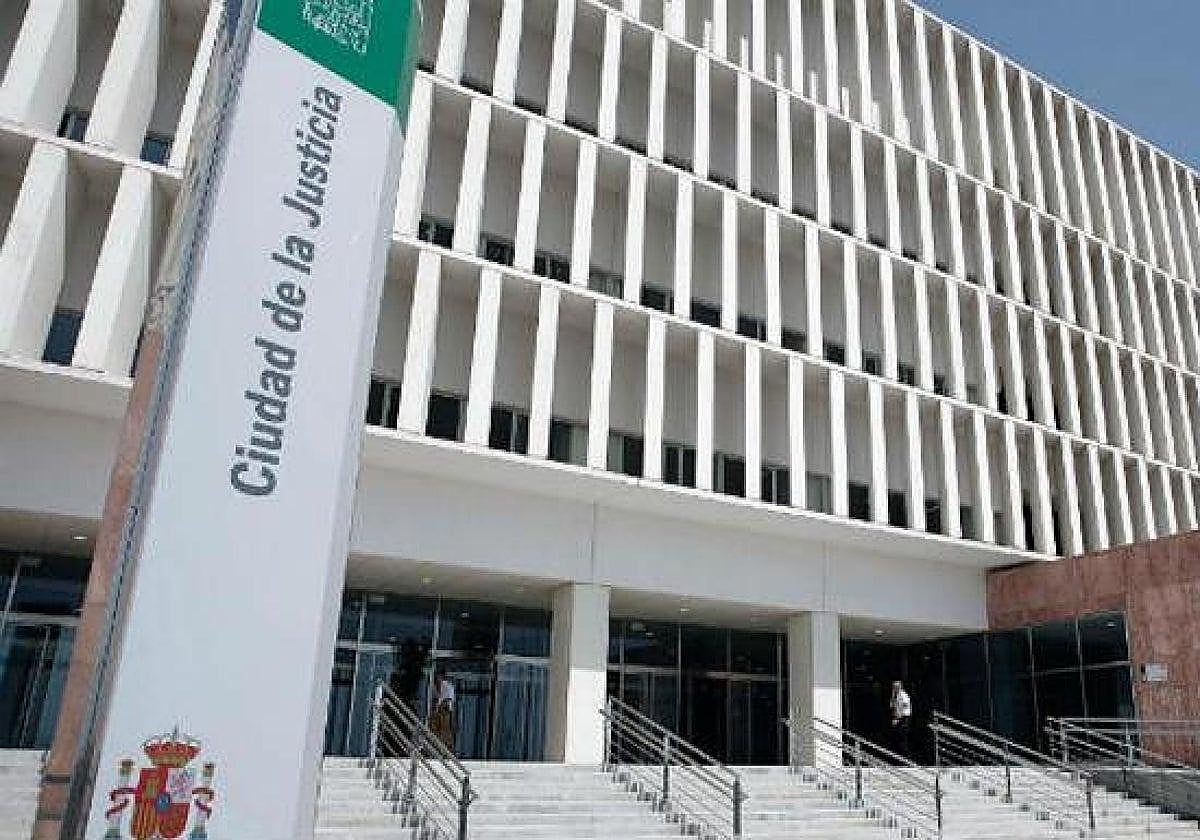
A Malaga court has acquitted the two priests who were accused of hate speech for certain statements made in articles or videos posted on a website. The statements addressed topics such as immigration, the Muslim community and Islam. The editor of the website, who was also on trial, has also been acquitted.
The prosecution had asked for three years in prison for each of the priests - Custodio Ballester and Jesús Calvo - and four years for editor Armando Robles. Given that the defendants had acknowledged authorship, the court focused on assessing whether the statements and the role that the three men played in their dissemination constitute a hate crime or a breach in the exercise of the fundamental right to freedom of speech.
The case of each defendant was analysed separately. The statements in articles and videos were made between 2013 and 2019. Words and expressions such as "invaders", "extermination of the infidel" or "serious threat" were used to refer to refugees or people, especially of African origin, who profess Islam.
The court ruling stated that there could even be certain statements that constitute "intolerant speech" within freedom of expression, even if they are offensive. According to the court, "there are nuances" "between hatred that incites the commission of crimes, hatred that sows the seeds of confrontation and erodes essential values of coexistence and hatred that is identified with animosity or resentment". These nuances imply that not everything that is not covered by freedom of expression "is necessarily criminal".
The court has ruled that Custodio Ballester was exercising his fundamental right to freedom of speech, even though his statements might be "linked to intransigent religious or ideological stereotypes" or to "unjust and arbitrary generalisations". For this reason, his actions are not considered a criminal offence.
The court's ruling also stated that "to hate is not a crime, nor is it to publish and disseminate such hatred. Nor is being proud or boasting of such messages". For this reason, "however despicable and perverse the message or its author may be, if it is not accompanied by a clear and manifest promotion of hatred towards one of the groups protected by such a crime" it cannot be considered outside the limits.
The court then assessed Jesús Calvo and his statements as "delirious". "The accused believes that his statements fall within the realm of normality" due to his mental illness, the ruling states. The priest has therefore been acquitted.
The person who the court considered to be closer "to the crime of incitement of hatred" was the editor of the website, which contained "articles, messages, interviews, news... with an exorbitant fixation with Islam, Islamism and migration and with a permanent and continuous criticism of such beliefs".
"It is intended to spread the idea that the transformation of European society into a multicultural and multiracial society leads to the disappearance of its native population, its racial mixing and the spread of crime and barbarism. Many of the expressions and ideas disseminated by the defendant through Alerta Digital media are clearly offensive," the sentence stated.
However, the ruling concluded that "this does not mean that they can constitute an offence of incitement to hatred". "We have the slightest doubt that the defendant's aim was, in reality, to incite hatred," it stated. It indicates that, although the contents "are not aimed precisely at promoting harmony and coexistence", the defendant's actions are not clearly aimed at provoking hostile or discriminatory acts against a specific group.
"The publication of news stories that do not reflect reality or are exaggerated in order to attract readers' attention (fake news or hoaxes), does not in itself constitute a crime of incitement to hatred, especially when some of those stories are, in fact, based on real events, even if at times they are distorted to the detriment of the migrant population, particularly Muslims," the ruling stated.
The court also referred to the comments made by many readers (usually behind anonymous profiles), which might constitute a hate crime. However, the ruling states that they cannot "be held responsible", given that they are freely given the opportunity to make these comments. According to the court, this opens the door to "hateful, insulting and threatening comments towards" certain groups of people, but such expressions cannot be considered evidence of the commission of a crime of incitement to hatred.
![[]](http://static.vocstatic.com/voc26/latest/assets/images/favicon/surinenglish/apple-touch-icon-57x57.png)