
Employment
Traditional autumn unemployment rise in Malaga eases with around 1,000 job losses in October
The drop in employment is of a similar magnitude with 1,118 fewer Social Security contributors in the province than in the previous month

Malaga
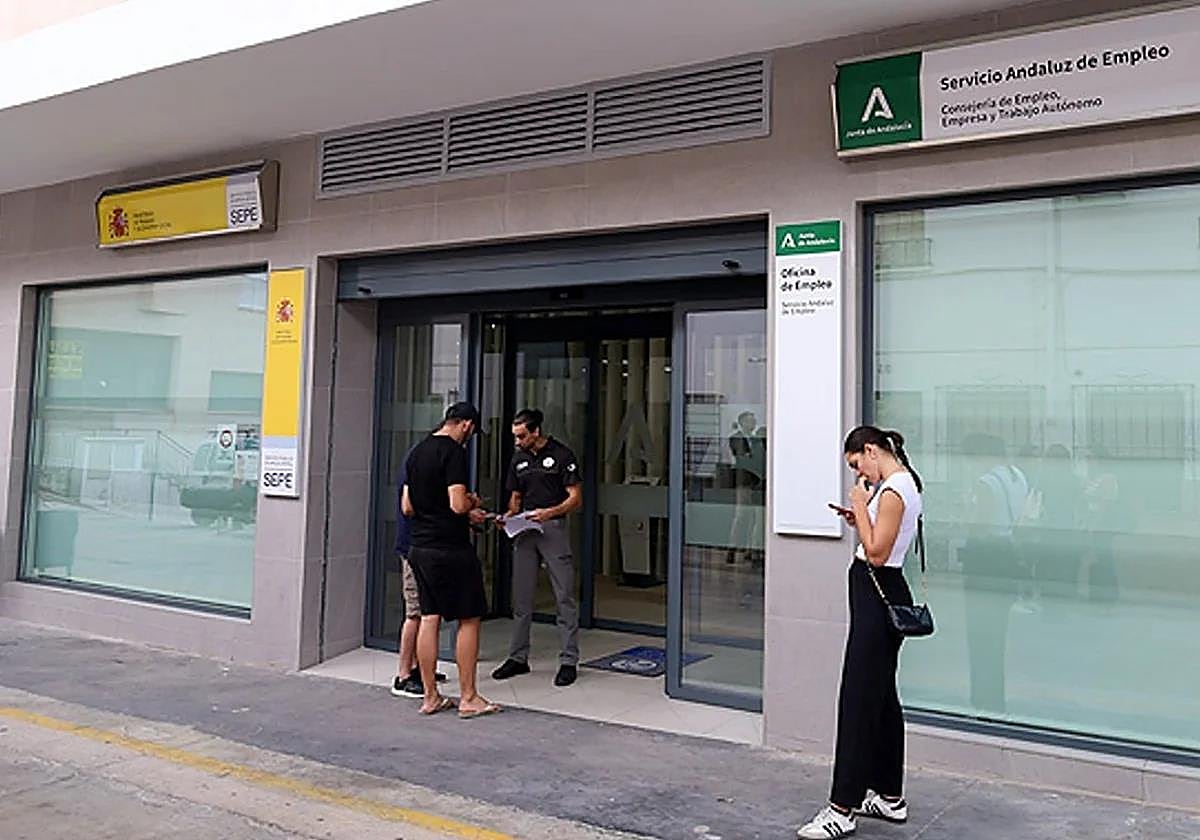
Autumn is no longer what it used to be in Malaga's jobs market... thankfully. The traditional upward curve in unemployment that used to start in August and last until March or April (depending on which month Easter fell) has softened. Adding together the figures for the last two months, unemployment has risen by less than 2,000 people: 637 in September and 985 in October. The province, which includes the Costa del Sol, starts November with 110,351 registered unemployed, which is 9,555 less than a year ago and represents the lowest unemployment figure for this month since 2007.
There are (at least) three factors that may be influencing this trend: the first is the economic boom that the province is experiencing, the second is the reduction in the seasonality of tourism and the third is the effects of the 2021 labour reform, which restricted temporary contracts and incentivised the adoption of fixed-term intermittent contracts for workers hired by hotels and restaurants during peak season. Employees with this type of contract are not counted as unemployed for statistical purposes, even if they are not working, hence the fluctuations in unemployment have been less pronounced in recent years.
Seasonal workers do cease to be registered with Social Security when not working. This was noticeable in September, when the province lost just over 6,000 contributors with respect to the previous month (and the increase in unemployment did not reach 700 people). However, in October, job losses slowed: on average, there were 1,118 fewer people working than in the previous month. The number of workers registered with Social Security is the highest on record for a November in Malaga: 750,011 people, which is 24,830 more than a year ago. The year-on-year growth rate of employment is 3.42%, the fourth highest in Spain.
Last month's rise in unemployment in Malaga was primarily due to the services sector (adding 1,023 unemployed) and first-time jobseekers (an increase of 194). In contrast, unemployment fell in construction (-273). Agriculture and industry recorded negligible variations (+32 and +9 respectively).
Andalucía
Across the Andalucía region, Malaga province saw the second-highest increase in unemployment. Cadiz came first (+1,200). The region ended October with 2,535 more unemployed than the previous month, although three provinces bucked the upward trend: Almeria, Cordoba and Seville. In terms of employment, Andalucía registered a positive balance, with 29,544 more workers registered with Social Security than in the previous month. Malaga and Cadiz were the only provinces where employment fell, with the latter faring the worst, losing 5,180 registered workers.
Employers and trade unions speak out
The executive vice-president of Malaga's association of employers (CEM), Natalia Sánchez, highlights "the economic dynamism of our province, which is evident, on the one hand, in the progressive deseasonalisation of tourism, as we are not only generating employment from February through to August, but this year unemployment has risen by half compared to last year in both September and October. And, on the other hand, in the generation of activity in sectors such as construction." Moreover, Sánchez points out, "we continue to set the best figures of the last almost 20 years and we are among the five provinces where unemployment is decreasing the most throughout 2025".
However, the representative of this employers' association also sees the "serious difficulty in generating a definitive impact on unemployment and achieving a reduction in the unemployment rate below double digits, mainly due to the constant increase in the active population". "We still can't break through our current barriers, repeatedly encountering groups that have a very difficult time entering or re-entering the labour market: young people and those over 45 years of age", explains the vice-president of CEM. On this point, her discourse aligns with that of the trade unions, as she points out "the need to commit to active employment policies that really have an impact on reducing unemployment".
From the CC OO trade union, the secretary for employment matters, María José Prados, agrees: "Active employment policies, especially those aimed at women, young people and the unemployed in the service sector, are more necessary than ever to retrain them so they can enter the labour market." The UGT union also calls for more investment in active employment policies and warns of another cause for concern: the drop in permanent contracts, which are down 5% compared to the same month in 2024.
![[]](http://static.vocstatic.com/voc26/latest/assets/images/favicon/surinenglish/apple-touch-icon-57x57.png)