
Mental health
Death by suicide is on the rise in Malaga province
The total was 168 last year, but a number of associations in the capital of the Costa del Sol are working with those affected and their families to prevent more suicides and help heal the grief

Malaga
The latest data provided by Spain's INE national statistics institute just a few days ago confirms the increase in deaths by suicide in Malaga. This was the cause of death for a total of 168 people in 2024 in the province: 136 men and 32 women. In 2023 there were 163 such deaths.
Beyond the data are the people. Every story, every step to get some relief, every pain that becomes insurmountable. Meanwhile there are thousands of people dedicated to trying to accompany, listen, support and even prevent more suicide deaths. In Malaga there are associations that work in suicide prevention, bereavement support and grief counselling. Thankfully, there are some who find refuge in such support groups.
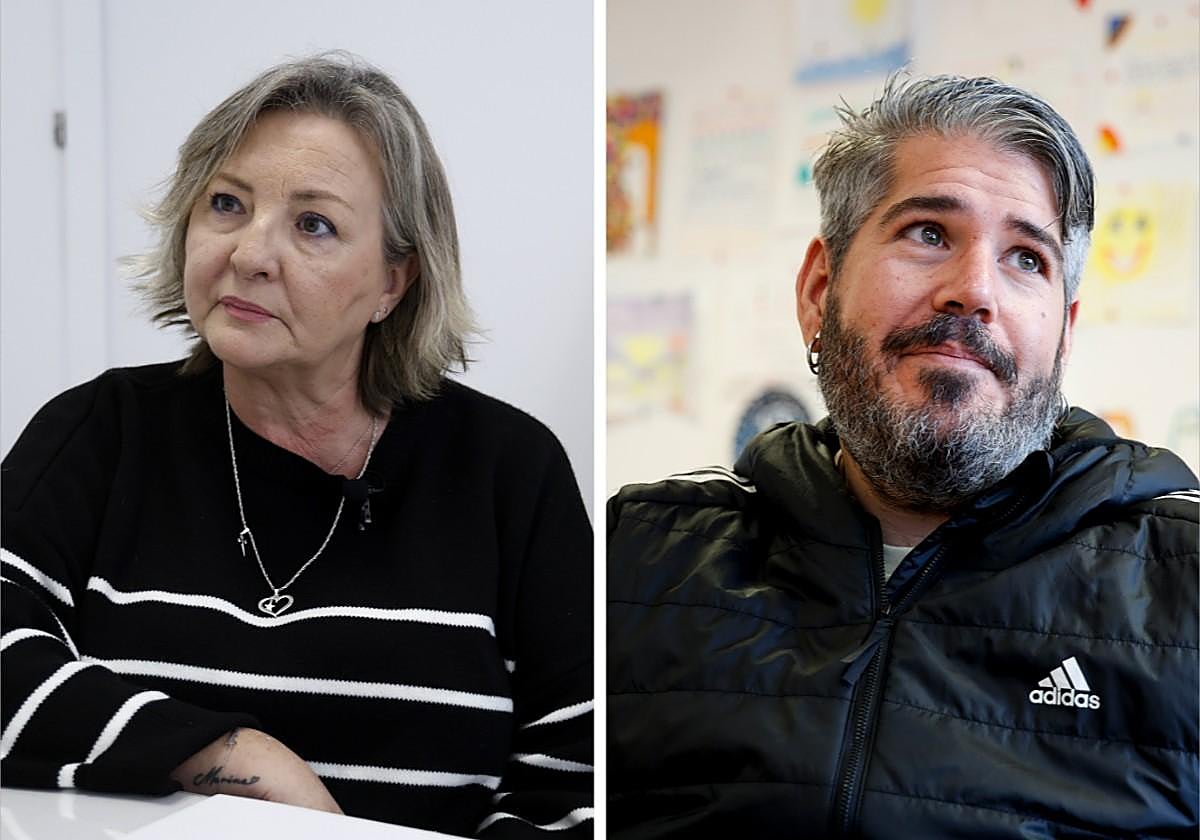
This is the case with Emilio Bandera who, after several suicide attempts, found the Afenes association - a group for relatives and those with mental illness - which completely changed his life. There, he began once again to feel part of society and he got to know himself better. He found the calm within the storm raging inside him.
Teresa Lerma also found a place to unburden herself with the Alhelí association after the death of her daughter Marina. There, in the bereavement counselling sessions, she learned that her routine would not only be full of crying, but that she could talk again and express her feelings.
Here they tell their story, assuring us that, although such pain cannot be healed or forgotten, there is a small light at the end of the tunnel that heals some wounds of the heart.
-
Emilio Bandera
"I weighed 150 kilos and took 15 pills a day. I lost the meaning of life"
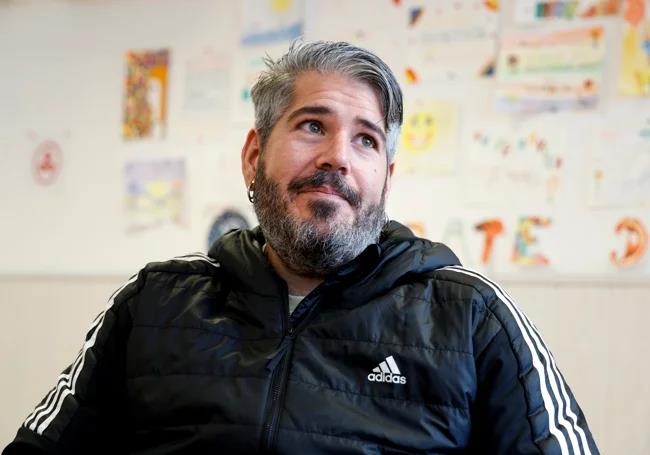
Emilio Bandera went through a period of "rebellion against the world" that led to almost ten years of not leaving his home and manifesting several suicidal behaviours. He had been living on the streets for a while and did not feel part of mainstream society, his identity was lost. Now he analyses and clearly recognises what and where was the starting point. "Everything starts when Emilio loses his own identity through diagnoses: schizophrenia, agoraphobia, chronic depression, obsessive compulsive disorder.... This Emilio does not understand himself, he comes from living on the streets, from hospital admissions and psychiatric centres... This Emilio is afraid to tell society who he is, also his family, who do not understand what a mental health process is. This Emilio hid behind his diagnosis and left the house less and less, to the point of losing all meaning to his life. And he had a couple of attempts of not wanting to be here, of wanting to disappear, of not wanting to be part of society. This Emilio was consumed by his emotions, he weighed 150 kilos and took 15 pills a day."
This is how Emilio Bandera, from Malaga, recounts his own personal story, in the third person, a story that turned into a living hell when he was a teenager. Now 43, he can tell us that the Emilio he is talking about is still working to get things back on track and his daily routine took a full 360-degree turn years ago. Between psychologists, psychiatrists and endless drug treatments, he found a refuge that finally pushed him to improve his behaviour. It was Afenes (an association for relatives of and people with mental illness), based in Malaga city, which became the support Emilio needed.
He has been a technician at the association for ten years, but he will never stop being a user like he was in the beginning: "I am still in my recovery, this is not about whether or not I am well. It's a step in the process of regaining a sense of purpose in life", says Emilio. He outlines the importance of the association's work: "When I came to Afenes, the simple fact of being able to talk to someone for a while without being judged helped me a lot. I began to feel part of a group that offered me the tools that I still use to keep moving forward."
Talking again in the first person
Now, in addition to being a technician for the association that taught him to see the light at the end of the tunnel, he participates in conferences and gives presentations on suicidal behaviour, sharing his first-hand experience. "It's very important to validate this today because it helps a lot in understanding the processes. It's a different method, neither better nor worse, but speaking closely with a person who is going through exactly what I went through helps you move forward faster. I don't like to talk about illness or problems, I talk about a life process within mental health. I am now focusing on peer support with mutual support groups where there are no labels, where everyone is part of the process of improvement."
"Emotion can be your worst enemy, but it can also be your best friend. Once you realise this, you change your perspective in order to grow and you have another tool to be able to move forward. And it shows that yes, you can get out of these situations", says Emilio positively. Despite all this positivity, there is a moment in his conversation with SUR when he comes clean and admits that, not long ago, he suffered another crisis. He is currently diagnosed with borderline personality disorder (BPD) and suffers anxiety attacks that leave him experiencing moments of panic: "It's hard and recent, but it's necessary to talk about it. I recently had to let go of my pride and ask for help again; I wasn't feeling well due to various personal situations after a year of nonstop work. I forgot to take care of myself and I have to thank all the people who supported me during that time of crisis."
Tools
The Emilio he spoke of at the beginning of the interview would not have known how to get out of that situation. "The me of many years ago would have acted impulsively and we wouldn't know if I'd be here right now. But nothing happened because now I have the tools I've been working with for so many years alongside Afenes, which have taught me how to get out of negative situations."
Emilio is familiar with the full spectrum of suicidal behaviour and has experienced firsthand how it is tackled, from public services to support resources from associations such as Afenes. "You can go to the psychiatrist's office, but they have 15 minutes to see you and you won't see them again for three months. They give you medication and, if they have any conscience, they might ask you something else. This isn't valid for mental health, we need to create spaces for emotional release and this is only being done by the associations, which have fewer and fewer resources", says Emilio, with a tone of condemnation.
-
Teresa Lerma
"We need to be heard, we need to make suicide public and stop it being taboo"
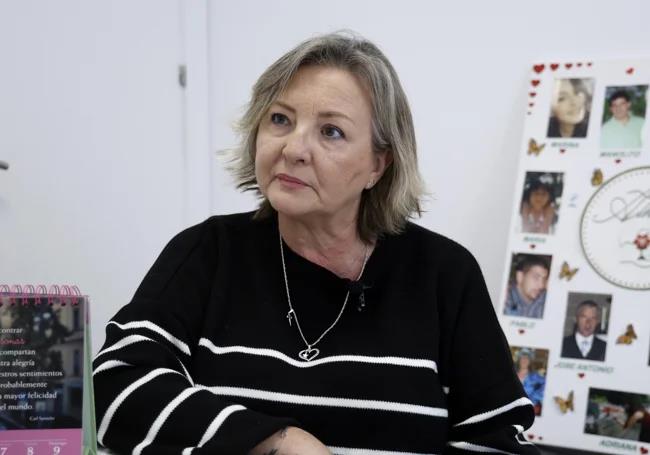
The year 2022 was a turning point in the life of Teresa Lerma, who lost her daughter Marina. "Seeing that she had attempted suicide three times in the previous few days, they voluntarily discharged her. They shouldn't have done that because she was at risk. But the fact is that hospitals aren't prepared for this, we have a barrier with mental health", Teresa Lerma voices her complaint from one of the rooms of the Alhelí association, a small refuge that she discovered almost two years ago and where she goes weekly to find support. "But this is something that will never heal or be overcome", she says.
Teresa's voice speaks from the pain and anger of what could have been avoided. She speaks her truth in this conversation with SUR. "I also made several attempts after losing my daughter. I was with the psychologist Miguel Guerrero and he listened to me and calmed me down. But then the psychiatrist just looked me in the face and gave me pills, pills and more pills. That's the mental health set-up. They think pills can cure everything, but it fixes nothing," she says.
She reflects on her own experience and that of her daughter. She also reflects on the stories she hears from group sessions with people in a similar situation to hers: they have suffered the death of a friend or family member. The Asociación Alhelí, based in Malaga city, supports them in the grieving process. "Since I came here there's a Teresa who can talk, something she couldn't do before. She only knew how to cry, cry and that's all. Since I've known Alhelí I can let out everything I have inside and I'm much more empathetic. I want to help everyone. I don't know... At least I am letting go a bit. Here they've taught me to let go of my grief and to know that there is support. We need more places like Alhelí in Malaga, Andalucía and Spain", says Teresa.
The sessions at Alhelí are not easy, as Teresa describes, going from emotion to rage, to anger, to helplessness.... "It's very hard, but if it weren't for them, what would become of us? I recommend that anyone who is going through the death of a son, daughter or relative to come here. We're not going to take away their grief because that's impossible, but we are going to try to help them," she says. Teresa confirms that it took her a year to decide to come to Alhelí: "But the reality is that this is a tremendous help. We all love each other madly and there is a lot of understanding between us. We all know the pain and grief that we feel when we lose someone so important in our lives, we know how to put ourselves in the other person's shoes and that is very important."
Need to raise awareness
"We need to be heard, we need the topic of suicide to be made public and for it not to be treated as something taboo. We want people to become aware of the serious problem we have in society and, for that, we need the help of professional doctors. We are no longer doing it for our own, we're doing it for others. Our children won't come back, but we don't want there to be more victims", says Teresa Lerma. She calls for more visibility and prevention of suicide: "We have campaigns and adverts on television about traffic accidents that make our hair stand on end. And what about mental health? Why don't they make adverts that give us goose bumps? It's one of the leading causes of unnatural death in our country."
Both she and the families who come to Alhelí seek to "open people's eyes" and to urge the governing bodies to launch more subsidies to support the network of associations that reaches out to accompany them during their grieving process. "I've even felt like my friends have left me behind... Here they have never made me feel like that, quite the opposite", says this mother.
OTHER HELPLINES
Telephone 024: the Spanish government's free 24-hour 365-day helpline run by the Red Cross. Real time telephone interpreting service for non-Spanish speakers.
Samaritans in Spain: Free helpline in English for anyone feeling desperate, anxious or alone: Freephone 900 525 100 between 10am and 10pm or email pat@samaritansinspain.com. Website: www.samaritansinspain.com
Anar: Helpline and chat for children and teens (Spanish). 900 202 010 www.anar.org
![[]](http://static.vocstatic.com/voc26/latest/assets/images/favicon/surinenglish/apple-touch-icon-57x57.png)