
Weather
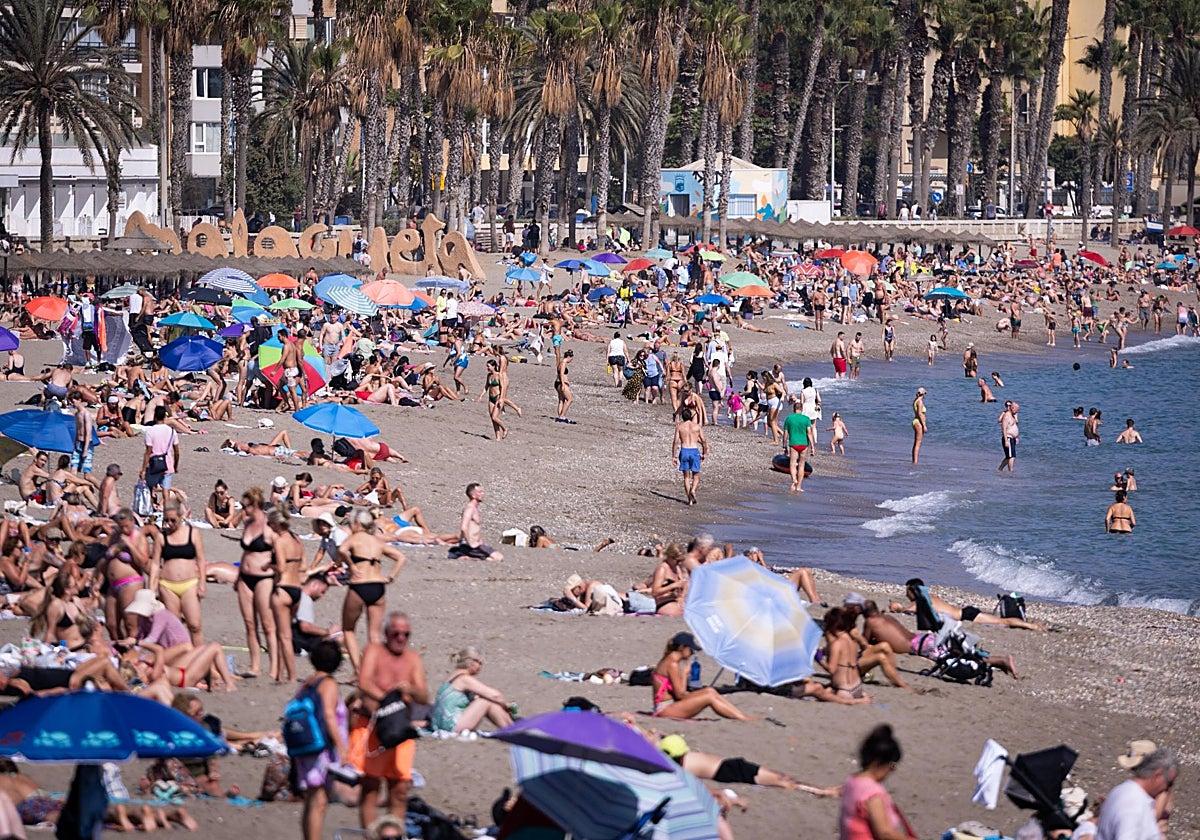
Summer extends into October with temperatures 4C above average on Costa del Sol
Maximum highs of up to 30C will be maintained in parts of Malaga province at least until next week, with no substantial amounts of rain on the horizon

Malaga
The Spanish rock duo Amaral sings: "There are no summer days left for me to apologise to you..." Well, there sure are summer days left in Malaga province and along the Costa del Sol this October. Amaral have at least until November to ask for forgiveness.
In the past few years, the summer has been starting earlier and ending later. It appears that October does not belong to the autumn season anymore. According to Aemet's state meteorology agency director for Malaga Jesús Riesco, the whole of the Andalucía region experienced maximum temperatures above the normal for mid-October, with some stations recording values above 30C (Álora, with 30.4C). The current situation is up to 4C above the average for the 1991-2020 reference period.
At this point, given the records so far this year, this is not a surprising phenomenon. On Monday, 13 October, the thermometer at Malaga Airport registered 28.3C, when the usual would be 24.4C. The maximum temperature in Antequera was 27.7C and 26.2C in Ronda.
Tropical nights persist
What is even more striking is that tropical nights, when the minimum temperature does not drop below 20C, persist well into the meteorological autumn, especially along the coast. On Monday, the nighttime minimum temperature at the airport was 18C, while at the port it was 20.6C. Marbella registered 22.3C early on Monday morning, while Rincón de la Victoria recorded 20.3C. The situation in the provinces of Almeria and Cadiz is similar.
Riesco warns that both the troposphere (which is the lowest part of the atmosphere) and the sea water are warm, which is what creates the current conditions, despite the presence of the easterly wind.
The climatic anomaly consolidates with an interminable summer and the drought perseveres with no sign of improvement
It is likely that the next few days will also experience maximum values of 30C. At this point, as Riesco ironically says, it will be weirder to have a cooler year. Moreover, there is still no sign of any significant rainfall.
The warm sea increases storm risks
Riesco alerts Malaga province's residents to the relationship between the warm sea water and the risk of storms. He warns that it is the high temperatures of the water that lead to torrential rainfall due to the vapour accumulated. The temperature of the sea at Malaga port on Tuesday was 21.3C, which is too high for this time of the year.
SUR's weather expert José Luis Escudero says that the temperature does not drop below 20-21C at least until 6am. It is around 7.30am when it might drop a bit. Escudero highlights that the weather map shows a warmer October every year. Abnormally high temperatures will be experienced next week as well, although mostly in the Guadalquivir Valley.
According to the historical records, the highest average temperature in the province in October so far was registered in 2013 (21.9C). However, the absolute record was on 22 October 2014 (36.3C).
Absent autumn
Climate change director at Malaga University Enrique Salvo assesses changes in the province by focusing on vegetation. According to him, we would not find any signs of autumn in the leaves of the trees, which "have not even changed colour". "It is as if it were still summer," he says.
Another sign of persistent summer is the stork population. A large number of these birds can be seen in the area around the Parcemasa cemetery these days. Salvo explains that they have found "an important heat pocket and an ideal place to feed, which is the Los Ruices landfill site".
"All these are manifestations of climate change," he says. The climate change expert urges the city council to find solutions for Malaga's residents - shady vegetation, climate shelters and urban planning adapted to the new reality. Tourists might love to spend a few tropical nights in October, but the conditions for locals lead to physical fatigue.
![[]](http://static.vocstatic.com/voc26/latest/assets/images/favicon/surinenglish/apple-touch-icon-57x57.png)