
Health
One in four people in Malaga province is at risk of suffering a stroke
The under-45 age group accounts for nearly 20% of all strokes due to their "unhealthy" lifestyles
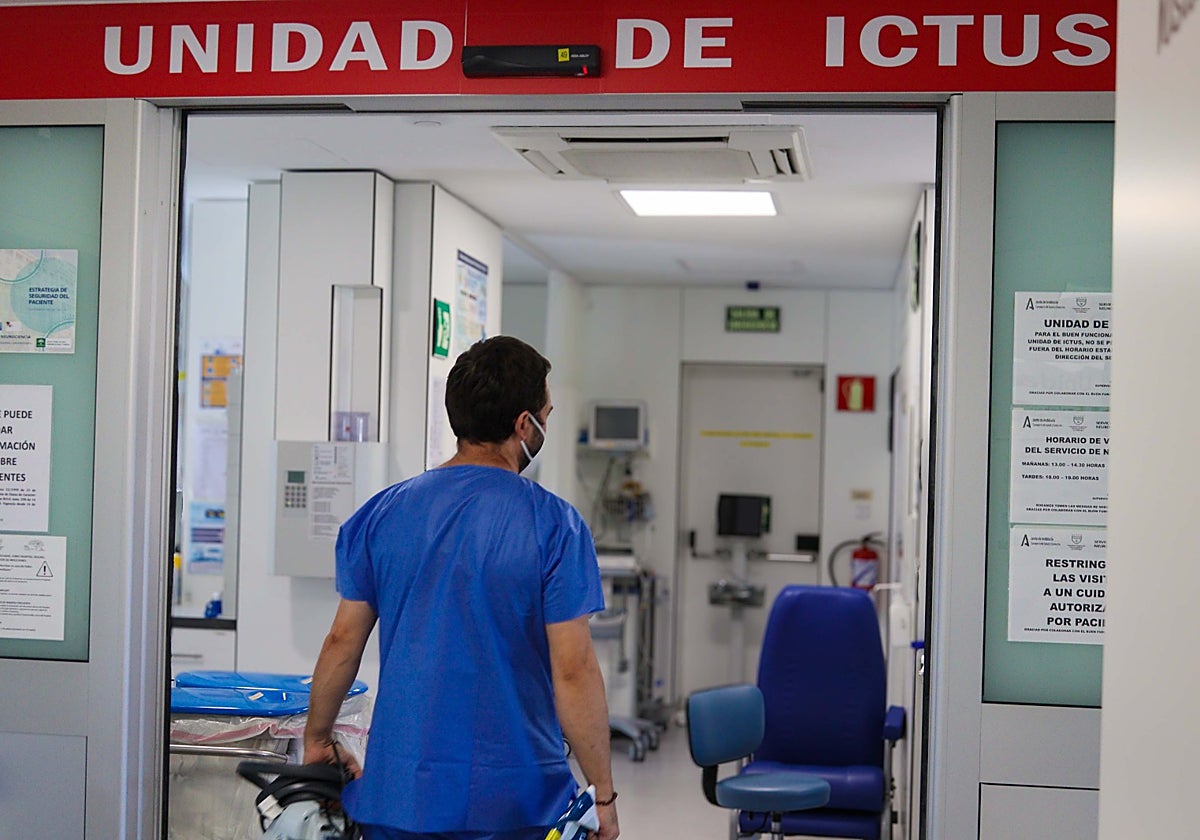

Neurologists often repeat this adage: time is brain. Acting quickly in the event of a stroke is key to minimising the after-effects, but both the Andalusian Society of Vascular Angiology and the Spanish Society of Neurology (SEN) warn that one in four people is at risk of suffering a stroke during their lifetime. These estimates relate to Andalucía and Spain and this data can be extrapolated to the case of Malaga and its province, according to medical sources consulted by SUR.
It is also clear to medical specialists that high blood pressure is the most common risk factor among stroke patients. Indeed, according to an international study called Interstroke, it is present in 64% of all cases and is responsible for more than 50% of stroke-related deaths. Its impact is multiplied when combined with factors such as smoking, diabetes, high cholesterol, obesity or atrial fibrillation: in hypertensive people who smoke, the risk of stroke increases sixfold and, if they are diabetic, by more than 30.
Malaga recorded 12 strokes per day in 2024, totalling 4,400 compared to 4,700 in 2023.
Official data from the regional health ministry indicates that there were 4,400 strokes in 2024 compared to 4,700 in 2023 in Malaga province. That means 12 strokes per day across the Costa del Sol province.
More strokes in young people
The Andalusian Society of Angiology and Vascular Surgery points out that this disorder is more common in older age groups: in fact, 75% of strokes occur in people aged over 65. However, it clarifies, "more and more cases are being recorded among young adults, due to the flawed and unhealthy lifestyle habits they've adopted". In fact, nowadays, between 15% and 20% of these strokes affect individuals under the age of 45, according to this society.
Carlos de la Cruz, head of the neurology department at the Hospital Clínico, explained in an interview with SUR back in April that "lifestyle habits have a significant impact. Society is under a lot of stress. Studies clearly demonstrate that prolonged and acute stress increases the risk of suffering a stroke and this, together with substance use - by this I mean primarily amphetamines, cannabis and cocaine, something we frequently see in patients in their 30s or 40s admitted to our hospital with a stroke - has led to an increase in the prevalence of strokes in young people in recent years, which is not the case with other diseases."
Prevention is essential
The truth is that prevention in this field is essential: 90% of strokes could be prevented by healthy lifestyles and control of cardiovascular risk factors. More than 30% of stroke survivors live with lasting effects (sequelae, in medical speak). "A stroke is a cerebrovascular disease that occurs when blood flow to the brain is interrupted or reduced." There are two main types of stroke: ischaemic stroke, which accounts for 80% of cases, and haemorrhagic stroke, which accounts for the remaining 20%. "The former occurs when a blood clot (thrombus) blocks or obstructs blood flow to the brain, while the latter is caused by the rupture of blood vessels in the body," explains María del Mar Freijo, coordinator of SEN's research group for cerebrovascular diseases. She adds that time is of the essence: for every minute that passes without blood reaching the brain, two million neurons are lost. If you suspect a stroke, you should call 112 immediately or go to your nearest hospital.
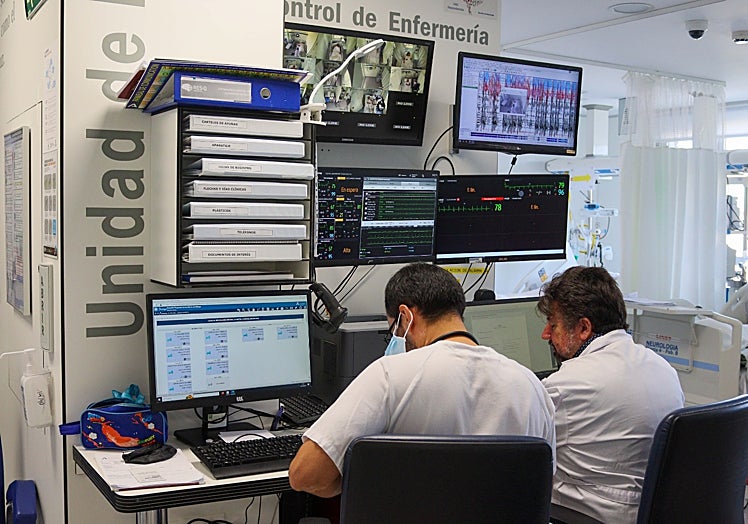
Rafael Bustamante is a neurologist at Malaga's Regional University Hospital and prescribes a healthy lifestyle, "follow a healthy, varied diet, avoiding most processed foods, staying away from tobacco and other substances at all costs and engaging in some physical activity, at least moderate". He also advocates monitoring for hypertension, diabetes and dyslipidaemia (the appearance of abnormal blood lipid levels, such as cholesterol and triglycerides). He also advises socialising: "This is an excellent cognitive activity for older and younger people."
Treatments have improved greatly in the last decade
"Stroke diagnosis is completely different now to how it was 20 years ago. Now, in the vast majority of patients, we know the cause as soon as they arrive in the emergency room," says Bustamante, who recalls that the positive shift in clinical treatment began with the introduction of fibrinolysis, a drug administered to stroke victims to dissolve the blood clot, and thrombectomy, "a catheter-based treatment that reaches the clot and removes it", thus restoring blood flow and preventing, as much as possible, brain damage. "The sooner you get to the hospital, the greater the chance that these treatments can be applied and be effective," he says.
For all these reasons, the 'stroke code' was established, a programme designed to minimise the time between the onset of symptoms and treatment.
Malaga has centralised thrombectomy treatment at the Regional Hospital for severe strokes, guaranteeing fast, specialised care
Currently, both the Regional Hospital and the Hospital Clínico have stroke units, the former since 2006 and the latter for the last five years. Once the stroke code is activated, either by the 061 emergency call service from home or elsewhere, or from the emergency department of any hospital, the severity of the stroke is assessed. If a blockage in a large blood vessel is suspected, explain sources from the Regional, the patient is referred straight to this particular hospital as the only centre that performs thrombectomies in Malaga. If fibrinolysis is required, this can be administered in any hospital as it is, in a way, the initial treatment. If the patient then needs a thrombectomy, but is at the Clínico for instance, they are transferred to the Regional Hospital and then returned after the specialist procedure has been completed.
At the Regional, secondary treatments are also performed. For example, a carotid angioplasty (30% of strokes in Malaga are due to carotid stenosis, the narrowing of the main artery that supplies blood to the brain due to the accumulation of fat and cholesterol, according to the Andalusian Society of Angiology). This means that, once the stroke has passed (but the patient is still in the acute phase), a stent is placed, with the help of catheterisation, or the so-called endarterectomy is performed (available in both the Clínico and the Regional), a more invasive operation that involves opening up the patient.
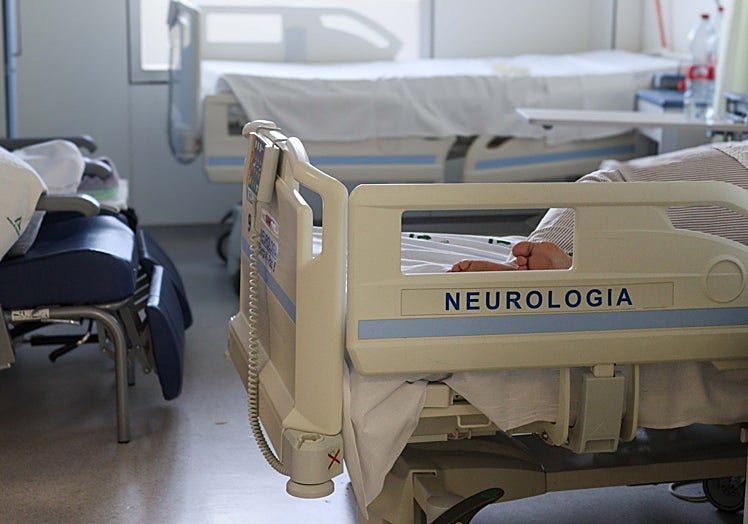
If the 061 medical emergency service assesses the patient's condition, the unit's in-house physician decides where the patient best needs to go for immediate treatment.
The risk of death is 20%. Once the patient is seen in the emergency room, they are admitted to the stroke unit. "Standardised care is given to patients and we try to use technology, our expertise and especially nursing care, to anticipate as far as possible and address any situations that may arise," says the doctor. After this initial period, the damage remains, although, the sooner rehabilitation begins, the faster the recovery. Those affected undergo numerous tests and this monitoring is then consolidated on the hospital ward.
In 2024, the Regional Hospital's stroke unit treated 694 patients.
The Clínico Hospital's stroke unit has treated 5,000 patients in the last five years and, according to the hospital, "has marked a turning point" for the specialist unit.
Stroke symptoms
The Spanish Society of Neurology (SEN) states that only half the population in Spain knows how to identify the symptoms of stroke, which causes critical delays in care. These are the basic symptoms: sudden loss of strength or sensation in the face, arm or legs, especially on one side of the body, sudden difficulty in speaking or understanding, sudden loss of vision in one or both eyes, problems with coordination or balance and a sudden, severe headache, different from usual.
Healthy eating and regular exercise are the cornerstones of cardiovascular health: quitting smoking and moderating alcohol consumption are also essential
Some basic prevention measures include, for one, following a diet low in salt, fat, cholesterol and sodium that is also high in vegetables, fruit and fibre. Engage in regular physical activity, at least 30 minutes daily, three to five days a week. Quit smoking, avoid excessive alcohol consumption and maintain strict control of blood pressure, as well as blood glucose levels if you have diabetes. In this latter case, it must be managed with diet, exercise and appropriate medications to keep glycated haemoglobin below 7%.
Stroke is the leading cause of death in women and the second leading cause in men, accounting for 10% of all deaths.

![[]](http://static.vocstatic.com/voc26/latest/assets/images/favicon/surinenglish/apple-touch-icon-57x57.png)