
Health
Surgeons from all over Spain learn how to save lives in critical situations with training at Malaga hospital
There are only six health facilities in the country that offer such courses focused on polytrauma patients

Malaga
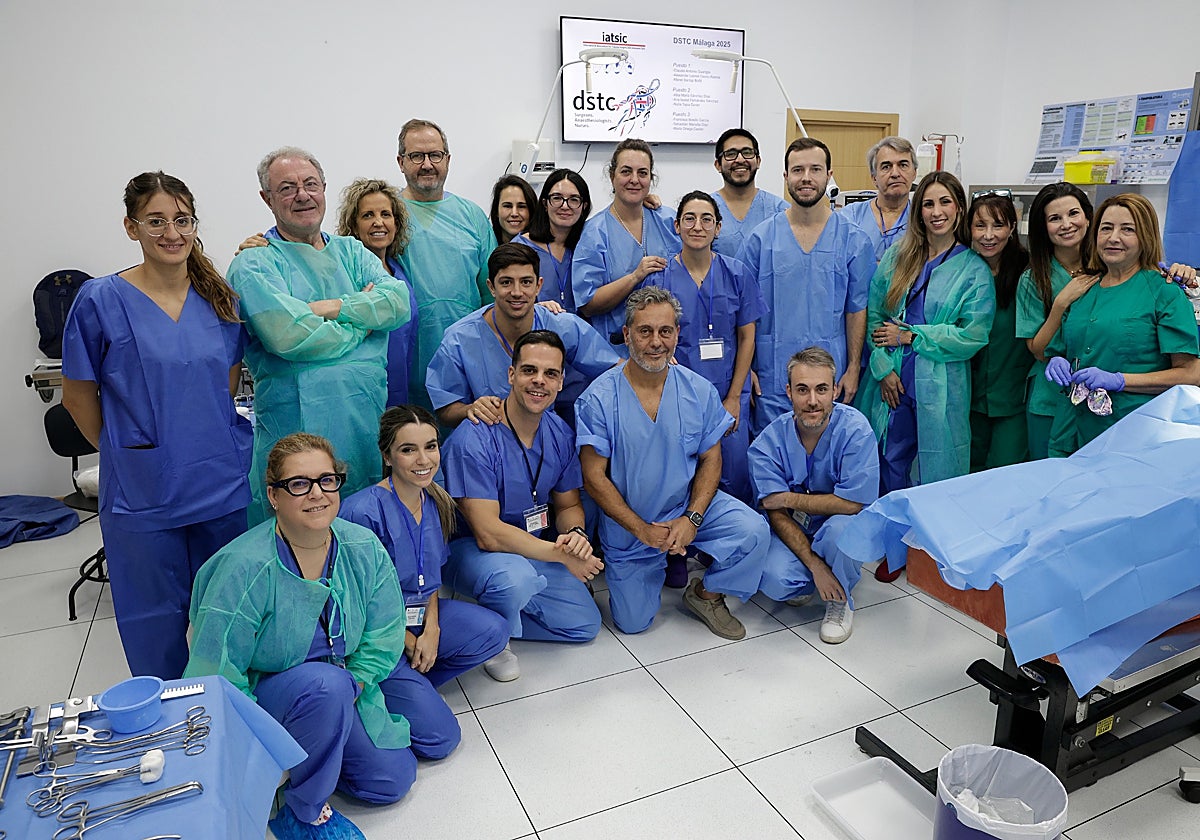
In emergency medicine, the 'golden hour' is the 60-minute window following a major trauma that doctors have to save the patient's life. What they decide in that one hour is key. Dozens of surgeons from all over the country met in Malaga this month to take part in two courses to train in how to save lives in this type of critical situation. Both training modules were given by Dr José Manuel Aranda Narváez, a surgeon at Hospital Regional Universitario and head of "care for trauma patients and emergency surgery".
"These two courses are focused on care for the polytrauma patient, who has multiple injuries or any life-threatening injury. There are two main types of trauma: blunt trauma, such as that resulting from road traffic accidents, and penetrating trauma, such as that caused by a stabbing or firearms. They have different diagnostic methods, different types of care, different indications for assessment and subsequent treatment. Sometimes, they are injuries that we don't have to operate on and sometimes we have to," Dr Aranda told SUR.
Patients in critical condition
Dr Aranda said that the course focuses on patients that arrive at the hospital in a critical condition, which requires doctors to "diagnose the multiple lesions they might have, establish a sequence of treatment, initially resuscitate them with different measures and, finally, carry out the definitive treatment of the lesions: sometimes it consists of monitoring and other times of operating and finally resolving the condition".
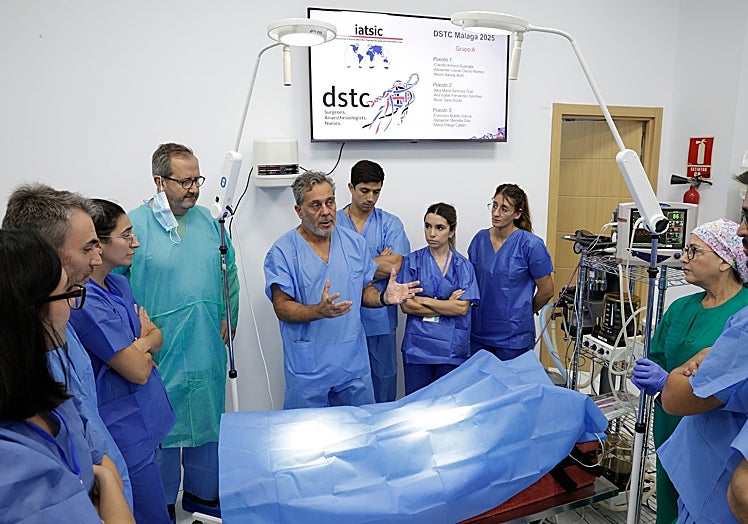
Two courses were held in Malaga this month. The first was Advanced Trauma Life Support (ATLS) - "a globally standardised course with the same format, focused on the initial phase of patient care when they arrive at the hospital, including a full assessment of all injuries and the initial treatment of all treatable injuries". The second course is the Definitive Surgical Trauma Course (DSTC), "aimed at the definitive treatment of injuries", which includes decisions such as whether to operate and what surgical technique to apply.
Acting with vital speed in polytrauma: time is crucial to avoid fatal outcomes in the emergency room
The courses teach doctors how to treat injuries and apply the appropriate techniques. "The courses are focused on ensuring that the staff attending to a polytrauma patient in extremely serious condition know very well how to diagnose and treat them," Dr Aranda said. He highlighted that the fundamental challenge is time. "These cases are critical and require time-sensitive actions, because we have to diagnose and treat the injuries as quickly as possible; otherwise, it can be fatal and the patient can die right in front of us," he said. "We can't think like in elective surgery, where we have time to reflect, analyse radiological tests and talk to colleagues. No, no, here we don't have time, we have to get involved and be very clear about the algorithms of action and know the techniques very well in order to be able to apply them immediately on the spot," he stated.
Professional challenge
According to Dr Aranda, the professional who attends to these patients must be fully trained from the minute the patient arrives in order to "respond immediately", with no "seconds to lose". As the course instructor said, polytrauma patients receive "absolute priority in all emergency services".
The treatment of such emergency cases requires a "multidisciplinary approach", which means that all available resources prioritise them. From the moment the patient arrives, all units are informed (specialists, surgeons, traumatologists, neurosurgeons, ICU, anaesthesia) and scanners and the laboratory are reserved for them.
Both courses are reviewed periodically. The ATLS course has a four-year waiting list and only 16 students take it on-site, compared to 18 for DSTC. "The two courses are so good and with qualifications that are validated worldwide: you can go to any other country and say that you have done ATLS or DSTC in Spain and it is exactly the same as if you go to work in the UK or Germany," Dr Aranda said. In Spain, the courses are organised by the national association of surgeons.
![[]](http://static.vocstatic.com/voc26/latest/assets/images/favicon/surinenglish/apple-touch-icon-57x57.png)