
Tradition
The 100-year-old fishing boat that has returned to the sea in Malaga
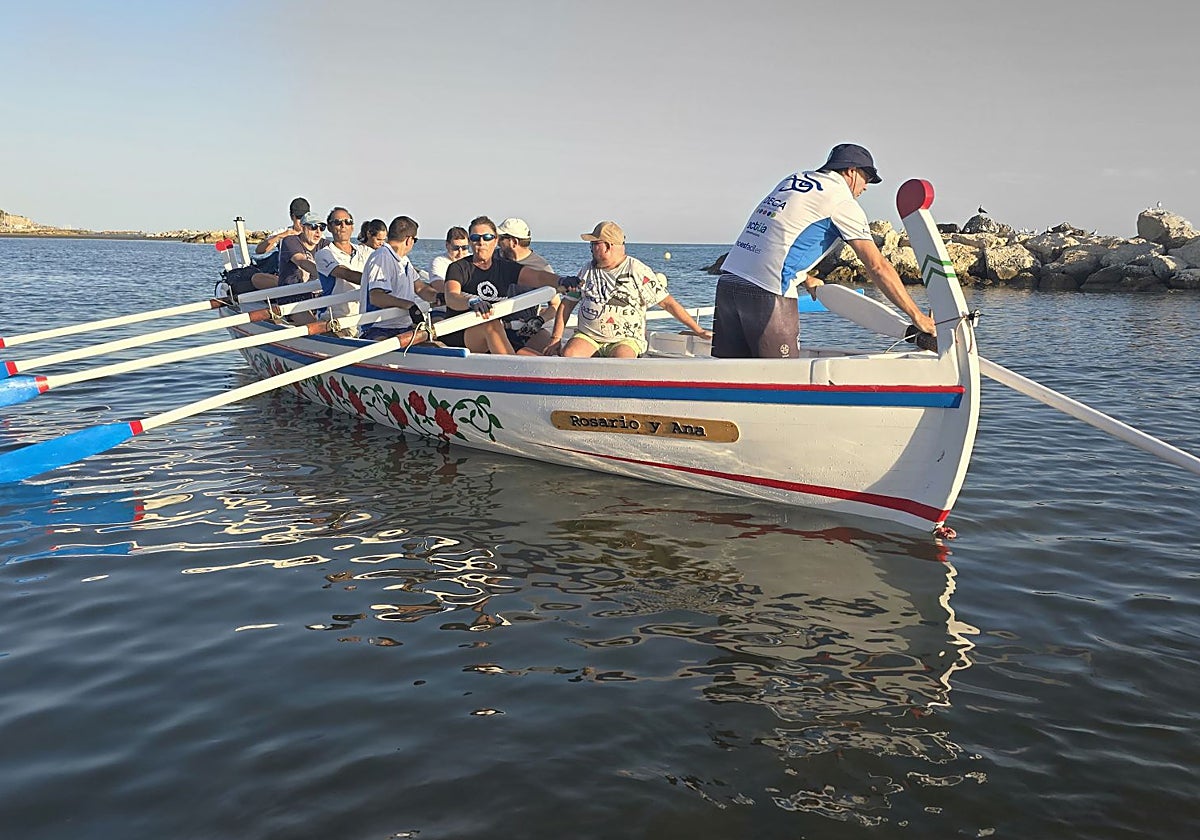
This is the story of a group of volunteers who have spent four years working on the 'jábega' Rosario y Ana, first registered in 1932

Malaga
This is the story of how a hundred-year-old traditional Malaga fishing boat, a 'jábega' came back to life, but above all, it is the story of a group of friends who are passionate about the sea, of a boat that has gone back and forth between its previous owner and the current owners and of a sports club that has become a big family.
The adventure began at the end of 2020 at the Nereo shipyard in Pedregalejo, when its manager, Alfonso Sánchez Guitard, proposed to a group of friends that they should make use of an old boat which was in need of repair. In just two weeks there were already 15 people who had volunteered to help out, explains the main driving force behind the project, Javier Lumbreras.
It was then that they met Fernando Dols, the owner of the boat which he considers "his second daughter". According to the documentation, the origin of this traditional boat officially dates back to 1932, although all agree that it was actually made even earlier, which makes it a century-old piece of Malaga's maritime heritage.
The first challenge: rowing to Nerja
A resident of Nerja, Fernando was too elderly to travel to Malaga city to visit his boat and so the group set themselves a first challenge in September 2021: to row from Pedregalejo to Nerja, a 47-kilometre crossing...so that Fernando could see his "second daughter".
Shortly after that feat, the group asked the owner to lend them the boat so that they could restore it and use it more comfortably. He agreed on one condition: that they would create a rowing club around it. This is how Jabegotes de la Bahía, chaired by Javier Lumbreras, was born.
Jabegotes de la Bahía rowing club has completed the restoration of historic boat
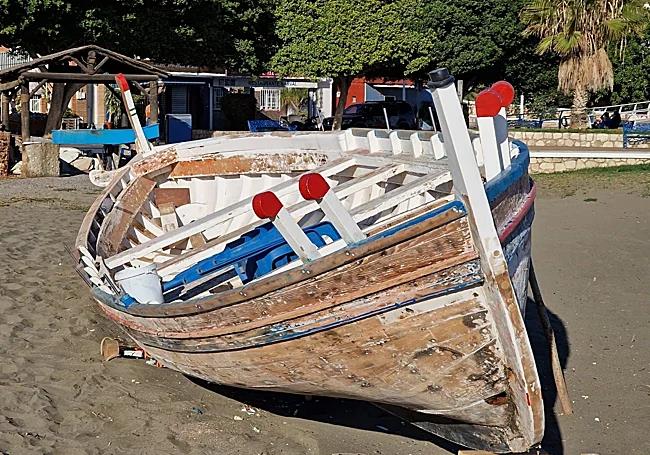
In August 2023 the group received the boat, moved it to Pedregalejo beach and gradually began to work on its restoration. But soon serious structural problems appeared. The group then contacted Rafael Serrano Estudillo, a retired shipbuilder who offered to help them.
Improvised shipyard
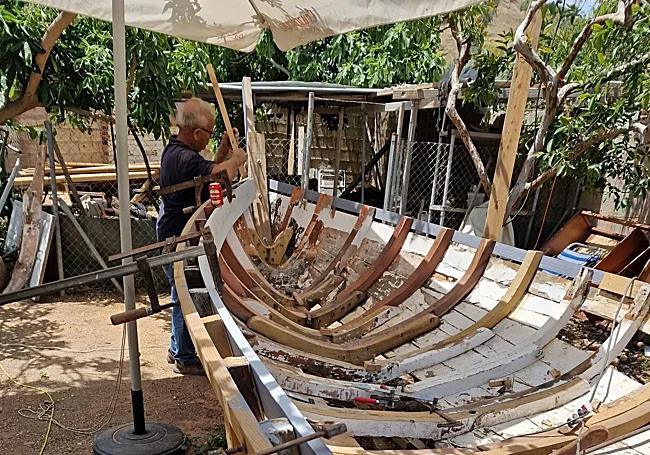
Each step forward uncovered more and more deteriorated parts that needed to be replaced. This is how, at the initiative of his wife, Coca Rubio, they ended up taking the boat to an "improvised shipyard" that they set up in the garden of their home. The workshop is named in honour of María Isabel Gálvez, his mother (now deceased), "who always encouraged me to continue in this endeavour", says Javier.
The club then bought second-hand professional carpentry machinery and materials. In the end, all the work will cost around 12,000 euros. Under the supervision of the expert carpenter and thanks to voluntary work, the work progressed. They have been sponsored by several companies from Malaga: Congelados Deca, Angioven, Superskunk, Puertas Segurestil, Pebar Distribuciones and Actúa Infraestructuras, among others.
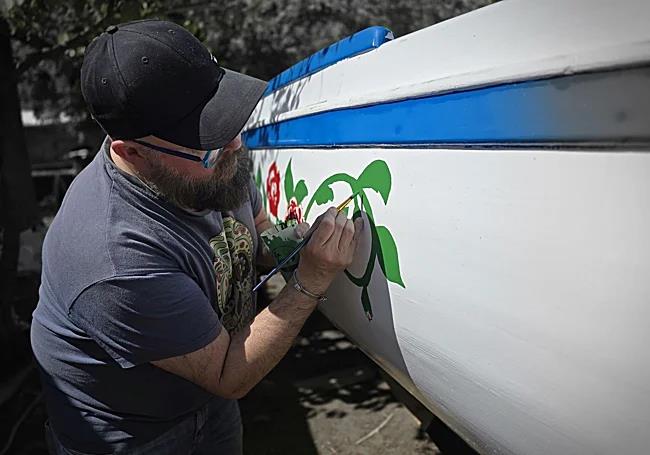
As a result, the current boat retains barely 20 per cent of the original structure, to the point that "it would have been easier to make it new". Finally, Toni Albaladejo was the artist in charge of painting the boat with his own design based on intertwined carnations.
This is how last summer the restored boat returned to the sands of Pedregalejo beach, which has been its home for the last century. Since then the club has continued to add members and today has 37 members, who continue to make between two and three trips a week, weather permitting, to train and enjoy the bay. Their philosophy is not to compete, but to experience the sea and explore new routes.
Rowing towards Venice
Among their great objectives is a collective dream: to be able to participate in 2027 in the Vogalonga in Venice, the international meeting of traditional rowing boats. Until then, they also plan to do the Camino de Santiago by sea; to cross several Spanish navigable reservoirs; to attend meetings of traditional boats all over Spain; to row down the Guadalquivir river and as the nearest challenge, to go up the Guadalhorce river, retracing the crossings of the Phoenicians in search of new territories when they arrived on these shores.
This story has been captured in a book and a public presentation that took place on Friday 14 November at the Baños del Carmen, which closes one chapter to open another. With its jábega ready to sail, the club has taken the spirit of belonging and fraternity as its banner. "We train a lot but we enjoy it more. We are very lucky: watching the sunrise from the sea, alone in the bay, is a unique spectacle". For the 'Jabegotes', rowing is synonymous with teamwork, total disconnection and new friendships: a way of life linked to the sea and to the deepest roots of Malaga's identity.
![[]](http://static.vocstatic.com/voc26/latest/assets/images/favicon/surinenglish/apple-touch-icon-57x57.png)