
Environment
Malaga includes bird flu sampling in new contract to keep pigeons, parakeets and seagulls at bay
In addition to population monitoring, with special emphasis on nests and reproductive processes, the contracted company will carry out random tests on specimens

Malaga
Total Animal Services Paraíso has taken over the contract to keep seagulls, pigeons and monk parakeets in Malaga at bay. The environmental sustainability department of the city council has awarded the contract for a period of one year and a budget of 44,000 euros. The contractor's first task is to analyse bird populations by species and their distribution across the city, locating the main feeding, roosting and nesting points. In addition, the company must assess the level of nuisance caused by the birds, mainly pigeons, collared doves and yellow-legged gulls. Last but not least, it must propose the most appropriate control methods for each species.
A health analysis of each species must also be carried out. This includes parasites, possible zoonoses and bird flu. "Analytical tests for the Newcastle disease, the bird flu, salmonella, histoplasmosis and psittacosis must be carried out in the case of pigeons and collared doves. Argentinian parakeets will be subjected to psittacosis tests, while yellow-legged gulls will undergo bird flu, salmonella, histoplasmosis and cryptococcosis analyses," the tender states.
Population control
Effective control of the populations has always been a controversial topic, especially among various animal welfare organisations. For this reason, the contractor will instead focus on the reproductive cycle of birds. More expeditious measures will be implemented if there is public demand and need.
Seagulls
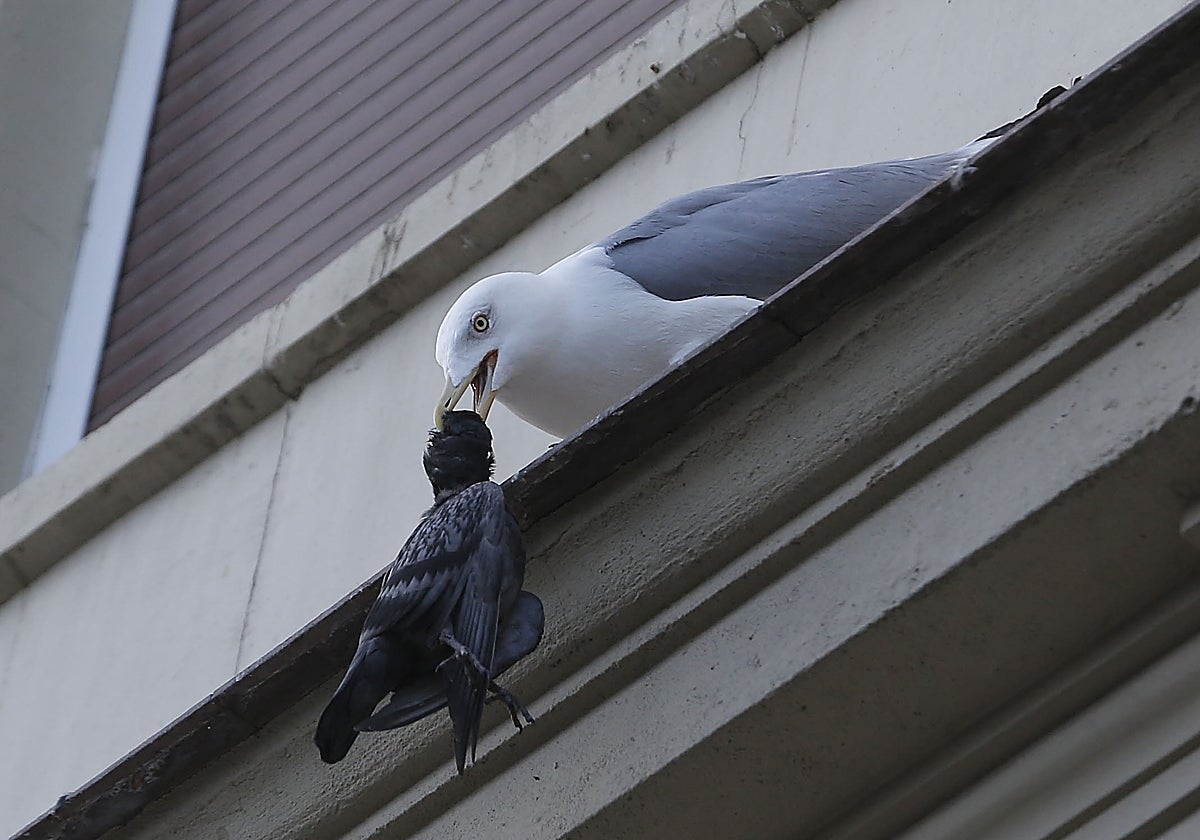
With seagulls, the aim is to displace the population settled in the city and prevent them from nesting on man-made infrastructure. How? By interfering with their daily feeding and resting activities, in order to discourage them from settling and breeding. Nests shall be removed from all rooftops. Where, for technical reasons, this is not advisable, eggs and nests shall not be removed but instead punctured or inactivated to prevent hatching.
Collared doves and pigeons
With pigeons and turtle doves, the emphasis is on avoiding disproportionate breeding through measures such as locating and removing nests and dovecotes, especially on cornices, walls, wiring or lampposts. The company must have at least a dozen active trap cages. These must be supplemented with feeders and water containers holding more than 5 liters, along with drinkers designed to prevent droppings from polluting the water. "They should be installed in places that provide shade throughout the day and shelter from the rain, as well as out of reach of predators. The design should minimise stress and not cause physical harm to the birds. Captured pigeons shall be transported under appropriate welfare conditions and released at an approved site," the tender states.
Parakeets
Argentinian parakeets will also have their nests removed, especially those located in trees that could pose a risk to passersby. The breeding cycle of these birds is from May to September and this is when control actions will increase. Experts will spend 35 eight-hour days removing at least 200 nests. If bird captures are necessary, the company must only implement methods authorised by official institutions so as to not "infringe any animal protection regulations".
![[]](http://static.vocstatic.com/voc26/latest/assets/images/favicon/surinenglish/apple-touch-icon-57x57.png)