
Health
Contract awarded for construction of Malaga's third major public hospital
The Andalucía regional government's new 543.36 million euro health facility in the city should be in operation in a little over six years' time

Malaga
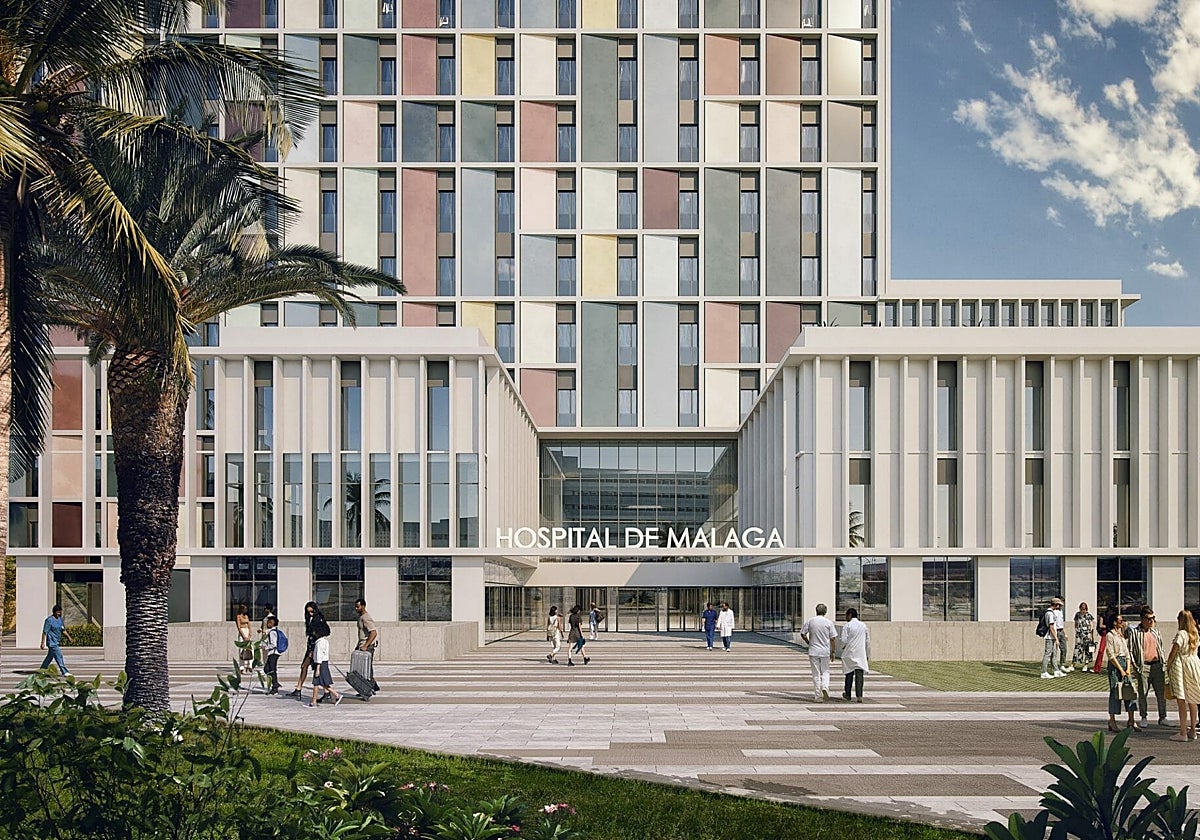
The Junta de Andalucía regional government has officially awarded the contract for the construction of the long-awaited third hospital in Malaga. A joint venture (UTE) formed by Construcciones Sánchez Domínguez SA (Sando), Obrascón Huarte Laín SA (Ohla) and Vialterra Infraestructuras SA has won the work worth 543,362,250.06 euros (449 million plus IVA sales tax). The project is being financed with European funds.
The project will take around six years and three months (75 months) to complete, divided into two phases: the first concerns the construction of the car park building attached to Calle Blas de Lezo (one year and three months) and the second involves the construction of the hospital complex (five years). It is expected that construction will start in the first half of 2026. The operation of the car park has also been awarded for 23 years.
Competition for the contract
The tender, with an investment of more than 607 million euros, attracted the country's major construction groups. The joint venture won by an overall score of 95.42 points, compared to the 78.93 points obtained by the joint venture formed by Dragados, Sacyr and Verosa and the 78.58 points obtained by Ferrovial, FCC Construcción, Heliopol and Guamar.
The award to the winning UTE has been ratified by the Andalusian health service, with no room for surprises
The winning proposal made the lowest economic offer (449 million euros, IVA excluded), compared to the 470.25-million-euro proposal of Ferrovial, FCC Construcción, Heliopol and Guamar and the 476.97-million-euro proposal of Sacyr, Dragados and Verosa. However, the bid does not include extensions or modifications. On 17 October, a proposal was made to award the contract to the ultimately successful joint venture and over the following six weeks, the Andalusian health service (SAS) reviewed the submitted documentation, after which it confirmed the initial decision, leaving no room for surprises.
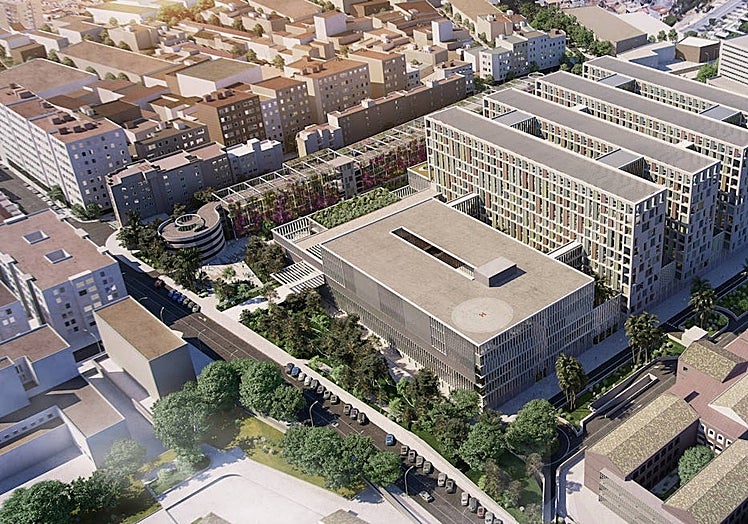
This will be the largest hospital in Andalucía and the largest civil engineering project to have been undertaken in the region in the last half century - a project that has faced an extremely complex administrative path, with more than 30 key milestones.
Undoubtedly, the third hospital is an old aspiration of the city, which began to demand this infrastructure at the end of the 90s, when there was even talk of the possibility of locating a hospital in the Este district. In the middle of the first decade of this century, then regional minister of health María Jesús Montero recycled the idea of a hospital in El Palo or Rincón de la Victoria into that of a macro-hospital, which led to a debate between the Junta and the city council about the best location. The idea never came to fruition.
A second life for the project
The Partido Popular political party took up the project when it came to power in January 2019, but it clashed with the administrative reality. Wishful thinking was outweighed by deadlines and requirements. There was even talk of completing the hospital in 2027, which is when the extension of metro line 2 to Hospital Civil is expected to be completed.
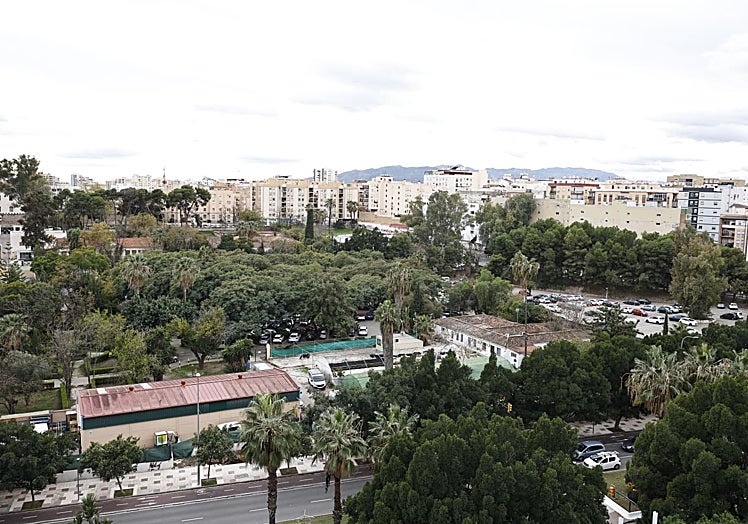
President of the Junta Juan Manuel Moreno has, on several occasions, said that the province has been "punished for decades" in health matters. According to him, Malaga is the Andalusian province with the fewest beds (1.57 per thousand inhabitants) and the fewest doctors (12.30 doctors per thousand inhabitants), which undoubtedly explains why there is such a commitment to the third hospital project, which will materialise on the plot where the car parks of Hospital Civil are located.
More than 400 professionals and residents of the city were involved in various working groups to brainstorm and analyse the third hospital project and present a proposal for a functional plan to the Sas.
Construction phases
Before construction begins, there will be a phase of preliminary work that will involve the demolition of the transfusion, tissue and cell centre, the relocation of a water tank, the construction of a medium voltage line and the construction of accesses and connections. These tasks are currently in the tender phase.
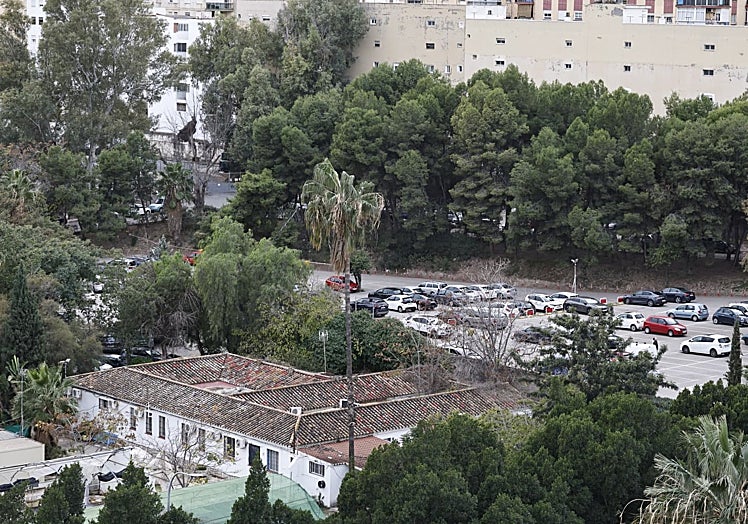
Phase zero will last two months and will consist of the construction of an open-air car park with 650 parking spaces on the Hospital Civil plot. The first phase will start after that, with a car park building behind the blocks on Calle Blas de Lezo: seven-storey-high and three below ground level, which will create 839 parking spaces. This phase will last 15 months.
The hospital building will have four underground levels and 11 above ground and a car park located on levels minus two and minus three, with 928 spaces for cars and 128 for motorcycles (1,056 in total). There will be spaces reserved for healthcare workers and local residents in both parking areas.
The hospital will have 815 single rooms (which can be doubled up to more than 1,600 if necessary), 48 operating theatres, 80 ICU beds, over 150 medical consultation rooms, 40 nursing consultation rooms and facilities for teaching and research.
The design was carried out by the Lamela and Aidhos studios, with the collaboration of Sener and ARCS.
The project will create a large civic boulevard
The 53,000-square-metre site posed a great challenge to architects because of its unevenness. The hospital building has four towers emerging from a five-storey base that runs all the way around the building. The towers are dedicated to inpatient care and clinical services. Two circulation corridors have been created - one public and one internal - which divide the building into three horizontal zones, with a large three-level lounge area.
The new hospital will be integrated into the city with a large square and walkways connecting it to the Civil and Materno hospitals
In addition, a large boulevard will be created between the Civil and the new hospital. Passersby will be able to walk through the large square, which generates new axes, as well as two large walkways leading from the third hospital to the Civil and the Materno. The new site will feature wide sidewalks and landscaped areas amounting to 20,000 square metres.
A smart and sustainable building
The building will use aerothermal energy - an air-conditioning system that extracts thermal energy from the outside air and brings it inside to provide heating, cooling and domestic hot water - to produce 12 MW of heat and eight MW of cooling. This system takes advantage of Malaga's climate conditions, recovering energy from the cooling process to supply the hospital's heating from May to October, without additional energy consumption.
Many of the components will be mass-produced in an industrial facility and assembled once transported to the building. In addition, there are four roofs fitted with photovoltaic panels that will generate enough energy to cover 12% of the hospital's energy needs.
![[]](http://static.vocstatic.com/voc26/latest/assets/images/favicon/surinenglish/apple-touch-icon-57x57.png)