
Environment
Malaga stormwater equivalent to 120 Olympic pools led to faecal water discharge into the sea this summer
The local opposition has criticised the lack of investment in sanitation, while the manager of Emasa has responded that torrential rain causes the water to drain into the sea

Málaga
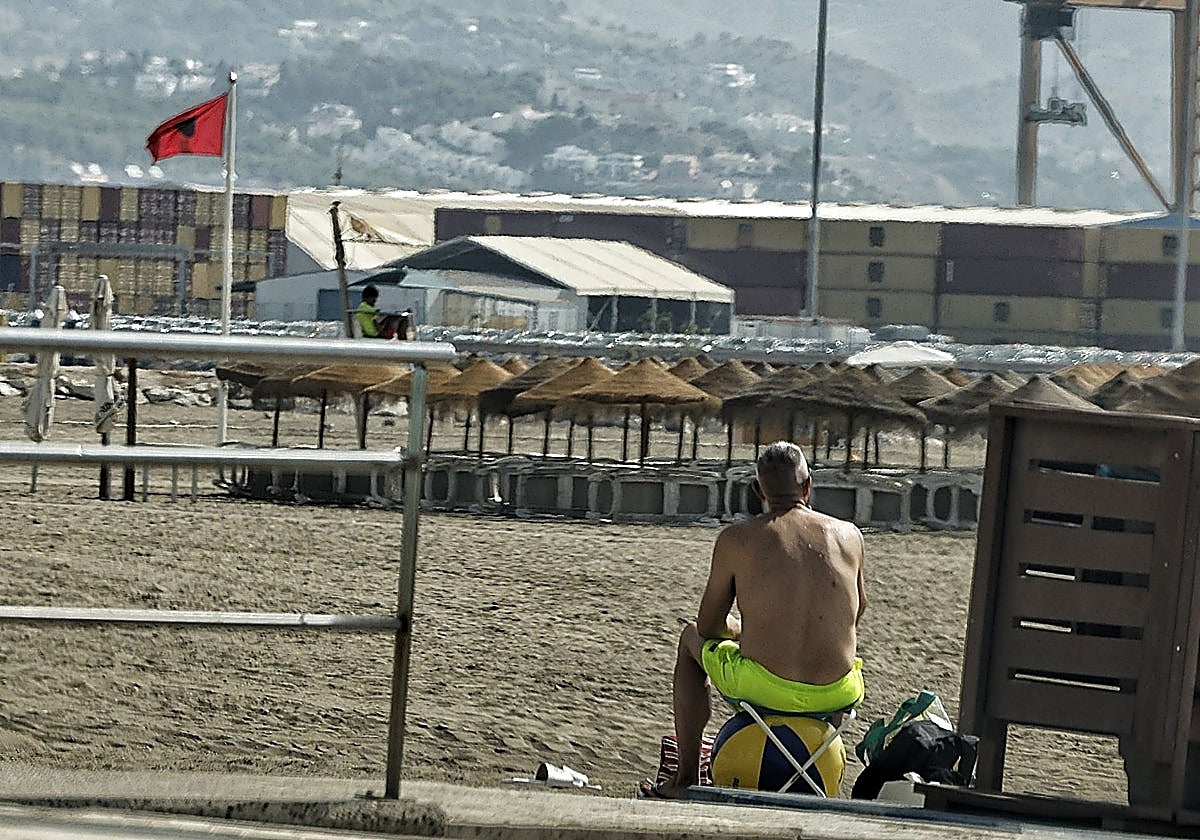
Six beaches in Malaga city closed this summer due to faecal bacteria, prompting opposition parties to accuse the local governing team of failing to ... invest enough in sewage infrastructure.
Emasa, the municipal water company, has stated that the problem was largely caused by exceptionally heavy storms that overwhelmed the system, forcing excess water to be discharged into the sea.
During a council meeting, Emasa manager Juanjo Denis said the storm that hit Malaga on the first night of the Feria produced around 100 Olympic swimming pools' worth of water per hour, while the city's two wastewater treatment plants can process the equivalent of only three pools per hour.
Related story
-U84046146306zOm-366x256@Diario%20Sur.jpg)
He said the plants are more than capable of handling wastewater from residents and tourists during the summer, but extreme rainfall can overwhelm the wider sewage network.
Denis also said 58 per cent of Malaga's stormwater and wastewater pipes are completely separate, while a further 17 per cent are partially separated. The remainder form part of a combined system.
Denis stated that Malaga has one of the highest proportions of separate drainage networks among Spanish cities, while other municipalities have opted to build stormwater retention tanks.
What is Malaga city council going to do to prevent sewage discharges into the sea?
Denis said the Ministry for Ecological Transition had ordered municipalities to draw up comprehensive plans for managing their sewage systems. The ministry has granted Malaga an additional two years to comply.
"We will have it available in Malaga within a few months," Denis said.
He also pointed out that responsibility for monitoring bathing-water quality lies with the regional government of Andalucía (Junta), which carries out regular tests and orders the closure of beaches when necessary.
The opposition also called for better management of the company responsible for lifeguard services. Juan Antonio Ruiz and Mario Emiliano Cortés told the meeting that the company had made six staff redundant and said they had been treated "unfairly" despite their commitment to the job.
Cortés said lifeguards were the ones who raised the alarm on 12 August. They were initially told the problem was caused by "Asian seaweed", he said, but "in the end, the lifeguards and residents were suffering from the effects of the sewage discharges".
He also complained that the lifeguards had requested meetings with the mayor on 1 December and 23 January but had not been received. He demanded an apology from beaches councillor Teresa Porras after she allegedly described them as "trápalas", a derogatory term for people regarded as dishonest or unscrupulous.
The lifeguards had already asked for an apology, but none had been given, with Porras leaving the defence of the council's position to environment councillor Penélope Gómez.
Local resident Antonio Manuel Lozano, from the La Asunción neighbourhood, said just 15mm had been enough to expose what he described as the "rotten insides" of Malaga.
He also called on Emasa to overhaul the drinking-water network, claiming that 35 per cent of treated water is lost before reaching consumers. He said this needed to be addressed urgently, particularly after water tariffs had risen by 42 per cent.
Socialist councillor Begoña Medina described the management of Malaga's beaches as "disastrous". She also criticised the city council for stripping Emasa of funds after the company transferred 75 million euros to it.
Nicolás Sguiglia, meanwhile, criticised the fact that six beaches had been closed in the middle of August after 30 years of PP rule, asking what had been done to address the problem during that time.
Vox deputy spokesperson Yolanda Gómez said it was "a joke" to blame sewage discharges on residents' use of wet wipes.
Environment councillor Penélope Gómez said a series of projects were already under way through Emasa and the urban planning department, with a combined value of almost 50 million euros.
She added that the hydraulic investment plan has a budget of 100 million euros and will focus on separating stormwater from wastewater in Malaga city and building stormwater retention tanks.
"However, stormwater tanks, several of which I have designed myself as an engineer, are only useful during the first eight minutes of heavy rain. If the rain continues, the water eventually reaches the sea," she said.
![[]](http://static.vocstatic.com/voc26/latest/assets/images/favicon/surinenglish/apple-touch-icon-57x57.png)